


Large facilities incur ongoing maintenance costs due to moisture and air infiltration. High-performance insulation stops these issues before they start by sealing the building envelope. This protection keeps structural materials dry and prevents expensive mechanical failures.
Key Takeaways
- Insulation prevents mold by stopping moisture buildup.
- HVAC systems last longer with stable indoor temperatures.
- Air sealing protects metal and wood from rot or rust.
Stop Moisture Damage and Structural Decay
Moisture is the biggest enemy of any large commercial building. When warm air meets cold surfaces, condensation forms, leading to wood rot, metal corrosion, and mold growth that can destroy drywall.
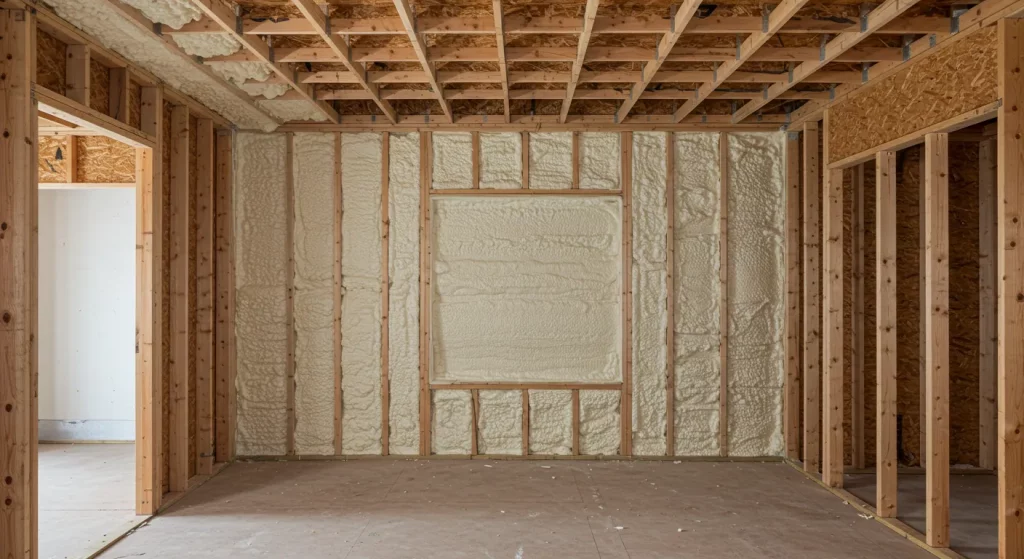
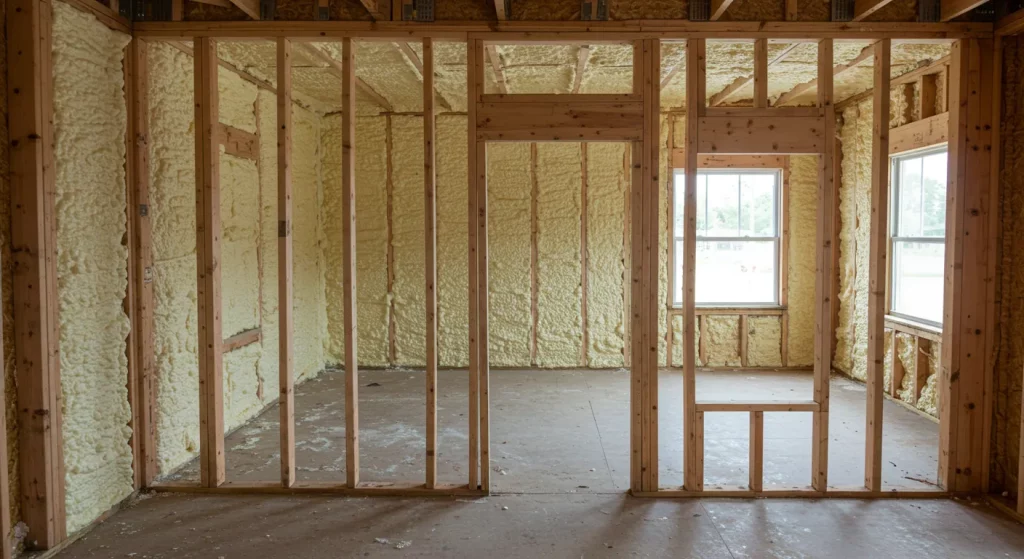
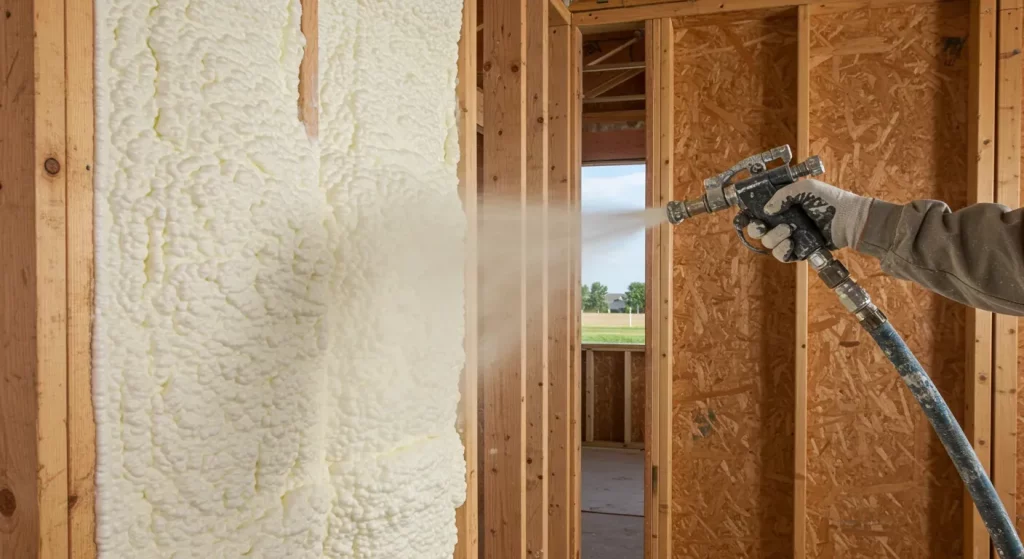
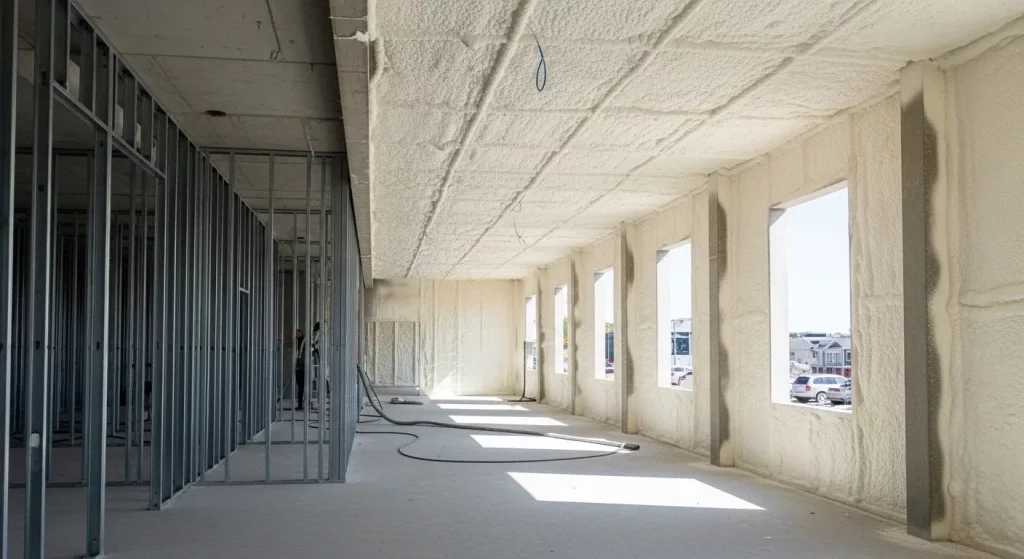
By using spray foam, we create a solid barrier that prevents air from passing through. A study by the U.S. Department of Energy shows that air sealing is the most effective way to keep moist air from entering wall cavities. This prevents the “sweating” effect often seen on metal beams and roof decks, helping prevent rust from eating away at the structure and saving on paint and repair costs.
Extend the Life of HVAC Equipment
Heating and cooling systems in large plants or warehouses represent a massive investment. When a building lacks proper insulation, these units must run around the clock to combat outdoor temperatures from leaking inside.
When we install high-quality spray foam, the building holds its temperature for much longer. The Environmental Protection Agency notes that well-insulated buildings use significantly less energy because the machines do not cycle on and off as frequently. This reduction in cycles means fewer broken belts, motors, and compressors. By keeping the indoor climate stable, we help owners avoid emergency repair calls.
Insulation Performance and Maintenance Impact
The materials you choose directly affect how often your facility needs repairs and inspections. The right insulation can reduce long-term maintenance and save money over time.
- Some building materials break down faster than others
- More durable options offer a longer-lasting solution
- Insulation should match the environment of a large facility
- Upfront cost matters, but long-term value matters more
- Spray foam often saves more on maintenance than fiberglass batts
Comparison of Maintenance Factors by Insulation Type
This table compares common insulation materials and their effects on long-term maintenance needs for a large facility.
| Maintenance Factor | Spray Foam | Fiberglass Batts | Cellulose |
|---|---|---|---|
| Air Sealing Ability | High (Built-in) | Low (Needs extra wrap) | Moderate |
| Moisture Resistance | High (Closed-cell) | Low (Holds water) | Low (Can rot) |
| Pest Prevention | High (No food source) | Low (Nesting site) | Moderate |
| Sagging or Settling | Never | Often (Creates gaps) | Frequently |
| Replacement Needs | 50+ Years | 15–20 Years | 20–30 Years |
Practical Application and Structural Strength
Large facilities often experience movement due to temperature changes. Materials like steel and concrete expand when hot and shrink when cold, which can lead to cracks in the walls or roof leaks over time.
Controlling Thermal Expansion Damage
A consistent internal temperature minimizes the stress caused by these thermal shifts. When the temperature inside a warehouse remains steady, the materials that make up the frame move less. This keeps seals around windows and doors intact for a longer period.
Detailed Breakdown of Roof Decking Support
Roof decks are sensitive to heat. On a hot day, a metal roof can reach extreme temperatures, causing it to shift against the fasteners. Spray foam applied directly to the underside of the roof deck helps regulate the metal’s temperature.
Experience-Based Optimization Insight
Applying foam to the roof deck also adds a layer of rigidity. This extra strength helps the roof resist wind uplift during storms, which prevents loose panels and leaks.
Real-World Result at Raleigh Distribution
A large distribution center in North Carolina recently updated its insulation after experiencing recurring roof leaks. After the installation, the facility saw a 40% decrease in roof-related maintenance calls over two years.
Long-Term Cost Savings for Facilities
Reducing maintenance starts with a better building envelope. We see that the right insulation choice does more than just lower a power bill. It acts as a shield for the entire property, protecting everything from the steel beams to the cooling fans. This proactive approach saves thousands of dollars in repairs every year.
Raleigh Excel Spray Foam Insulation
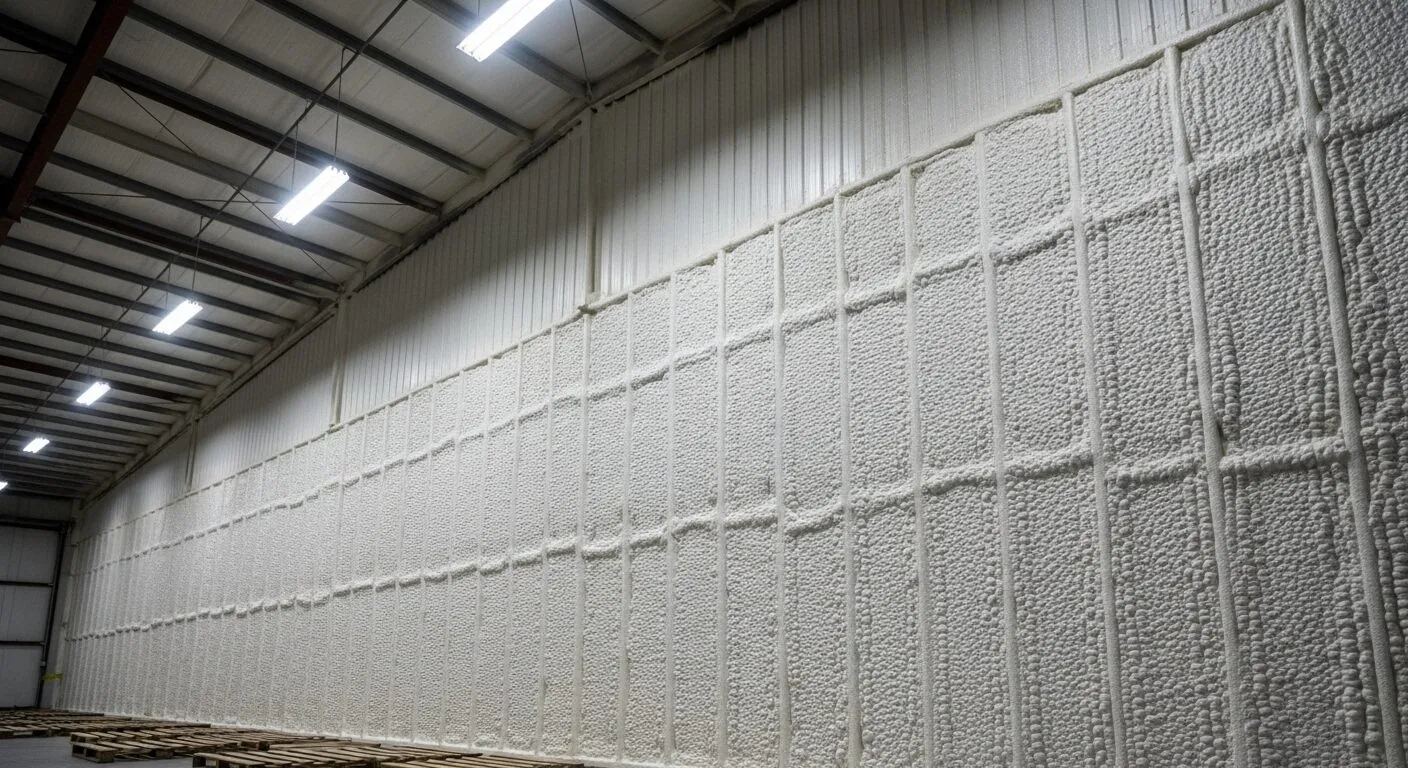
We help facility managers and building owners protect their investments through professional spray foam application. Our team understands how to seal large spaces to prevent common issues that drive up maintenance costs. Whether you are dealing with moisture in a warehouse or high energy bills in an office complex, we provide the solutions needed for stability.
Contact us today to discuss your project. Phone: (919) 301-9435 Email: [email protected]
FAQs – For Spray Foam Professionals
What is the main purpose of insulation in buildings?
The main goal of insulation is to resist heat flow. It keeps heat inside during the winter and outside during the summer. Beyond temperature, it also serves as a tool for moisture control and air sealing, helping prevent damage to building materials.
Do commercial buildings need insulation?
Yes, commercial buildings require insulation to meet local building codes and to manage operating costs. Large spaces are prone to energy loss and moisture issues if the walls and roofs are not properly sealed. It is a standard requirement for both comfort and structural health.
What insulation elements are required for sustainable building design?
A high R-value and a strong air seal are the most important elements. These features ensure the building uses the least amount of energy possible. Materials that do not degrade over time help the building stay efficient for decades without needing replacement.
What are the five types of insulation used in buildings?
The most common types include spray foam, fiberglass batts, cellulose, mineral wool, and rigid foam boards. Each has its own strengths, but spray foam is often preferred for large facilities because it provides both insulation and an air seal in a single step.
How does insulation benefit the building environment?
Insulation creates a more comfortable work environment by eliminating drafts. It also improves air quality by preventing mold growth and keeping outdoor pollutants from entering through cracks in the walls, according to findings from the International Association of Certified Home Inspectors.
Sources
- U.S. Department of Energy – Information on air sealing and building envelope performance.
- Environmental Protection Agency – Data regarding energy efficiency and HVAC system longevity.
- International Association of Certified Home Inspectors – Research on moisture intrusion and building maintenance.