


Maintaining your commercial insulation system is one of the most overlooked yet impactful parts of building ownership in Raleigh. Proper insulation maintenance protects your energy budget, extends the life of your HVAC equipment, and keeps your building compliant with North Carolina’s commercial energy code requirements under ANSI/ASHRAE/IESNA 90.1. Whether you manage a small retail space in North Hills or a large warehouse near I-440, the right maintenance strategy depends on your building type, insulation material, age of the installation, and occupancy patterns. This guide covers inspection routines, common failure points, material-specific care, and how Raleigh’s humid subtropical climate affects your insulation’s performance over time.
TLDR / Key Takeaways
- Raleigh falls within Climate Zone 3-4A under the North Carolina Energy Conservation Code, requiring specific R-values for commercial roofs, walls, and ducts.
- Routine insulation inspections should happen at least twice per year: once before summer heat and once before winter cold snaps.
- Spray foam insulation typically requires less ongoing maintenance than fiberglass or cellulose because it resists moisture, settling, and pest infiltration.
- Condensation and moisture intrusion are the two most common causes of insulation degradation in Raleigh’s high-humidity climate.
- Commercial buildings with well-maintained insulation can reduce heating and cooling energy costs by 20 to 30 percent, according to the Insulation Institute.
- Ignoring insulation gaps around pipes, ducts, and loading docks is the most frequent maintenance mistake we see in Raleigh commercial properties.
- Partnering with an insulation contractor who understands local code requirements can prevent costly compliance violations during property inspections or renovations.
Why Commercial Insulation Maintenance Matters in Raleigh
Raleigh’s climate presents a unique challenge for commercial building owners. With hot, humid summers and moderate but unpredictable winters, your insulation system works hard year-round. During summer months, outdoor temperatures regularly exceed 90 degrees Fahrenheit with humidity levels above 70 percent. In winter, temperatures can dip below freezing for extended stretches. This constant thermal cycling puts stress on insulation materials, especially at joints, seams, and penetration points.
The Energy Star Operation and Maintenance Best Practices guidelines emphasize that building envelope maintenance, including insulation, is one of the most cost-effective ways to sustain energy performance. When insulation degrades, your HVAC system compensates by running longer and harder, which drives up utility costs and accelerates equipment wear.
Beyond energy costs, poorly maintained insulation affects occupant comfort, indoor air quality, and even your building’s structural integrity. Moisture that gets past compromised insulation can lead to mold growth, wood rot, and corrosion of metal building components. For businesses in Raleigh, where humidity is a persistent factor, these risks are not theoretical; they are a matter of when, not if.
Common Insulation Types in Commercial Properties and Their Maintenance Needs
Different insulation materials have different lifespans and maintenance requirements. Understanding what is installed in your building is the first step toward an effective maintenance plan.
| Insulation Type | Typical Lifespan | Common Issues in Raleigh | Maintenance Frequency |
|---|---|---|---|
| Spray Foam (Open Cell) | 20+ years | Overspray damage, pest chewing at edges | Annual visual inspection |
| Spray Foam (Closed Cell) | 30+ years | UV degradation if exposed, joint separation | Annual visual inspection |
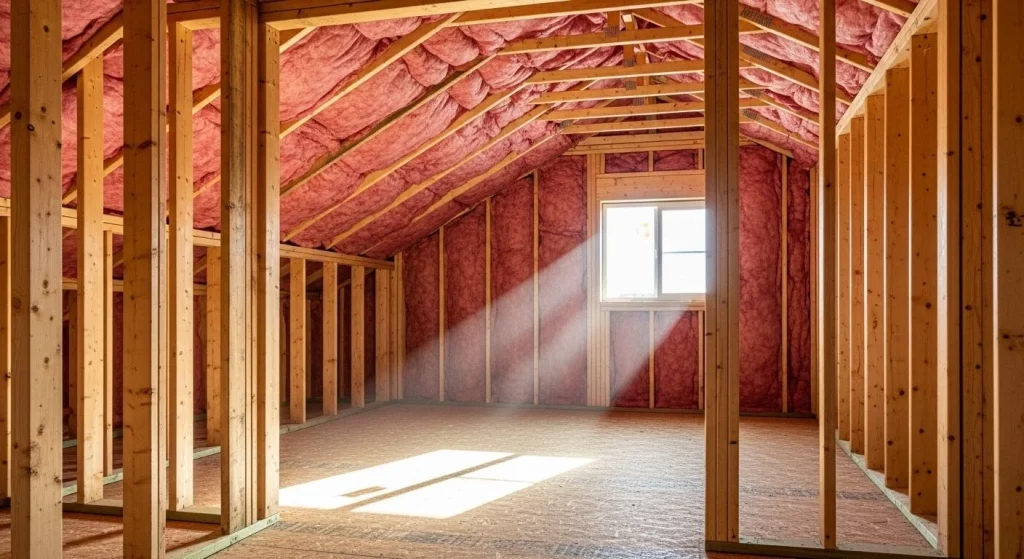
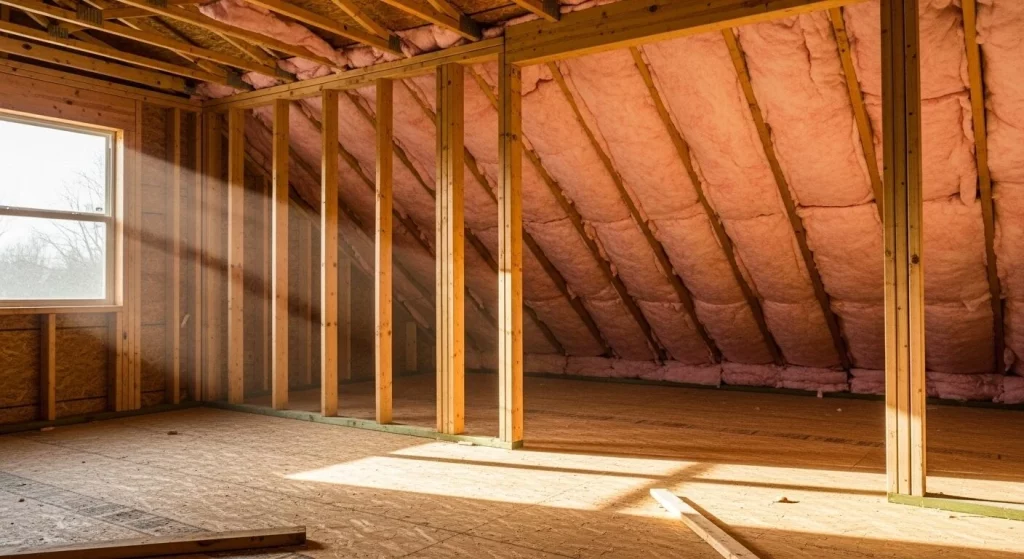
| Fiberglass Batts | 15-20 years | Moisture absorption, settling, pest nesting | Biannual inspection |
| Rigid Foam Board | 25+ years | Cracking at joints, moisture behind panels | Annual inspection |
| Blown-In Cellulose | 15-20 years | Settling, moisture clumping, pest infestation | Biannual inspection |
| Mineral Wool | 20+ years | Water absorption if exposed, compression | Annual inspection |
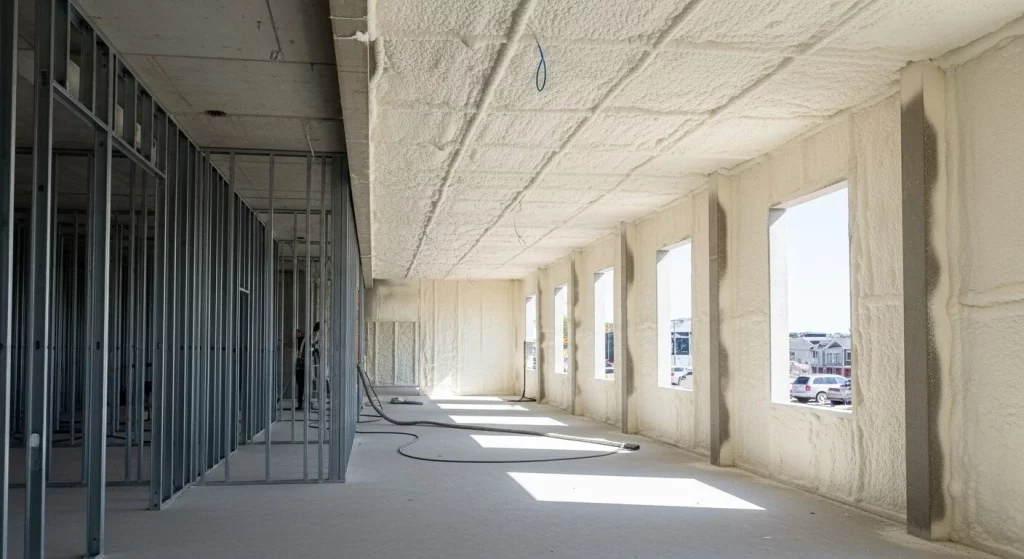
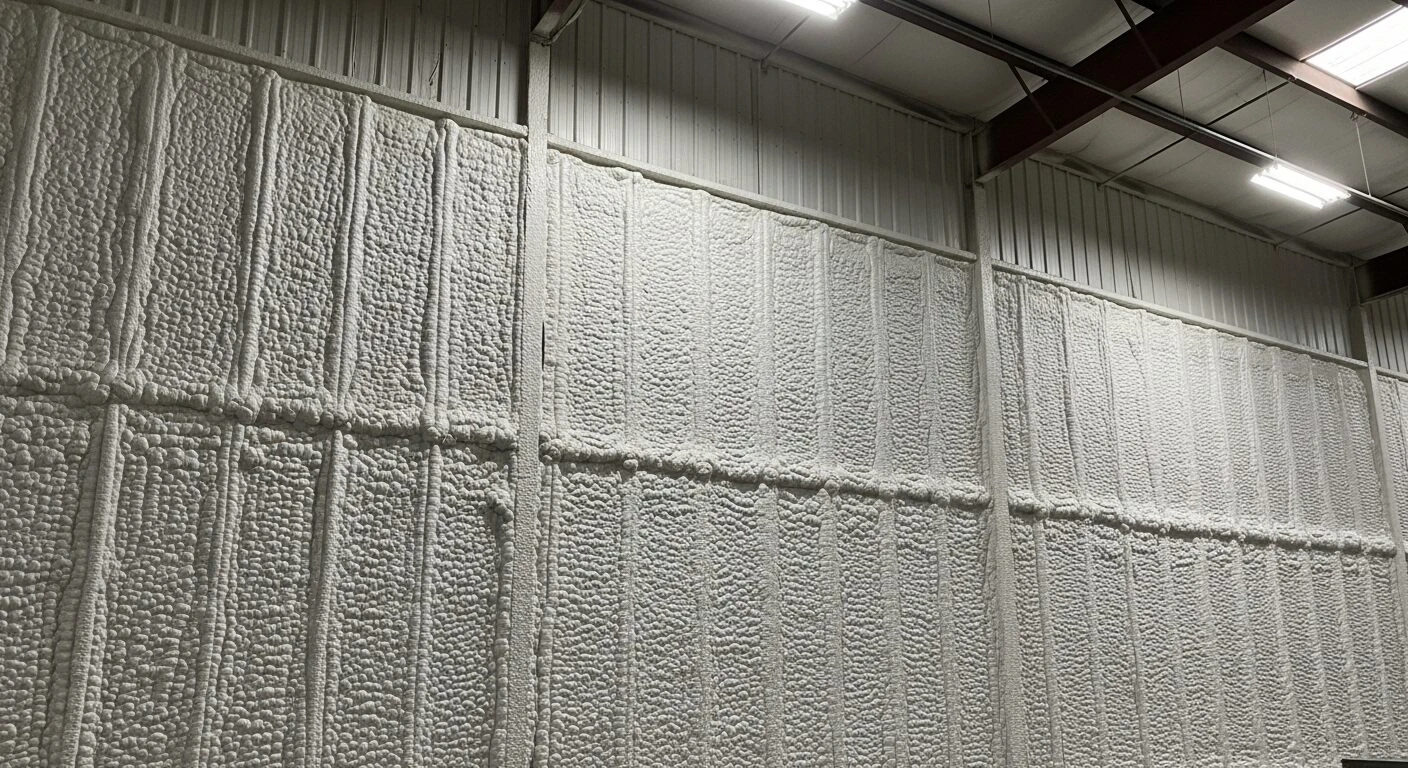
Spray foam insulation offers a distinct maintenance advantage for Raleigh businesses because it creates an air seal in addition to providing thermal resistance. Closed-cell spray foam also acts as a moisture barrier, which is especially valuable in our humid climate. Fiberglass and cellulose, while still common in older commercial buildings, are more vulnerable to moisture damage and require more frequent attention.
Seasonal Inspection Checklist for Raleigh Businesses
A structured inspection schedule prevents small issues from becoming expensive problems. We recommend dividing your inspections into two primary checkpoints aligned with Raleigh’s seasonal shifts.
Spring / Early Summer Inspection (April-May)
- Check attic and roof insulation for signs of moisture staining or mold growth, especially after spring rains
- Inspect insulation around roof penetrations (vents, skylights, HVAC curbs) for gaps or compression
- Verify that duct insulation in unconditioned spaces meets the NC code requirement of R-8
- Look for pest damage near eaves, soffits, and wall penetrations
- Confirm that vapor barriers are intact and properly positioned
Fall / Early Winter Inspection (October-November)
- Recheck all areas inspected in spring for new damage or degradation
- Pay special attention to insulation around loading docks, roll-up doors, and exterior-facing walls
- Verify that insulation has not shifted or settled in wall cavities
- Check for air leaks around windows, doors, and electrical conduit penetrations
- Assess whether any insulation additions are needed before heating season
Common Failure Points in Commercial Buildings
Certain areas of commercial buildings are more prone to insulation failure regardless of the material used. Knowing where to look saves time and catches problems early.
Roof-to-wall transitions: The junction where the roof meets exterior walls is a high-stress area due to thermal expansion and contraction. Sealants at these transitions degrade over time, creating gaps that allow air and moisture infiltration.
HVAC duct runs: Ductwork running through unconditioned spaces such as attics, crawl spaces, or mechanical rooms is especially vulnerable. Duct insulation that slips, tears, or absorbs moisture directly impacts system efficiency and indoor air quality.
Pipe and plumbing penetrations: Every point where pipes, conduits, or structural elements pass through insulated assemblies creates a potential weak spot. These penetrations are rarely sealed as thoroughly as they should be during initial construction.
Loading docks and overhead doors: Large openings in the building envelope are inherently difficult to insulate. The compression strips, weather seals, and perimeter insulation around these areas require regular replacement.
Exterior wall cavities behind signage or equipment: Mounted signs, HVAC condensers, and electrical equipment attached to exterior walls often create localized insulation gaps that go unnoticed during routine walkthroughs.
Moisture Management: The Biggest Threat to Insulation in Raleigh
Raleigh’s average annual humidity hovers around 70 percent, and summer dew points frequently exceed 70 degrees Fahrenheit. These conditions make moisture management the single most important factor in insulation longevity.
When warm, humid air contacts cooler surfaces inside wall cavities or ceiling assemblies, condensation forms. Over time, this moisture accumulates in the insulation, reducing its R-value and creating conditions favorable for mold growth. According to the North Carolina DEQ Energy Saving Guidelines, proper vapor barrier placement is essential for all commercial insulation assemblies in our climate zone.
Key moisture management practices include:
- Ensuring proper ventilation in the attic and crawl spaces
- Maintaining intact vapor barriers on the warm side of insulated assemblies
- Addressing roof leaks immediately, even small ones
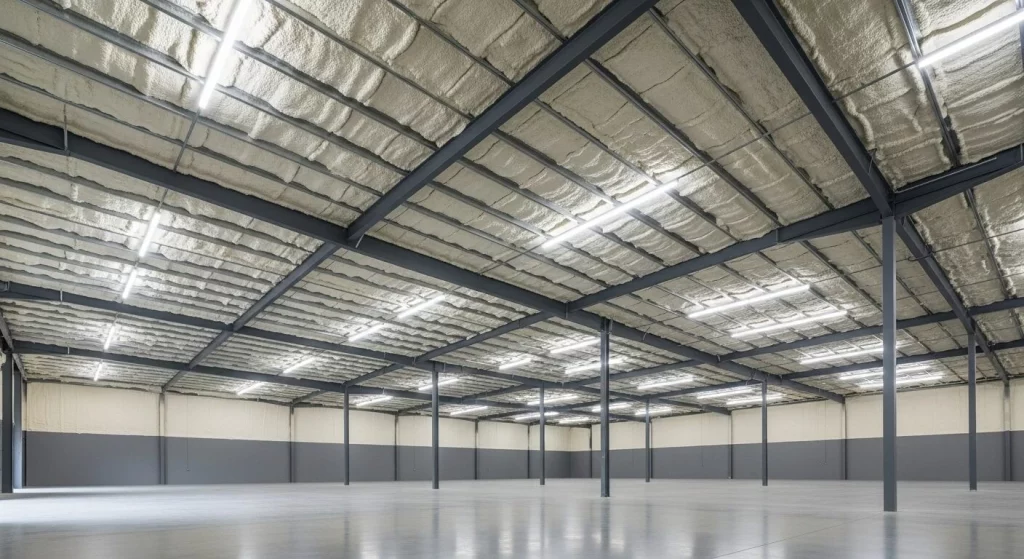
- Using closed-cell spray foam in crawl spaces and basement rim joists where moisture exposure is highest
- Monitoring indoor relative humidity and keeping it between 30 and 50 percent
When to Repair vs. Replace Commercial Insulation
Not all insulation problems require full replacement. Many issues can be addressed with targeted repairs that cost a fraction of the replacement price.
Repair is usually sufficient when:
- Damage is limited to a small, accessible area
- The insulation material is still within its expected lifespan
- The surrounding insulation is dry and intact
- The issue is a gap or air leak rather than material degradation
Replacement is usually necessary when:
- Insulation has been saturated with water for an extended period
- There is widespread mold growth within the insulation assembly
- The material has significantly compressed or settled, reducing the R-value
- The building is undergoing a major renovation or change of use
- The insulation no longer meets current energy code requirements
As a general rule, if more than 25 to 30 percent of an insulated area is compromised, replacement often makes more financial sense than repeated spot repairs.
Recommendations by Business Type
Different commercial properties face different insulation challenges. Here is what we recommend based on building type:
| Business Type | Priority Areas | Recommended Approach | Typical ROI Timeline |
|---|---|---|---|
| Retail / Office | Exterior walls, windows, and roof | Air sealing + spray foam in problem areas | 2-4 years |
| Warehouse / Distribution | Roof deck, loading docks, dock levelers | Rigid foam roof insulation + dock seals | 3-5 years |
| Restaurant / Food Service | Kitchen exhaust penetrations, walk-in coolers | Closed-cell foam at penetrations, cooler panels | 1-3 years |
| Healthcare / Labs | HVAC ducts, clean rooms, exterior walls | Full building envelope assessment | 2-4 years |
| Manufacturing | Process piping, mechanical rooms, and the roof | Pipe insulation + spray foam roof system | 3-5 years |
Signs You Have Found the Right Insulation Maintenance Partner
Choosing the right contractor for insulation maintenance matters as much as the maintenance plan itself. Here are the qualities that separate reliable providers from the rest:
- Thorough initial assessment: A quality contractor will not quote a price without first inspecting your building, discussing your energy concerns, and understanding how your space is used.
- Material-agnostic recommendations: The right partner will recommend the best solution for your specific situation rather than pushing a single product across every job.
- Code awareness: They should be familiar with North Carolina’s commercial energy code requirements and be able to explain how their work keeps your building compliant.
- Clear scope of work: Every proposal should detail exactly what will be inspected, repaired, or replaced, along with expected timelines and warranty information.
- References in similar buildings: Ask for examples of work they have completed on commercial properties comparable to yours in size and type.
Visual Suggestions for Your Maintenance Plan
- Bar Chart Suggestion: Energy cost comparison before and after insulation maintenance across four commercial building types in Raleigh, measured over a 12-month period.
- Timeline Graphic: Seasonal maintenance schedule showing inspection, repair, and replacement milestones across a calendar year, with Raleigh weather events overlaid.
- Heat Map Suggestion: Infrared thermal scan comparison of a commercial roof before and after insulation repair, showing where air leaks and moisture intrusion were occurring.
Get Your Raleigh Commercial Property Insulated Right
Raleigh Excel Spray Foam Insulation helps businesses across the Raleigh area protect their buildings with professional commercial insulation installation, repair, and maintenance services. Our team understands the specific demands of Raleigh’s climate and North Carolina’s commercial energy code requirements, and we work with you to develop a maintenance plan that fits your building and budget. Whether you need a full insulation assessment or targeted repairs to a known problem area, we are ready to help.
Call us at (919) 301-9435 or email [email protected] to discuss your commercial insulation needs.
Schedule a Building Assessment: Contact us to book a comprehensive insulation inspection and receive a detailed report with prioritized recommendations.
FAQs
How often should commercial insulation be inspected in Raleigh?
We recommend inspecting your commercial insulation at least twice per year: once in spring before cooling season begins, and once in fall before heating season. Properties with older insulation, known moisture issues, or high-humidity operations like restaurants may benefit from quarterly inspections.
What R-values are required for commercial buildings in North Carolina?
North Carolina’s commercial energy code, based on ASHRAE 90.1, requires specific R-values depending on the building assembly. For Climate Zones 3 and 4, commercial roof insulation must meet or exceed R-20 to R-30, depending on the construction type; exterior walls typically require R-13 to R-19, and ducts in unconditioned spaces must be insulated to R-8. A local contractor can verify your specific compliance requirements.
Can damaged spray foam insulation be repaired without replacing the entire area?
Yes, in most cases. Small areas of damaged spray foam can be cut out and re-applied without disturbing the surrounding insulation. This is one of the practical advantages of spray foam in commercial settings, as it allows targeted repairs that minimize disruption to your business operations.
How does Raleigh’s humidity affect insulation performance?
High humidity creates condensation risk inside wall and ceiling assemblies, which can reduce insulation R-value and promote mold growth. Spray foam, especially closed-cell varieties, resists moisture absorption and provides an air barrier that helps prevent humid air from reaching cooler surfaces inside building cavities.
What is the most cost-effective insulation maintenance step for a small business?
The single most cost-effective step is air sealing. Identifying and sealing gaps around doors, windows, duct penetrations, and electrical conduit stops conditioned air from escaping and prevents humid outdoor air from entering. Air sealing is low-cost, can often be completed in a single visit, and delivers noticeable energy savings immediately.
Sources
- Insulation Institute – Why Insulate Commercial Buildings – Data on commercial insulation benefits, including energy savings of 20-30% and the relationship between insulation and HVAC efficiency.
- Energy Star – Operation and Maintenance Best Practices – Federal guidelines on maintaining building envelope performance and HVAC system efficiency in commercial properties.
- NC State Building Code – 2018 Energy Conservation Code Amendments – North Carolina’s commercial building energy code requirements, including ASHRAE 90.1 compliance and R-value mandates.
- Rmax – Insulation Requirements in North Carolina – Breakdown of North Carolina’s climate zones and corresponding insulation code requirements for residential and commercial construction.
- NC DEQ – Energy Saving Fact Sheet: Insulation Guidelines – State guidance on insulation performance zones in North Carolina and vapor barrier placement recommendations.