


Walking into a poorly insulated home during winter feels like throwing money out an open window. The cold drafts, high heating bills, and constant battle to maintain a comfortable temperature can be frustrating and expensive. Yet many homeowners overlook the single most effective solution: proper insulation. This comprehensive guide draws from years of hands-on experience helping hundreds of families transform their homes into comfortable, energy-efficient spaces.
Understanding insulation goes far beyond just knowing what material to use. It’s about grasping how heat moves through your home, which areas lose the most energy, and how different insulation types perform in various situations. After reading this guide, you’ll have the knowledge to make informed decisions about your home’s insulation needs, potentially saving thousands on energy bills over the lifetime of your home.
Foundational Understanding: What is Insulation and Why It Matters
At its most basic level, insulation is any material that slows down the transfer of heat. Heat naturally moves from warmer areas to cooler areas, and in your home, this happens in three ways: conduction (direct transfer through materials), convection (transfer through air movement), and radiation (transfer through electromagnetic waves). Effective insulation addresses all three types of heat transfer.
The impact of proper insulation extends far beyond just keeping your home warm in winter and cool in summer. According to the U.S. Department of Energy, properly installed insulation can reduce heating and cooling costs by 15% on average, with some homes seeing savings of up to 50% depending on their current insulation levels and climate zone.
The financial benefits compound over time. While the initial investment might seem substantial, insulation typically pays for itself within 3-5 years through energy savings alone. When you factor in increased comfort, reduced HVAC wear and tear, and potential tax incentives, the return on investment becomes even more attractive.
The Science Behind Insulation: How It Works
Understanding how insulation works starts with recognizing that most insulation materials function by trapping air or other gases in tiny pockets. These pockets create thermal barriers that slow down heat transfer. The effectiveness of this process depends on several factors, including the material’s density, structure, and thermal conductivity.
Different insulation types use different mechanisms to achieve this effect. Some rely on millions of tiny air bubbles (like foam insulation), while others use fibers that trap air between them (like fiberglass or cellulose). The key is creating countless small pockets of still air, since still air is actually a poor conductor of heat.
Insulation performance is measured by its R-value, which indicates thermal resistance. Higher R-values indicate better insulating properties. However, R-values aren’t the complete picture. The effectiveness of insulation also depends on proper installation, air sealing, and moisture control. Even the best insulation will underperform if installed incorrectly or if air can bypass it through gaps and cracks.
Key Takeaways: Understanding Insulation Performance
- R-value measures thermal resistance, but doesn’t tell the whole story
- Proper installation is just as important as the R-value of the material
- Air sealing works hand-in-hand with insulation for maximum effectiveness
- Moisture control is essential for maintaining insulation performance over time
Types of Residential Insulation
Choosing the right insulation type for your home depends on several factors, including your climate, budget, the area being insulated, and whether you’re doing the work yourself or hiring professionals. Here’s a comprehensive look at the most common options available.
Fiberglass Insulation
Fiberglass remains one of the most popular insulation choices for residential applications. Made from fine glass fibers, it comes in batts, rolls, or loose-fill forms. The material is relatively inexpensive, widely available, and easy to install in standard stud cavities.
Pros:
- Cost-effective and widely available
- Non-combustible and moisture-resistant
- Easy for DIY installation in accessible areas
- Contains some recycled content (typically 20-30%)
Cons:
- Can irritate the skin, eyes, and respiratory system during installation
- Settles over time, reducing R-value
- Performance drops significantly when compressed
- Provides no air barrier
Cellulose Insulation
Cellulose insulation is made from recycled paper products, primarily newsprint, treated with fire retardants. It’s typically installed as loose-fill using blowing equipment, making it ideal for attics and retrofit applications.
Pros:
- Made from 75-85% recycled content
- Excellent at filling gaps and voids
- Better air-sealing properties than fiberglass
- Higher R-value per inch than fiberglass (about 3.5 vs 2.5)
Cons:
- Professional installation recommended for best results
- Can settle over time, requiring thicker initial applications
- Heavier than fiberglass, potentially requiring ceiling reinforcement
- Potential moisture issues if not properly installed
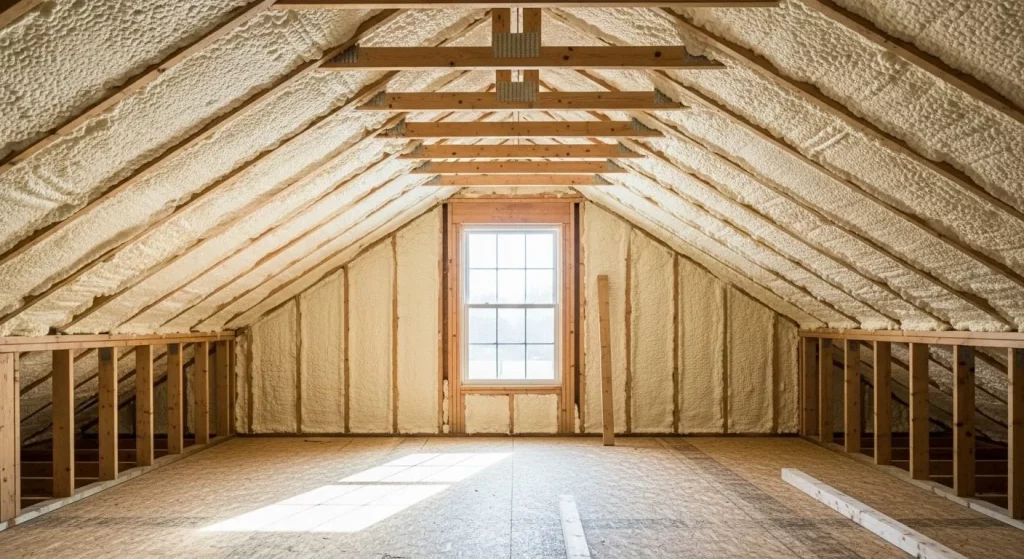
Spray Foam Insulation
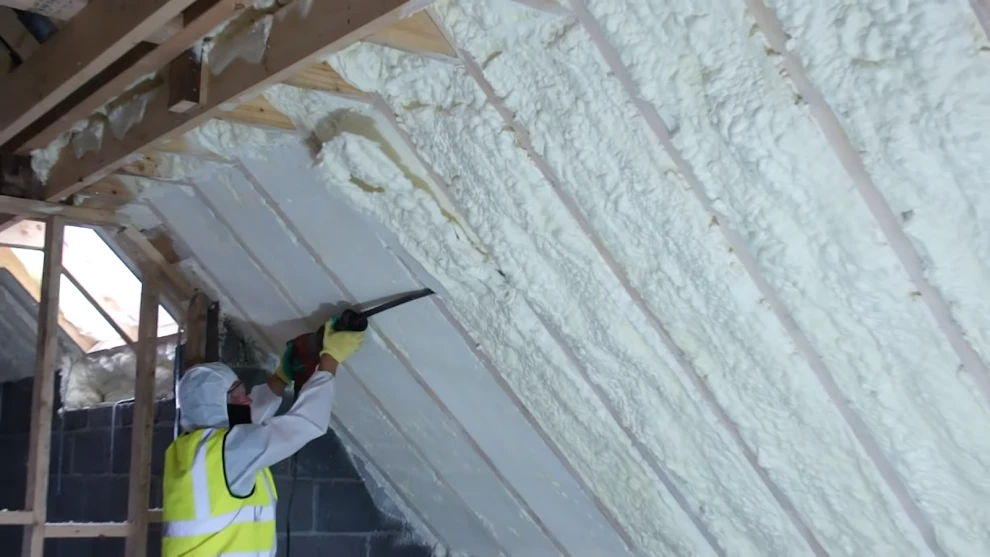
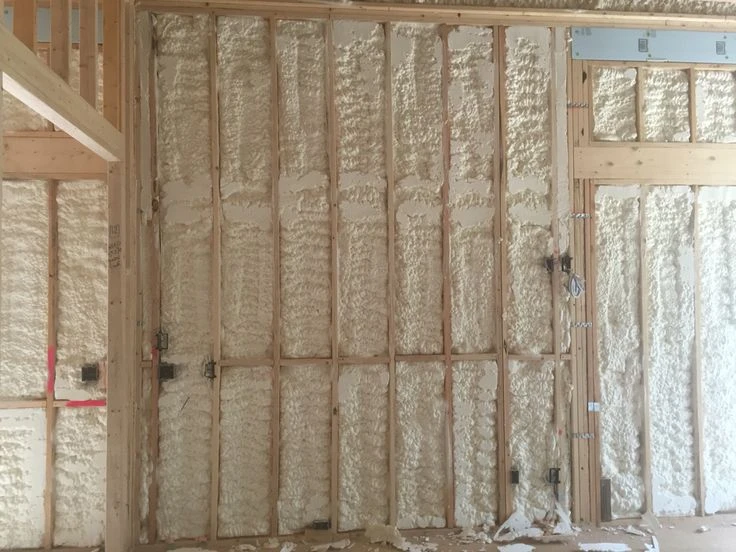
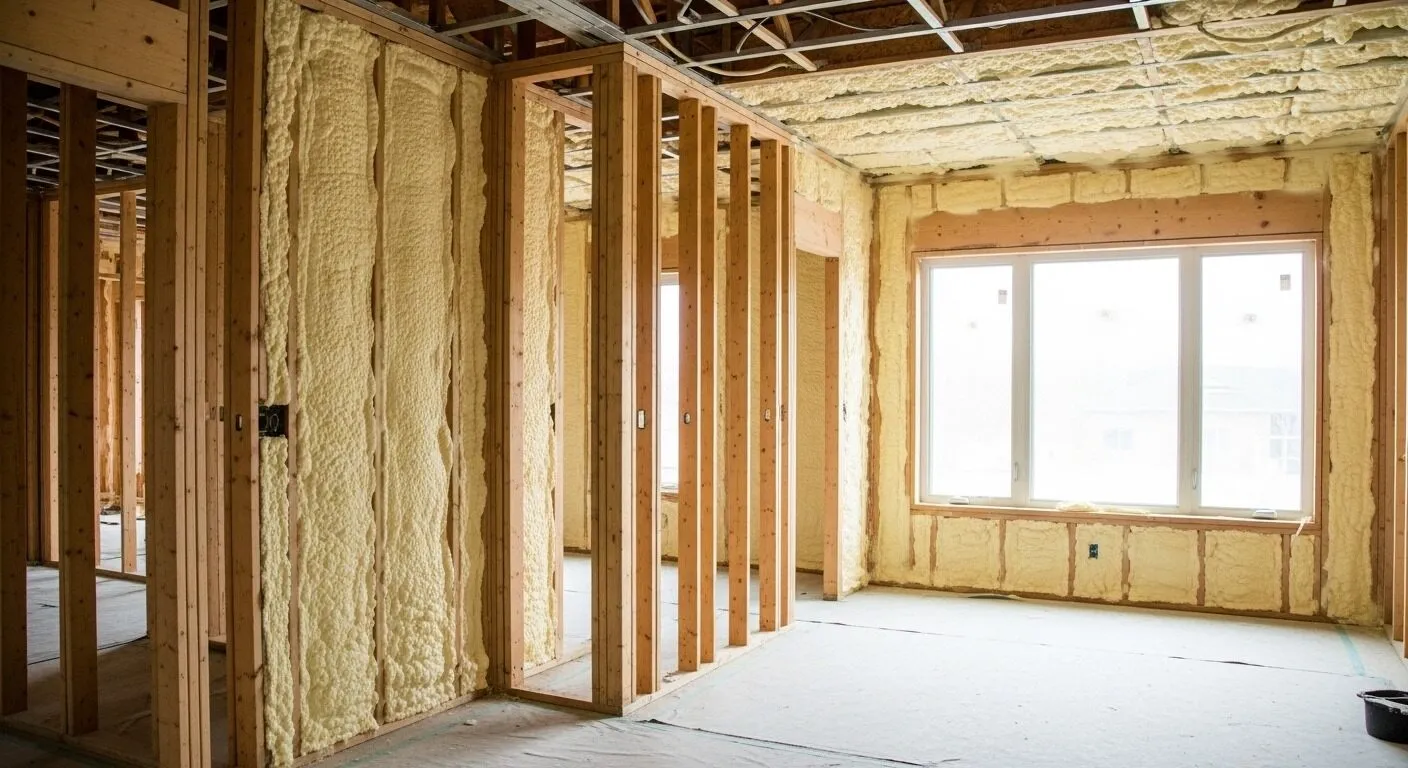
Spray foam insulation has gained popularity for its superior performance characteristics. Available in open-cell and closed-cell formulations, it expands to fill gaps and creates an air-tight seal while providing excellent insulation value.
Open-Cell Foam:
- Lower density and less expensive
- R-value around 3.5 per inch
- Allows moisture vapor to pass through
- Better sound-dampening qualities
Closed-Cell Foam:
- Higher density with R-value around 6.5 per inch
- Creates a moisture barrier
- Adds structural strength to assemblies
- More expensive but provides more benefits
Mineral Wool Insulation
Mineral wool, which includes rock wool and slag wool, is made from natural minerals or industrial byproducts. Available in batts, boards, or loose-fill forms, it offers similar performance to fiberglass with some unique advantages.
Reflective Insulation
Reflective insulation works differently than other types by reflecting radiant heat rather than slowing conductive or convective heat transfer. Typically made from aluminum foil attached to various backing materials, it’s most effective in hot climates where reducing heat gain is the primary concern.
Understanding R-Values and Insulation Performance
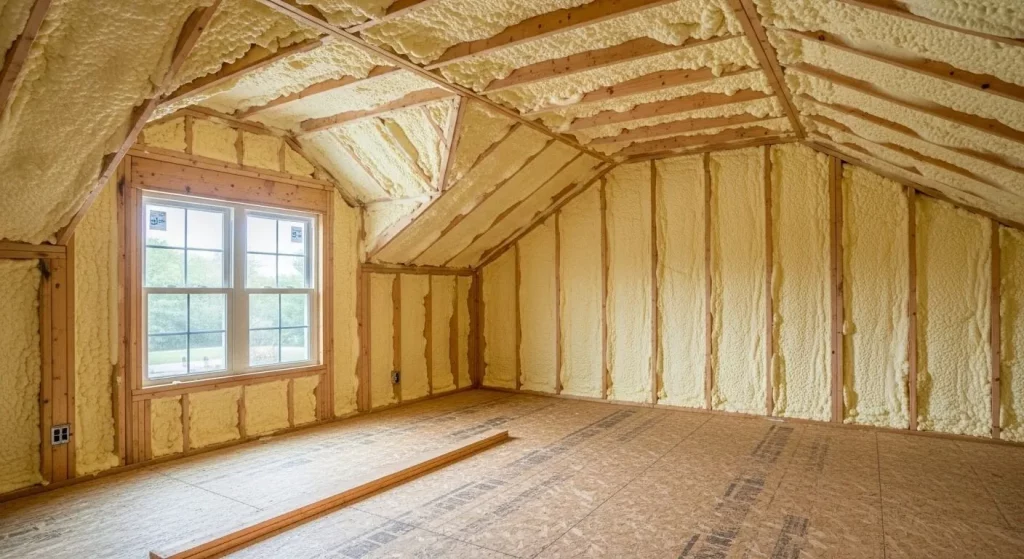
The R-value system was created to provide a standardized way to compare insulation performance. It represents thermal resistance – how well a material resists heat flow. Higher R-values mean better insulation performance.
The U.S. Department of Energy and ENERGY STAR recommend specific R-values for different parts of your home based on climate zones. For example, homes in colder zones (5-8) typically require attic insulation levels between R-49 and R-60, while those in warmer zones (1-2) may only require R-30 to R-49.
Energy Savings and ROI Calculations
Understanding the financial benefits of insulation helps justify the investment and prioritize projects. While exact savings vary based on your climate, home size, and current insulation levels, the returns are often significant.
Payback Period Analysis: To calculate your payback period, divide the initial investment of the project by your annual reduction in utility expenses. This determines how many years it takes for the efficiency gains to fully offset the upfront expenditure.
Many homeowners can also take advantage of the Database of State Incentives for Renewables & Efficiency (DSIRE) to find local rebates, utility programs, and federal tax credits that significantly lower the initial cost of insulation upgrades.
Putting Your Residential Insulation Strategy into Action
You now have comprehensive knowledge about residential insulation. Start with a thorough assessment of your current situation, prioritize the attic (which usually offers the highest ROI), and ensure you handle air sealing at the same time.
Whether you’re planning a DIY project or hiring professionals, use this guide as your reference. A well-insulated home isn’t just more efficient, it’s a more comfortable, valuable, and enjoyable place to live.
Need Expert Guidance?
If you need professional guidance or installation services, Raleigh Excel Spray Foam Insulation offers comprehensive insulation solutions tailored to your specific needs and budget. Reach out at [email protected] or call (919) 301-9435 to discuss your insulation project.
Common Problems and How to Overcome Them
Even well-installed insulation can develop problems over time. Recognizing these issues early prevents more serious problems and ensures your insulation continues to perform optimally.
- Moisture Problems: Wet insulation loses its properties and leads to mold. Always address roof leaks or crawlspace dampness before insulating.
- Pest Infestations: Rodents and insects can nest in insulation. Seal entry points and consider pest-resistant materials like treated cellulose.
- Settling: Loose-fill materials can settle over time. Periodic inspections and “topping off” can restore the necessary R-value.
Sources
- U.S. Department of Energy – Comprehensive information about insulation types, R-values, and energy savings.
- Environmental Protection Agency (ENERGY STAR) – Program requirements, home energy efficiency guidelines, and R-value recommendations.
- DSIRE (Database of State Incentives for Renewables & Efficiency) – The most comprehensive source of information on incentives and policies that support renewables and energy efficiency in the United States.