


Choosing the right commercial insulation in 2026 comes down to matching your building type, climate zone, and budget with the insulation material that delivers the highest R-value per dollar over the long haul. There is no single “best” option across the board. A warehouse in North Carolina has different thermal demands than a healthcare facility in Minnesota, and the insulation that makes sense for new construction may not be the right retrofit choice for an aging office building. What matters most is understanding the primary insulation categories (spray foam, fiberglass, mineral wool, rigid board, and cellulose), how each performs against fire codes and moisture, and what the payback period looks like for your specific property. Below, we walk through the decision-making framework we use with commercial clients to get this right every time.
TLDR: Key Takeaways
- R-value per inch remains the single most useful metric for comparing insulation materials head-to-head. Spray foam and polyiso board lead the pack at R-6 to R-7 per inch. According to Wikipedia’s overview of R-value in building insulation, this metric quantifies thermal resistance and serves as the benchmark for comparing insulation performance across all material types.
- Spray foam insulation delivers the best air sealing performance, which can reduce commercial energy costs by 20-50% when properly installed, according to industry performance data.
- Building code compliance is non-negotiable in 2026. ASHRAE 90.1 and IECC standards have tightened thermal envelope requirements, particularly for commercial roofs and walls.
- Moisture management is the most overlooked factor. In humid climates like the Southeast, closed-cell spray foam provides a built-in vapor barrier that fiberglass and mineral wool cannot match.
- ROI timelines for commercial insulation upgrades typically range from 2 to 7 years, depending on the material, building size, and local energy rates.
- Fire safety ratings vary significantly. Mineral wool is inherently non-combustible, while spray foam requires intumescent coatings in many commercial applications.
- Retrofit projects should prioritize accessible areas first (attics, crawlspaces, rim joists) to maximize energy savings per dollar spent before tackling enclosed wall cavities.
Understanding the Commercial Insulation Landscape in 2026
The commercial insulation market has shifted noticeably over the past several years. Energy codes continue to push for higher thermal performance, building owners are more focused on operational cost reduction than ever, and sustainability reporting requirements are making insulation upgrades a line item in ESG strategies. The Insulation Institute has published data confirming that insulation upgrades in existing commercial buildings reduce energy use by an average of nearly 9% in primary schools, with even higher savings potential in office and retail environments.
What this means for property owners and facility managers is that insulation is no longer a set-it-and-forget-it building material. It is an active performance system that affects monthly operating expenses, occupant comfort, indoor air quality, and regulatory compliance. The decision framework we recommend starts with five core questions:
- What is the building type and primary use?
- What climate zone is the property located in?
- Is this new construction or a retrofit?
- What is the budget and expected payback period?
- Are there specific fire code or moisture control requirements?
Answering these first narrows your options from the full market down to two or three viable materials.
Top Insulation Types for Commercial Properties: Comparison
Here is a head-to-head comparison of the most commonly specified commercial insulation materials in 2026:
| Insulation Type | R-Value Per Inch | Best Application | Air Sealing | Moisture Resistance | Fire Rating | Typical Cost (Per Sq Ft) |
|---|---|---|---|---|---|---|
| Closed-Cell Spray Foam | R-6.5 to R-7 | Walls, roofs, crawlspaces | Excellent | Vapor barrier built in | Requires a thermal barrier | $1.50 to $3.50 |
| Open-Cell Spray Foam | R-3.5 to R-3.7 | Walls, sound deadening | Excellent | Permeable | Requires a thermal barrier | $0.75 to $1.50 |
| Fiberglass Batts | R-2.9 to R-3.8 | Walls, ceilings, standard cavities | Poor | Low (absorbs moisture) | Non-combustible | $0.50 to $1.25 |
| Mineral Wool | R-3.3 to R-4.2 | Walls, fire-rated assemblies | Moderate | Good | Non-combustible | $1.00 to $2.00 |
| Rigid Foam Board (Polyiso) | R-5.6 to R-6.5 | Roofs, exterior sheathing, below grade | Poor (joints leak) | Varies by facer | Varies by product | $0.75 to $2.00 |
| Cellulose (Blown-In) | R-3.1 to R-3.8 | Attics, existing wall cavities | Moderate | Treated for moisture | Treated for fire | $0.60 to $1.50 |
As the Leyton Insulation Buyer Guide for 2026 points out, R-value is the primary measure of thermal resistance, but it does not tell the whole story. Air infiltration accounts for a significant portion of energy loss in commercial buildings, and only materials that create a continuous seal (like spray foam) fully address that gap.
Where Each Material Shines (and Where It Falls Short)
Spray Foam: The All-In-One Performance Option
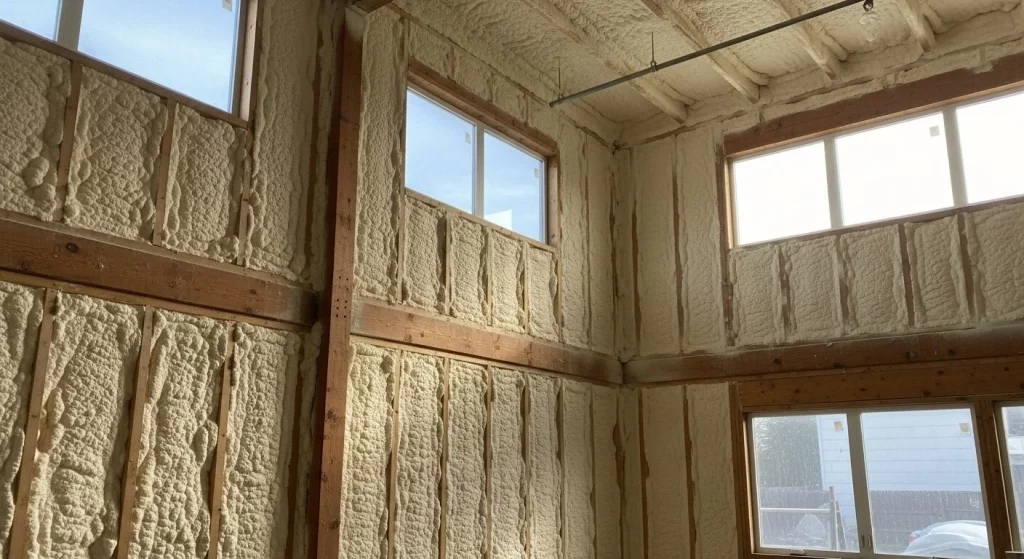
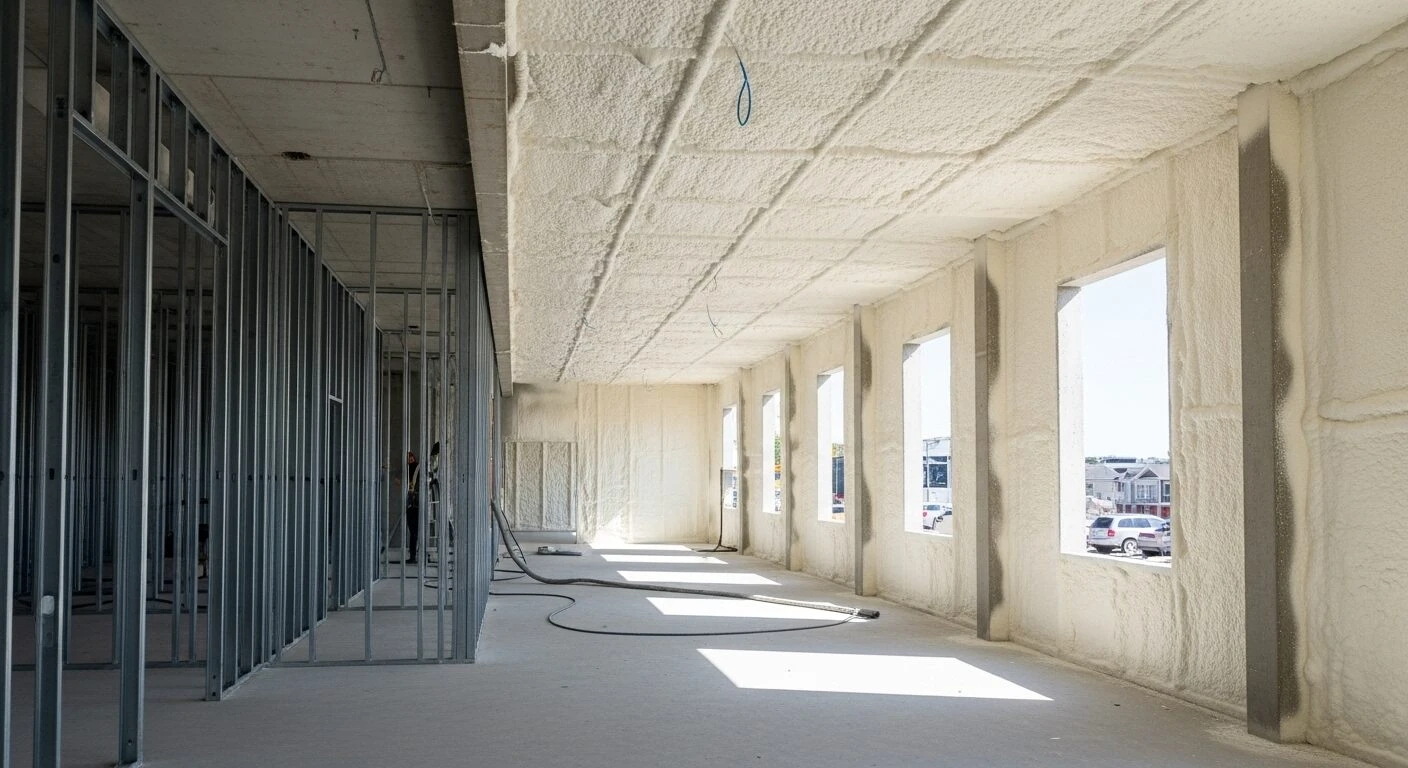
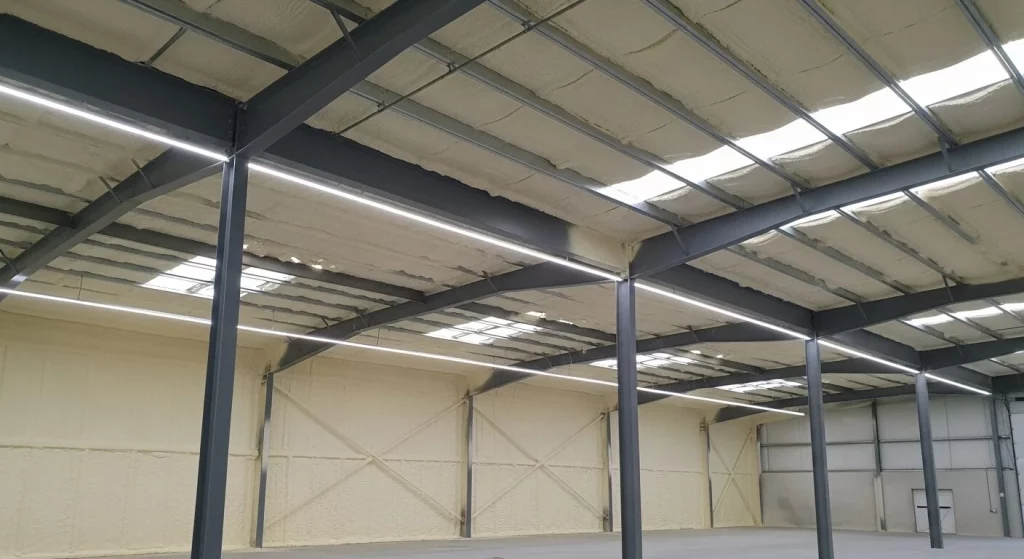
Spray foam insulation, particularly closed-cell, is the most versatile commercial insulation available in 2026. It expands to fill gaps, cracks, and penetrations, creating an airtight seal that no other material can match at the point of installation. For commercial properties dealing with high humidity, condensation risk, or metal building construction, closed-cell spray foam also acts as a vapor retarder and adds structural rigidity to the building envelope.
The trade-off is cost. Spray foam carries the highest upfront price per square foot, and installation requires trained, certified contractors using specialized equipment. But for new commercial construction and major retrofits where long-term energy savings are the priority, spray foam consistently delivers the fastest payback.
Fiberglass and Mineral Wool: The Budget-Friendly Standards
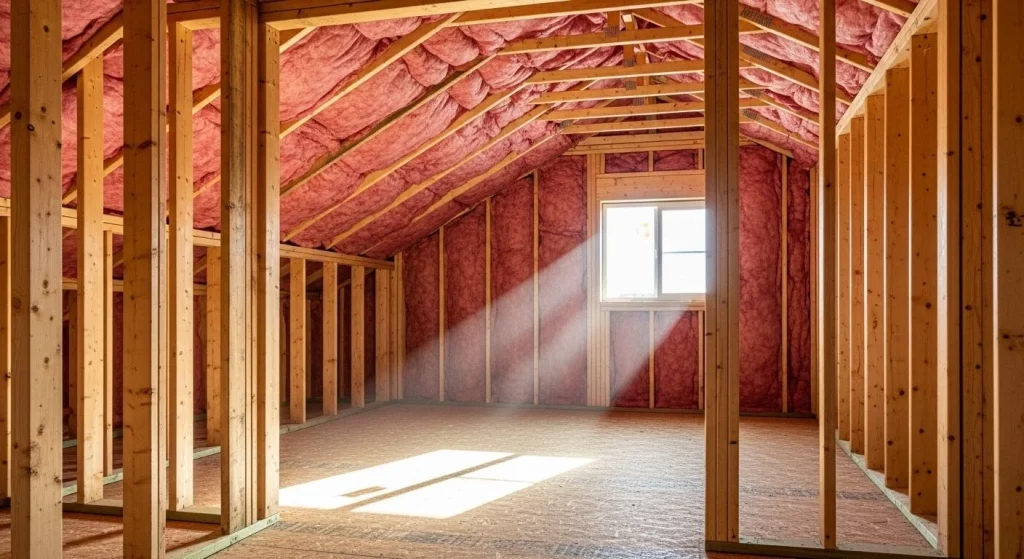
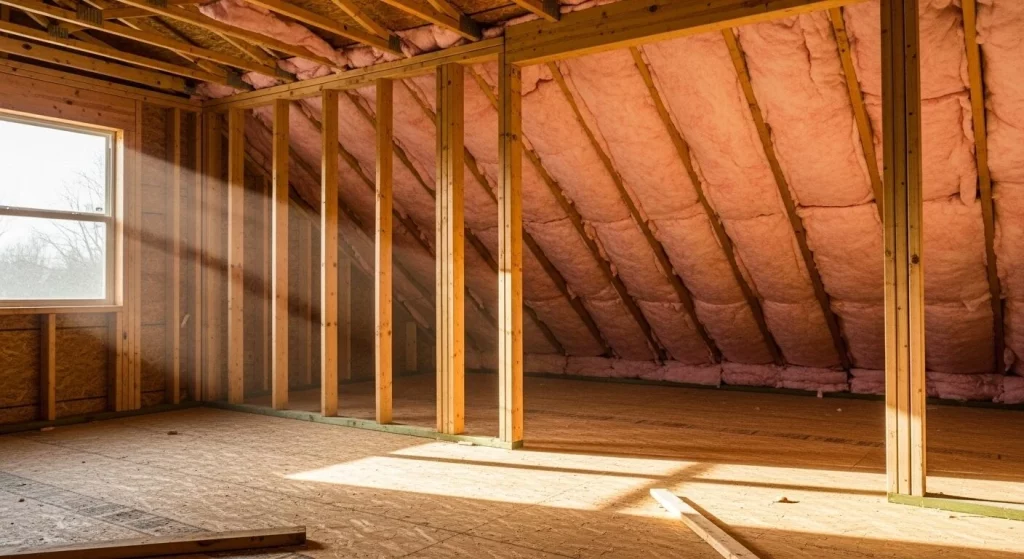
Fiberglass batts remain the most widely installed commercial insulation, primarily because of low cost and familiarity. Mineral wool has gained significant market share due to its superior fire resistance and sound attenuation properties. Both materials perform well in standard wall cavities and ceiling assemblies where the framing provides a consistent cavity.
The limitation is air sealing. Neither fiberglass nor mineral wool fills gaps on its own, so they require a separate air barrier system (like house wrap or spray-applied sealants) to perform at their rated R-value. In retrofit scenarios where walls are already closed, blowing cellulose or mineral wool into wall cavities can be a cost-effective improvement, but it will not match the air sealing performance of spray foam applied to the same assembly.
Rigid Foam Board: The Commercial Roof Standard
Polyisocyanurate (polyiso) rigid board is the dominant insulation material for commercial low-slope roofing systems. At R-5.6 to R-6.5 per inch, it provides high thermal resistance in a thin profile, which is critical for roof assemblies where adding thickness affects drainage and edge details. According to the Polyisocyanurate Insulation Manufacturers Association (PIMA), polyiso insulation delivers measurable energy savings and emission reductions across the building envelope.
Rigid board is less effective in wall assemblies unless used as continuous exterior insulation, where it breaks thermal bridging through framing members. Joint sealing remains a weak point, so pairing rigid board with spray foam at penetrations and transitions gives the best overall performance.
Climate Zone Considerations
The right insulation choice depends heavily on where your property is located. The U.S. Department of Energy divides the country into climate zones that dictate minimum R-value requirements:
| Climate Zone | Location Examples | Minimum Wall R-Value | Minimum Roof R-Value | Recommended Material |
|---|---|---|---|---|
| Zone 2 (Hot-Humid) | South Florida, South Texas | R-13 | R-25 | Closed-cell spray foam |
| Zone 3 (Warm) | Raleigh, NC, Atlanta, GA, Dallas, TX | R-20 or R-13+ci | R-25 to R-30 | Spray foam or mineral wool |
| Zone 4 (Mixed) | Nashville, TN, St. Louis, MO | R-20 or R-13+ci | R-30 to R-38 | Spray foam + rigid board |
| Zone 5 (Cool) | Chicago IL, Boston MA | R-20 or R-13+ci | R-38 to R-49 | Mineral wool + rigid board |
| Zone 6-7 (Cold) | Minneapolis, MN, Duluth, MN | R-20+ or R-15+ci | R-49+ | Closed-cell spray foam + polyiso |
In the Southeast, where Raleigh Excel Spray Foam Insulation operates, the combination of hot summers and moderate winters means moisture control is just as important as thermal resistance. Closed-cell spray foam is frequently the best single material choice because it handles both demands in one application.
Recommendations by Property Type
Different commercial properties have different insulation priorities. Here is how we recommend approaching the decision based on building type:
Warehouses and Distribution Centers: These buildings have massive roof areas and often minimal wall insulation. Prioritize high-R rigid board on the roof and spray foam at the roof deck and wall-to-roof transitions. Metal buildings benefit enormously from spray foam applied directly to the metal panels, which addresses both thermal performance and condensation.
Office Buildings: Occupant comfort and energy efficiency are top priorities. Fiberglass or mineral wool in standard walls, paired with spray foam at rim joists and penetrations, delivers a strong balance of performance and cost. Retrofits should focus on attic and crawlspace insulation first.
Healthcare Facilities: Stringent fire codes and humidity control requirements push these buildings toward mineral wool for walls and closed-cell spray foam for moisture-critical areas. Sound attenuation is also a priority, making mineral wool the preferred choice for interior partitions.
Retail Spaces: Large glass storefronts create significant thermal loss. Focus insulation investment on the roof and back-of-house areas where wall area is available. Spray foam at the ceiling deck and rigid board on the roof deliver the best return.
Multi-Family Residential (5+ Units): Sound isolation between units and fire-rated assemblies are critical. Mineral wool in party walls and spray foam at the building envelope provide the best combination of acoustic performance, fire safety, and energy efficiency.
Cost and ROI: What to Expect
The EPA’s Rules of Thumb for Energy Efficiency in Buildings notes that energy-efficient building upgrades, including insulation, typically deliver energy cost savings of 4-17% relative to total commercial energy costs. The National Renewable Energy Laboratory (NREL) further confirms that building envelope improvements rank among the most cost-effective energy efficiency strategies for commercial properties. In our experience, insulation-specific upgrades in commercial buildings that were previously under-insulated commonly achieve savings in the 15-30% range, with payback periods of 2-5 years for spray foam and 4-7 years for fiberglass or mineral wool retrofits.
| Upgrade Scenario | Typical Investment | Annual Energy Savings | Payback Period |
|---|---|---|---|
| Attic spray foam (warehouse) | $8,000 to $15,000 | $2,500 to $4,500 | 2 to 4 years |
| Wall cavity spray foam (office) | $12,000 to $25,000 | $3,000 to $6,000 | 3 to 5 years |
| Roof rigid board overlay | $20,000 to $50,000 | $4,000 to $10,000 | 4 to 6 years |
| Blown-in attic insulation (retrofit) | $2,500 to $6,000 | $800 to $1,800 | 3 to 5 years |
Signs You Have Found the Right Insulation Contractor
The material you choose matters, but the contractor installing it matters just as much. Poor installation can reduce insulation performance by 30% or more, regardless of the material. Here are the indicators we tell property owners to look for:
- Detailed energy assessment before quoting. A contractor who walks the building, checks existing insulation levels, identifies air leakage points, and asks about your energy bills before providing a quote is doing the work to recommend the right solution, not just selling a product.
- Material-neutral recommendations. If a contractor only sells and installs one type of insulation, they will recommend that type for every project. Look for installers who work with multiple materials and can explain why they recommend a specific product for your building.
- Clear scope of work and warranty terms. The proposal should specify R-value targets by assembly, square footage, preparation work, and cleanup. Warranty coverage should be in writing and address both material and installation defects.
- Insurance and certifications. Commercial insulation requires specific liability coverage and, for spray foam, manufacturer-certified installers. Ask to see the current certificates of insurance and manufacturer training documentation.
- References from similar commercial projects. A contractor with strong residential experience may not understand the code requirements, scheduling constraints, and coordination demands of commercial work.
Get Expert Guidance on Your Commercial Insulation Project
Selecting the right insulation for a commercial property requires a clear understanding of your building envelope, climate demands, code requirements, and budget. At Raleigh Excel Spray Foam Insulation, we assess each property individually and recommend materials based on performance data, not product quotas. Whether you are planning new construction, a major retrofit, or targeting specific problem areas like condensation or air infiltration, our team provides honest, contractor-grade guidance and professional installation.
Contact us: (919) 301-9435 or [email protected] to discuss your project.
FAQs
What R-value do I need for commercial walls in North Carolina?
Most commercial buildings in Climate Zone 3 (which covers central North Carolina) require a minimum of R-20 for wood-frame walls or R-13 with continuous exterior insulation for steel-frame construction. New construction under the 2021 IECC, which most jurisdictions have adopted or will adopt by 2026, may require even higher performance depending on the specific assembly.
Is spray foam insulation worth the higher upfront cost for commercial buildings?
For most commercial properties, yes. Spray foam delivers the highest R-value per inch, provides air sealing that other materials cannot, and acts as a vapor barrier in closed-cell form. The energy savings typically offset the higher initial investment within 2 to 5 years, making it one of the fastest-payback insulation options available.
Can I install new insulation over existing insulation in a commercial retrofit?
In most cases, yes. Existing fiberglass or cellulose insulation in attics can remain in place with new material added on top, provided the existing insulation is dry and in reasonable condition. For wall cavities, blown-in insulation can be dense-packed over existing material. A professional assessment should confirm that the existing insulation is not damaged, moldy, or compressed before proceeding.
How does insulation affect indoor air quality in commercial spaces?
Proper insulation reduces air infiltration, which means fewer pollutants, allergens, and moisture enter the building from outside. Research from Harvard T.H. Chan School of Public Health’s Healthy Buildings program has demonstrated that building envelope improvements, when combined with proper ventilation, directly impact occupant health and cognitive performance in commercial environments. Spray foam, in particular, creates a tight building envelope that, when paired with adequate mechanical ventilation, can significantly improve indoor air quality. However, an overly tight building without proper ventilation can trap indoor pollutants, so ventilation design should always be considered alongside insulation upgrades.
What is the most fire-resistant commercial insulation material?
Mineral wool is inherently non-combustible and can withstand temperatures exceeding 2,000 degrees Fahrenheit without melting, producing smoke, or contributing to flame spread. It is the preferred insulation material for fire-rated wall and ceiling assemblies in commercial construction. Spray foam is combustible and requires a thermal barrier (such as drywall) to meet fire code requirements in occupied spaces.
Sources
- Wikipedia – R-value (Insulation) — Comprehensive overview of R-value as a metric for measuring thermal resistance in building insulation.
- ASHRAE – Standards and Guidelines — Industry-leading energy efficiency standards (including ASHRAE 90.1) governing commercial building thermal envelope requirements.
- National Renewable Energy Laboratory (NREL) – Buildings Research — U.S. Department of Energy research confirming building envelope upgrades as a top cost-effective energy efficiency strategy.
- Harvard T.H. Chan School of Public Health – Healthy Buildings — Research on how building envelope quality and ventilation affect occupant health, cognitive function, and productivity.