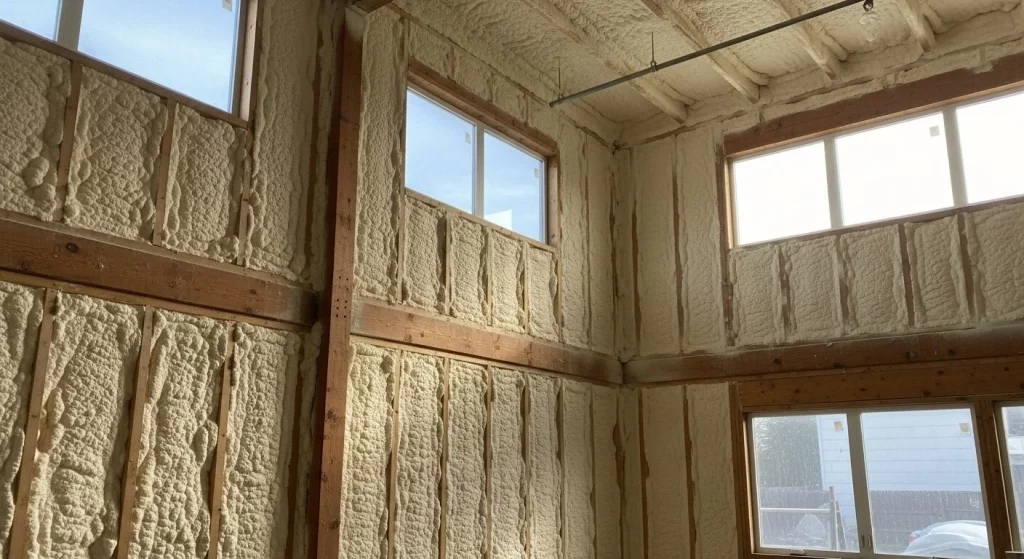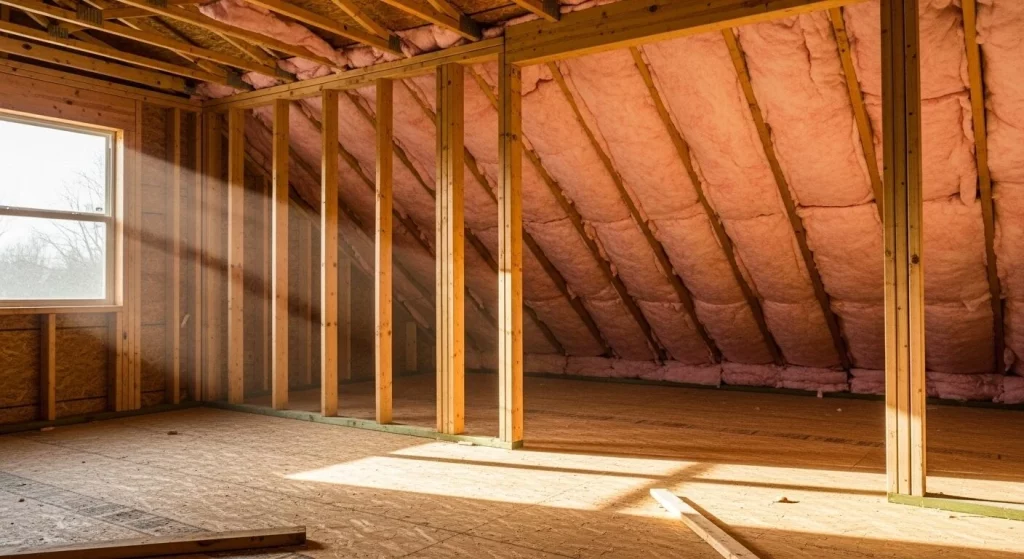



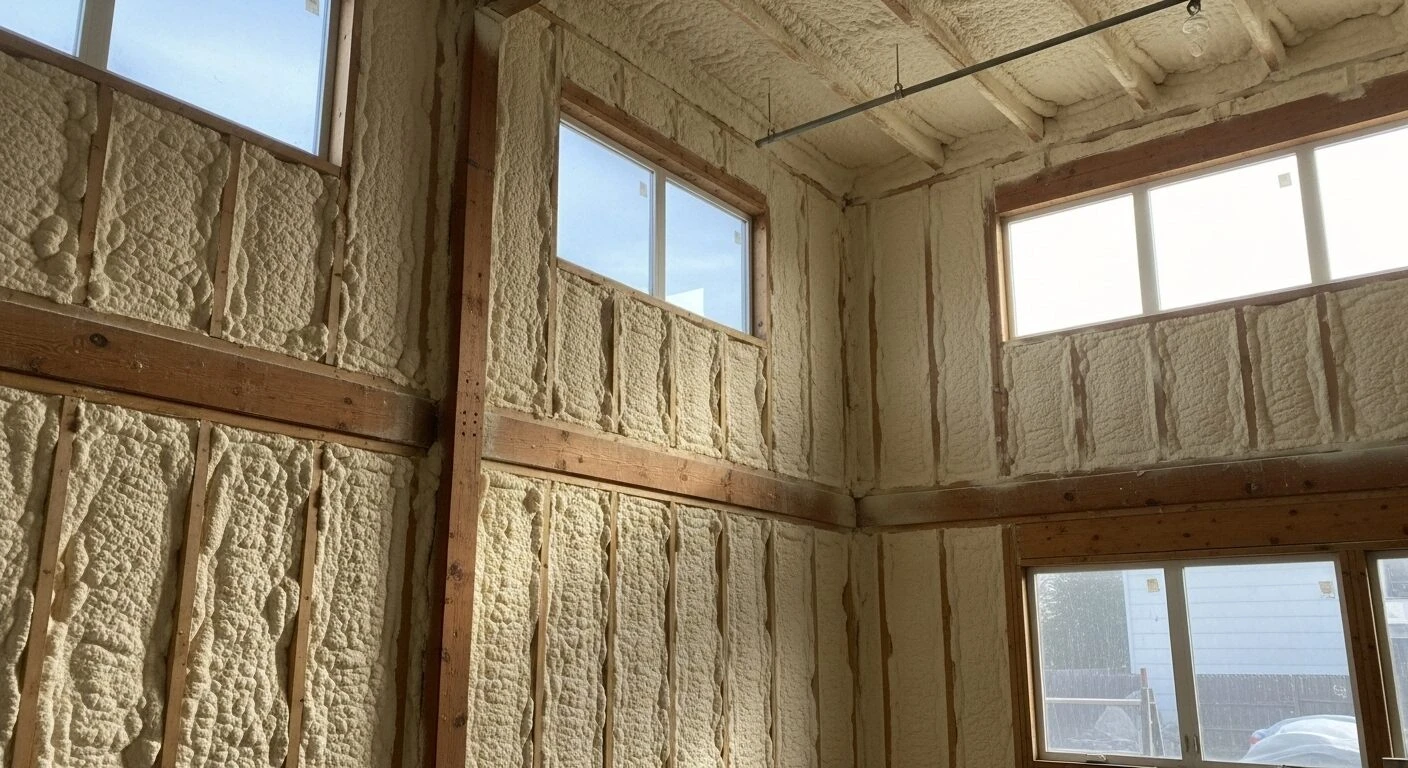
Spray foam insulation is one of the most effective ways to improve energy efficiency, indoor comfort, and moisture control in Fayetteville homes, but a poor installation can cause more problems than it solves. The most common mistakes include choosing the wrong foam type for our warm-humid climate, skipping surface preparation, applying foam in unfavorable conditions, ignoring vapor diffusion concerns, and hiring inexperienced contractors. Understanding and avoiding these errors protects your home from moisture damage, air quality issues, and wasted investment.
TLDR / Key Takeaways
- Fayetteville falls within IECC Climate Zone 3A or 4A, a warm-humid region where moisture control is just as important as thermal performance
- Using open-cell spray foam in crawlspaces or below-grade applications without proper vapor retarders is one of the most damaging mistakes in humid climates
- Surface preparation, substrate temperature, and ambient humidity directly affect foam adhesion, expansion, and long-term durability
- A double vapor barrier (foam plus an interior vapor retarder) can trap moisture and lead to concealed rot, especially in wall assemblies
- Closed-cell spray foam offers an R-value of approximately 6.5 per inch and acts as a vapor retarder, making it better suited for moisture-prone areas in North Carolina
- North Carolina’s energy code requires specific R-values for ceilings, walls, and floors depending on climate zone classification
- Hiring a certified installer with manufacturer training and proper equipment is the single most effective way to prevent installation failures
- Post-installation inspections, including thermal imaging, can identify gaps, shrinkage, and adhesion failures before they cause structural damage
Why Fayetteville’s Climate Makes Installation Quality Critical
Fayetteville sits in a warm-humid climate zone classified as either Zone 3A or 4A under the International Energy Conservation Code (IECC). Summers bring sustained high temperatures and humidity levels, while winters are mild but damp. This combination creates a unique challenge for insulation: materials must resist heat flow in both directions while managing significant moisture vapor drive, especially during summer months when warm, humid outdoor air pushes moisture into wall and ceiling cavities.
According to North Carolina’s energy conservation code, homes in these zones must meet minimum R-value requirements for ceilings, walls, and floors. But meeting the code minimum is only part of the equation. How the insulation is installed, what type of foam is selected, and whether vapor control is properly managed determine whether your insulation actually performs as designed or quietly creates moisture problems behind your walls.
Mistake 1: Choosing the Wrong Foam Type for the Application
This is arguably the most consequential error we see in Fayetteville homes. Spray foam Insulation comes in two primary formulations, open-cell and closed-cell, and each behaves very differently in a humid climate.
| Property | Open-Cell Spray Foam | Closed-Cell Spray Foam |
|---|---|---|
| R-Value per Inch | ~3.5 to 3.7 | ~6.0 to 6.5 |
| Vapor Permeability | High (vapor-permeable) | Low (Class II vapor retarder) |
| Density | 0.5 lb/ft³ | 1.5 to 2.0 lb/ft³ |
| Air Barrier | Yes | Yes |
| Best Applications | Walls, ceilings, attics (above grade) | Crawlspaces, basements, rim joists, and metal buildings |
| Cost | Lower | Higher |
Building science research from the Building Science Corporation emphasizes that neither open-cell nor closed-cell spray foam should be used indiscriminately. In a warm-humid climate like Fayetteville’s, open-cell foam can absorb and hold moisture over time, particularly when installed in areas where vapor drive is strong. Using open-cell spray foam against a crawlspace dirt floor, on basement walls, or in contact with rim joists where condensation risk is high can lead to wood rot, mold growth, and structural degradation.
Closed-cell foam, by contrast, has a much lower vapor permeability and provides structural rigidity in addition to insulation. For Fayetteville crawlspaces, rim joists, and any below-grade application, closed-cell is almost always the safer and more appropriate choice.
How to avoid this mistake: Ask your installer which foam type they recommend and why, specific to each area of your home. A qualified contractor should be able to explain why closed-cell is necessary for moisture-prone areas while open-cell may be acceptable for above-grade wall cavities and attics.
Mistake 2: Skipping or Rushing Surface Preparation
Spray foam adheres directly to the substrate, whether that is wood framing, concrete, metal, or drywall. If the surface is dirty, dusty, oily, wet, or frost-covered, the foam will not bond properly. Industry guidance consistently identifies poor surface preparation as a leading cause of delamination, where the foam pulls away from the substrate over time, creating air gaps and moisture pathways.
In Fayetteville’s humid environment, framing lumber often arrives on the job site with a high moisture content. Spraying foam over wet wood traps that moisture against the framing and can accelerate decay. Dust from construction activities, leftover release agents on concrete forms, and oil-based sealants also interfere with adhesion.
How to avoid this mistake: Ensure all surfaces are clean, dry, and free of contaminants before any foam is applied. Framing should be at or below 19% moisture content. Concrete should be cured and dry. In new construction, coordinate the insulation schedule so that framing has had time to dry and other trades are not creating airborne dust during the spray process.
Mistake 3: Installing in Wrong Temperature or Humidity Conditions
Spray foam is a chemical reaction, and like all chemical reactions, temperature matters. When substrate or ambient temperatures fall below the manufacturer’s minimum threshold, typically around 40 to 60 degrees Fahrenheit, depending on the formulation, the foam may not expand fully, may have poor adhesion, and may develop a brittle or crumbly texture.
Conversely, extremely high temperatures can cause the foam to expand too quickly, leading to overspray, uneven coverage, and waste. High humidity, which Fayetteville experiences for much of the year, can also affect the curing process and final cell structure.
Contractor resources highlight that temperature-related installation failures are among the most common and expensive problems in spray foam projects. Foam applied in cold conditions may look acceptable at first, but can shrink, crack, and delaminate months later.
How to avoid this mistake: Verify that your contractor checks substrate temperature, ambient temperature, and relative humidity before beginning work. In cooler months, ask whether they plan to use heated enclosures or temporary climate control. Legitimate installers will not spray when conditions fall outside the manufacturer’s published specifications.
Mistake 4: Creating a Double Vapor Barrier
This mistake is particularly dangerous in humid climates and often stems from a misunderstanding of how vapor diffusion works. When closed-cell spray foam is installed on the interior side of a wall assembly, it already acts as a vapor retarder. If a separate polyethylene vapor barrier or kraft-faced insulation is then added on the warm side of that foam, you have created a double vapor barrier.
Building science experts have documented numerous cases where double vapor barriers trap moisture inside wall cavities. In Fayetteville’s climate, where the vapor drive is primarily from the exterior during summer, this trapped moisture has nowhere to go and can saturate framing, sheathing, and insulation.
How to avoid this mistake: Never install an interior vapor retarder over closed-cell spray foam. Discuss the vapor profile of your entire wall assembly with your installer. If existing construction already includes a vapor barrier, your contractor needs to know about it before specifying the foam type and installation method.
Mistake 5: Inconsistent Application Thickness and Coverage
Spray foam must be applied in consistent layers at the correct thickness to achieve its rated R-value. When applicators move too quickly, spray at incorrect angles, or fail to maintain proper gun temperature and pressure, the result is uneven coverage with thin spots, gaps, and voids. Industry professionals note that thin areas reduce overall thermal performance and can create pathways for air and moisture infiltration.
Spray foam is typically applied in lifts, with each pass allowed to cure before the next is applied. Applying too much foam in a single pass generates excessive heat, which can damage the substrate or cause the foam to shrink and crack as it cools.
How to avoid this mistake: Discuss lift thickness and coverage targets with your installer before the job starts. Ask whether they use a thickness gauge during installation. After the job is complete, consider requesting a thermal imaging scan to verify uniform coverage, especially in hard-to-see areas like rim joists and behind ductwork.
Mistake 6: Ignoring Existing Moisture and Air Leakage Problems
Spray foam is a powerful air and moisture management tool, but it is not a fix for pre-existing water intrusion. If your crawlspace has standing water, your roof has a leak, or your foundation has drainage problems, sealing those areas with spray foam will not solve the underlying issue. In fact, it can make things worse by trapping moisture against building materials and concealing the problem.
Research compiled by Efficiency Vermont on damp attic insulation problems demonstrates that when moisture sources are not addressed before insulation is installed, the results can include saturated sheathing, mold growth, and structural damage that is expensive and disruptive to remediate.
How to avoid this mistake: Conduct a thorough inspection of your home for water intrusion, plumbing leaks, condensation issues, and drainage problems before scheduling any insulation work. Address these issues first. A reputable contractor should walk through your home, identify potential moisture concerns, and recommend corrections as part of their assessment.
Mistake 7: Hiring an Uncertified or Inexperienced Installer
All of the mistakes described above can be traced back to a single root cause: hiring the wrong contractor. Spray foam installation requires specialized training, calibrated equipment, and a solid understanding of building science. Installers who lack manufacturer certification may not follow proper procedures for mixing ratios, substrate temperatures, lift thickness, or quality control.
How to avoid this mistake: Verify that your installer holds current certifications from spray foam manufacturers and relevant industry organizations. Ask for references from recent projects in the Fayetteville area. Confirm that they carry appropriate insurance and that their crews have completed formal training programs. A legitimate contractor will welcome these questions and provide documentation without hesitation.
Real-World Scenarios: Spray Foam Installation Issues in Fayetteville-Area Homes
| Scenario | Home Type | Problem | Solution | Outcome |
|---|---|---|---|---|
| Crawlspace Retrofit | 1990s ranch on slab | Open-cell foam sprayed directly on damp crawlspace walls; moisture trapped against framing | Removed failed foam, installed crawlspace drainage, and reapplied closed-cell foam | No further moisture issues; reduced humidity by 40% |
| Attic Insulation | New construction two-story | Double vapor barrier created when poly sheeting was left in place under closed-cell foam | Removed poly, confirmed single vapor retarder profile, reinsulated problem areas | Prevented potential concealed moisture damage |
| Rim Joist Spray | 2005 home near Fort Liberty | Foam applied during cold snap in January; substrate was below 40°F | Installer returned in spring, removed delaminated foam, reapplied with temporary heat | Full adhesion achieved; no shrinkage after 12 months |
| Whole-House Retrofit | 1980s split-level | Existing roof leak concealed by spray foam in attic; sheathing rotted | Roof repair completed first, damaged sheathing replaced, foam reapplied | Homeowners avoided catastrophic failure |
| Garage Conversion | Detached garage workshop | Inconsistent foam thickness on walls; cold spots and condensation in winter | Contractor reapplied foam with proper lift technique; thermal scan confirmed coverage | Workshop temperature stabilized; no more condensation |
Factors That Affect Spray Foam Performance in Fayetteville
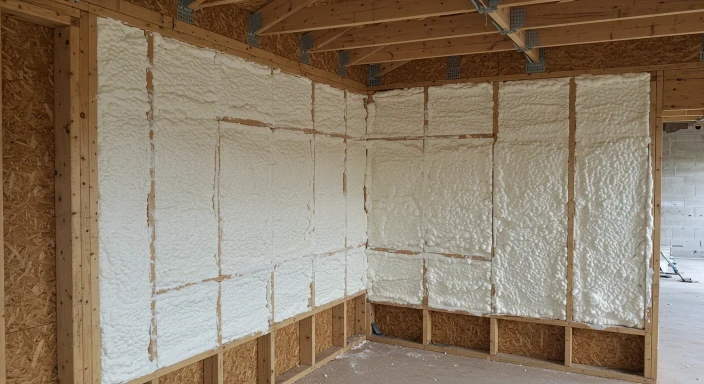
Several variables determine how well your spray foam insulation performs over time:
- Climate zone and seasonal moisture drive: Fayetteville’s warm-humid classification means vapor predominantly moves from exterior to interior during summer, requiring careful vapor retarder placement
- Foam type and thickness: Closed-cell foam at 1 to 2 inches provides both high R-value and vapor control, while open-cell requires greater thickness to reach equivalent R-values but allows vapor to pass through
- Installation conditions: Substrate temperature, ambient humidity, and air movement during application all affect cure quality and adhesion
- Building age and construction type: Older Fayetteville homes may have balloon framing, no vapor barriers, or inadequate drainage that must be addressed before insulation
- Existing mechanical systems: Homes with HVAC ductwork in unconditioned spaces benefit significantly from spray foam air sealing, but only if duct leaks are also repaired
Actionable Steps for Fayetteville Homeowners and Contractors
- Confirm your climate zone and code requirements. Fayetteville falls within IECC Zone 3A or 4A, and the NC energy conservation code specifies minimum R-values for each assembly type. Know your requirements before selecting materials.
- Match foam type to the location. Use closed-cell foam for crawlspaces, basements, rim joists, and any area where moisture exposure is likely. Open-cell may be appropriate for above-grade wall cavities and vented attics where vapor can dry to at least one side.
- Inspect for moisture problems before insulating. Walk through the property and check for roof leaks, plumbing issues, foundation drainage, and condensation. Fix these problems before any foam is applied.
- Verify installer credentials. Ask for manufacturer training certificates, insurance documentation, and local references. Confirm that the contractor will follow all manufacturer specifications for temperature, humidity, and lift thickness.
- Request a post-installation quality check. Thermal imaging can identify thin spots, gaps, and adhesion failures that are not visible to the naked eye. This is especially important for crawlspaces, rim joists, and other concealed areas.
- Document everything. Keep records of the foam type, thickness applied, manufacturer specifications, and installer certifications. This documentation is valuable for warranty claims, future renovations, and resale.
Ready to Get Your Spray Foam Installation Right?
Spray foam insulation is a significant investment in your home’s comfort, efficiency, and durability, and the difference between a job done right and a job done wrong can mean thousands of dollars in damage and energy waste. At Raleigh Excel Spray Foam Insulation, we serve Fayetteville and the surrounding areas with manufacturer-certified installers who understand the unique demands of North Carolina’s warm-humid climate. We assess every home individually, match the right foam to the right application, and verify our work with quality checks before we leave.
Call us at (919) 301-9435 or email [email protected] to discuss your project. We are happy to walk you through your options and help you avoid the costly mistakes that plague so many spray foam projects in the Fayetteville area.
FAQs
Can spray foam be installed in a crawlspace with a dirt floor?
Yes, but the crawlspace must be properly prepared first. Standing water should be eliminated, a vapor barrier should be placed over the dirt floor, and drainage issues should be corrected. Closed-cell foam is the recommended choice for crawlspace walls and rim joists in Fayetteville’s humid climate because of its low vapor permeability and resistance to moisture absorption.
How do I know if my existing spray foam was installed incorrectly?
Signs of a poor installation include visible gaps or shrinkage in the foam, musty odors that suggest trapped moisture, high indoor humidity despite running your HVAC system, and cold spots along exterior walls or floors. A thermal imaging inspection from a qualified professional can identify hidden problems like thin areas, voids, and delamination.
Is open-cell spray foam ever a good choice in Fayetteville?
Open-cell spray foam can work well in above-grade wall cavities and attics where the assembly can dry to at least one side. It is less expensive than closed-cell and provides good air sealing. However, it should not be used in crawlspaces, against concrete, or in any location where moisture exposure is likely, because its high vapor permeability allows moisture to pass through and potentially accumulate in adjacent materials.
What temperature is too cold for spray foam installation?
Most spray foam formulations require substrate and ambient temperatures of at least 40°F, though some cold-weather formulas allow application down to 20°F. In Fayetteville, winter temperatures can dip below these thresholds, especially overnight. Installers should monitor conditions and use temporary heating when necessary. Foam applied below the minimum temperature may appear acceptable initially but can fail months later.
How long does spray foam off-gassing last?
Newly installed spray foam produces odors as the chemical reaction completes and volatile organic compounds (VOCs) off-gas. This process typically lasts 24 to 72 hours, depending on the formulation, thickness, and ventilation. Occupants should stay out of the home during and immediately after installation. A qualified contractor will use proper ventilation and follow manufacturer re-occupancy guidelines. If odors persist beyond a few days, it may indicate a mixing problem or improper formulation and should be investigated.
Sources
- Building Science Corporation – Residential Spray Foam Guide – Comprehensive guidance on where and how to use spray foam in residential applications, including vapor control and climate-specific recommendations.
- Rmax – North Carolina Building Code Insulation Requirements – Breakdown of NC climate zones and insulation R-value requirements under current energy codes.
- UpCodes – North Carolina IECC 2021 General Requirements – Official code reference for climate zone determination and compliance requirements in North Carolina.
- Efficiency Vermont – Why Are Attics Insulated with Open-Cell Spray Foam So Damp? – Research presentation documenting moisture problems associated with open-cell spray foam in attic assemblies.
- FOAM-CO – Open-Cell vs Closed-Cell Spray Foam Key Differences – Technical comparison of open-cell and closed-cell spray foam properties, including vapor permeability and application guidance.
- AutoHVAC – North Carolina HVAC Climate Zones – Climate zone classification and design temperature data for North Carolina regions.