


If you have ever felt a draft in your living room during a winter storm or noticed your upstairs bedroom stays uncomfortably hot in the summer, you have experienced the failure of a building envelope. For many homeowners and property managers, the search for a solution leads to a confusing array of insulation options. Among these, closed cell spray foam stands out as a high-performance contender, often praised for its ability to solve multiple problems at once.
Choosing the proper insulation is not just about keeping warm or cool. It involves moisture control, structural integrity, and long-term financial planning. Closed cell spray foam is frequently cited as the premium choice, but that label often comes with questions about cost and necessity. Is it worth the higher price tag? Does your specific project actually require it, or would a lighter alternative suffice?
This guide serves as a complete resource for understanding closed cell spray polyurethane foam (SPF). We will examine the chemistry that gives it strength, the specific scenarios where it outperforms all other materials, and the real financial data behind its installation.
Raleigh Excel Spray Foam Insulation has seen firsthand how the correct application of this material can change a building’s performance. This guide distills years of field experience into actionable knowledge to help you make an educated decision for your property.
Foundational Understanding: What is Closed Cell Spray Foam?
To understand why this material commands a premium, you must look at its cellular structure. Spray polyurethane foam is produced by a chemical reaction between two liquids (commonly referred to as the “A” and “B” sides) that are mixed at the tip of a spray gun.
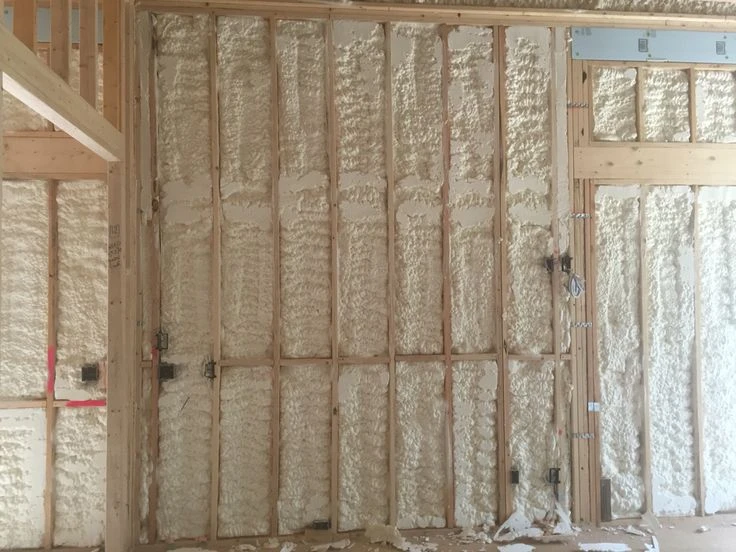
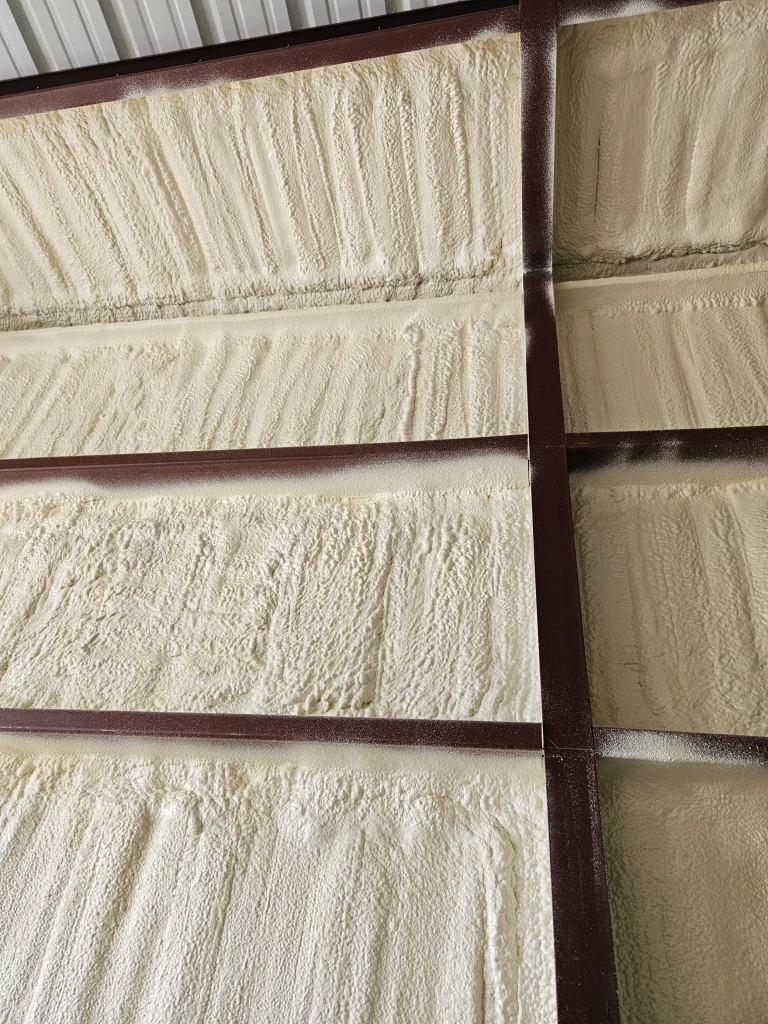
In closed cell foam, the bubbles or cells that form during this reaction remain completely intact and shut. Think of it like thousands of tiny, rigid balloons stacked partly on top of one another. Because the cells are closed, they trap a specialized gas (a blowing agent) inside. This gas conducts heat poorly, which is exactly what you want in insulation.
The Density Factor
The primary physical trait separating closed cell from other types is density. While open cell foam insulation feels spongy and soft, closed cell foam cures to a rock-hard solid. It typically has a density of 2.0 pounds per cubic foot. This rigidity allows it to reject bulk water and significantly strengthens the surface it adheres to.
Key Takeaway: Closed cell foam is not just fluffy insulation. It is a rigid, dense plastic that integrates with your building’s structure to provide thermal resistance, air sealing, and moisture management in a single step.
Closed Cell vs. Open Cell: The Crucial Distinction
Many people confuse the two main types of spray foam. Knowing the difference is vital because using the wrong one in the wrong location can lead to moisture rot or wasted money.
| Feature | Closed Cell Foam | Open Cell Foam |
|---|---|---|
| Structure | Rigid, dense, hard | Soft, spongy, flexible |
| R-Value (per inch) | High (6.0 – 7.0) | Moderate (3.5 – 3.8) |
| Water Permeability | Vapor retarder (semi-impermeable) | Vapor permeable (breathable) |
| Air Barrier | Yes | Yes |
| Structural Strength | Adds racking strength to walls | None |
| Expansion Rate | approx. 40x | approx. 100x |
| Typical Cost | Higher | Lower |
A report from the Spray Polyurethane Foam Alliance highlights that while both foams stop air movement, only closed cell foam acts as a Class II vapor retarder at a thickness of 1.5 inches or greater. This makes it the superior choice for areas with high moisture loads.
The Science of Superior Insulation: Core Principles
Closed cell foam operates on three primary principles that separate it from traditional materials like fiberglass or cellulose.
1. High R-Value per Inch
Space is often limited in building assemblies. If you have 2×4 wall studs, you only have 3.5 inches of depth to work with. Fiberglass batts might give you an R-13 in that space. Because closed cell foam has an R-value of roughly 6.5 to 7 per inch, that same cavity can achieve over R-20.
This high thermal resistance is critical for older homes with shallow wall cavities or modern designs (like cathedral ceilings), where you need maximum insulation in the least space.
2. The Air Barrier Advantage
Air leakage is responsible for up to 40% of energy loss in the average home. Traditional insulation acts like a wool sweater; it keeps you warm, but if the wind blows, the air cuts right through it. Spray foam acts like a windbreaker over the sweater.
By expanding into every crack, gap, and seam, closed cell foam creates a monolithic seal. This eliminates “convective loops,” air currents that circulate inside walls and steal heat.
3. Structural Reinforcement
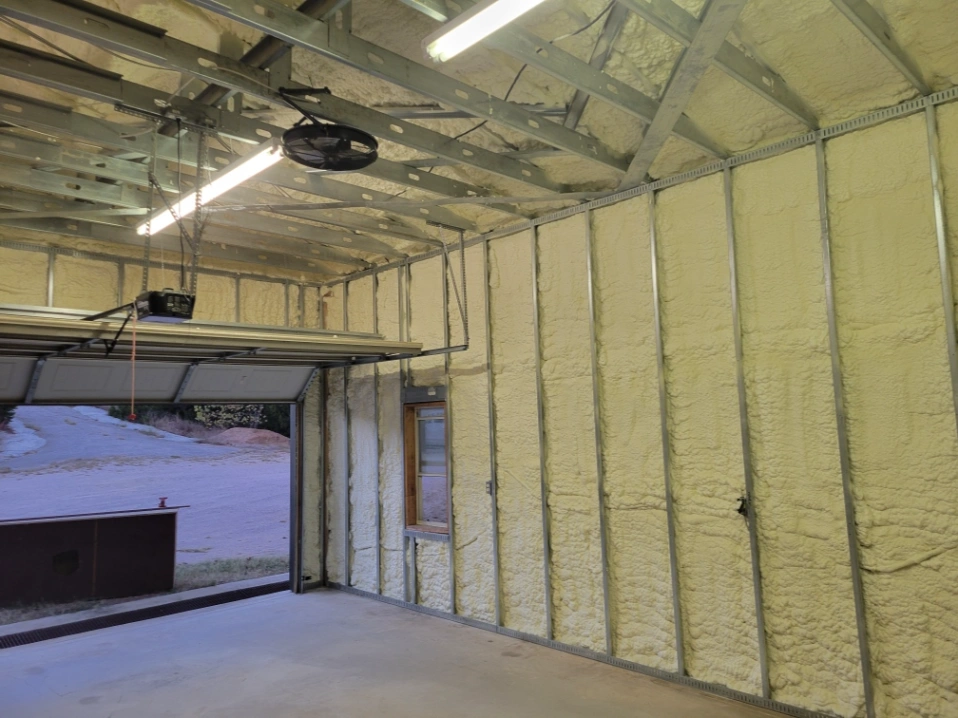
This is a unique benefit of closed cell foam. Because it adheres aggressively to the substrate and cures into a rigid plastic, it glues the building components together. Data published by Building Science Corporation indicates that closed cell spray foam can increase the racking strength (resistance to wind loads) of wall assemblies by up to 300%. This is particularly valuable in hurricane-prone areas or for strengthening metal buildings.
Best Use Cases: Where Closed Cell Shines
Not every part of a building requires the intensity of closed cell foam. However, particular areas demand it.
Basements and Crawl Spaces
These are notorious “wet zones.” The ground naturally emits moisture, and concrete walls are porous. Using a material that absorbs water (like fiberglass), here is a recipe for mold.
- The Strategy: Closed cell foam is sprayed directly onto the foundation walls (masonry or concrete).
- The Benefit: It stops moisture from moving through the concrete into the basement, insulates the space, and seals out soil gases like radon.
Roof Decks and Attics
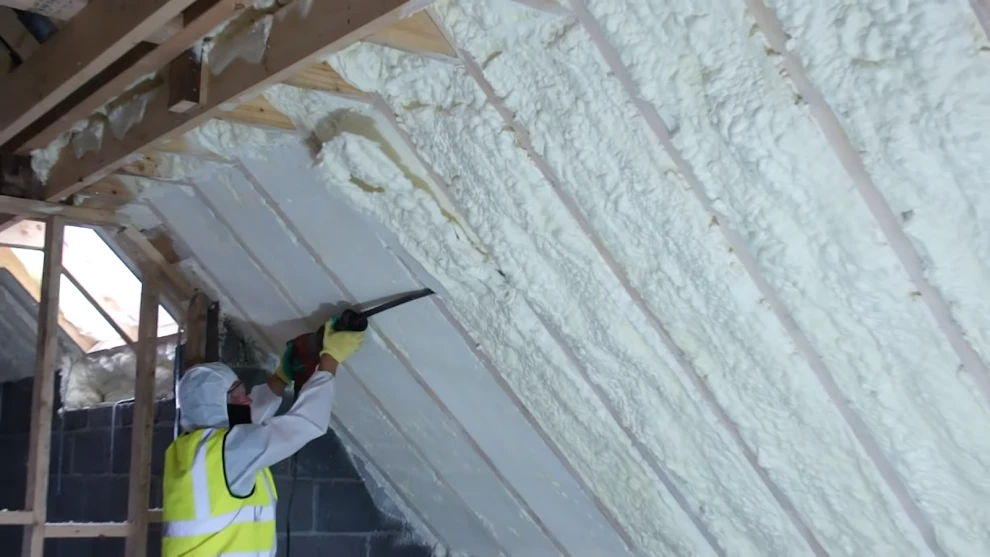
In unvented attic assemblies, where insulation is applied to the underside of the roof rather than the floor, closed cell foam is often preferred. If there is a roof leak, open cell foam might absorb the water and hide the leak until the wood rots. Closed cell foam will not absorb the water, forcing it to run off, which helps preserve the roof sheathing longer and makes leak detection easier.
Pole Barns and Metal Buildings
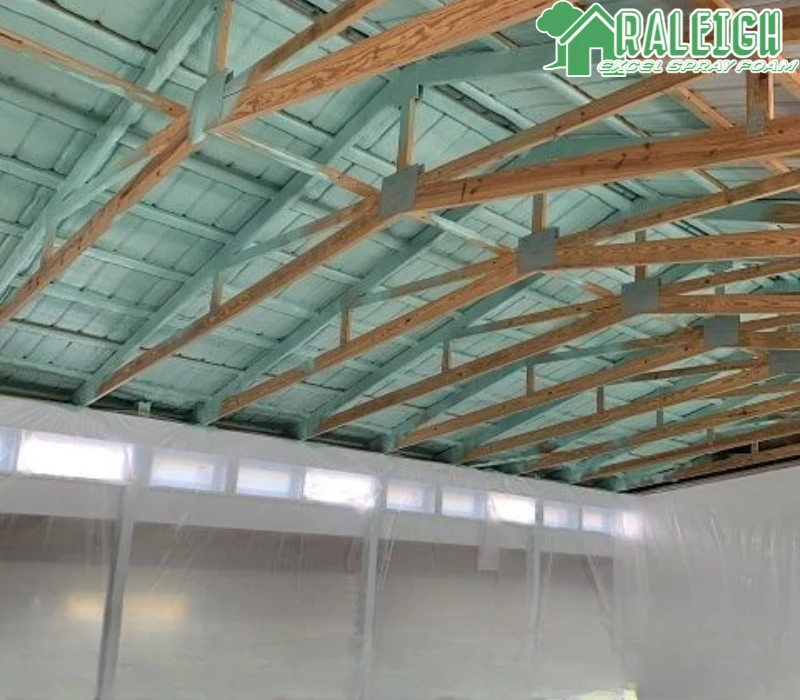
Metal structures experience significant condensation issues. When warm air inside hits cold metal, water drips. Closed cell foam bonds to the metal, eliminating the air gap where condensation forms. Its rigidity also increases the stiffness of the metal panels.
Flood Zones
The Federal Emergency Management Agency (FEMA) classifies closed cell spray foam as a flood-damage-resistant material. In areas prone to flooding, this is the only insulation type that can be washed and sanitized after a flood event, rather than requiring total removal and replacement.
The Financial Equation: Costs and Affordability
The sticker shock is real. Closed cell foam is one of the most expensive insulation products on the market. Understanding the economics requires looking at “lifecycle cost” rather than just the “installation cost.”
Upfront Investment Analysis
Closed cell spray foam typically commands a higher market rate per board foot compared to open cell alternatives. A standard project could require a significantly larger budget than a fiberglass equivalent.
Why is it expensive?
- Chemical Costs: The raw materials are chemically complex and pricey.
- Yield: You get less volume per drum set compared to open cell foam.
- Labor & Equipment: It requires highly trained installers and rigs, which represent a massive capital investment.
Long-Term Energy Savings and ROI
The payback comes in monthly installments on your utility bill. Air sealing and proper insulation can save homeowners roughly 15% on heating and cooling costs, with spray foam often exceeding this figure due to its superior air-sealing properties.
The HVAC Downsizing Bonus: Because the building envelope is so tight, the heating and cooling load decreases. This means when it is time to replace your HVAC unit, you can often buy a smaller, less expensive system.
| Cost Factor | Traditional Insulation | Closed Cell Spray Foam |
|---|---|---|
| Initial Material Cost | Low | High |
| Air Sealing Costs | Extra (requires caulk/tape) | Included (built-in) |
| Vapor Barrier Costs | Extra (requires plastic sheeting) | Included (built-in) |
| HVAC Sizing | Standard | Reduced Size Potential |
| Lifespan | 15-20 years (settles/degrades) | 80+ years (permanent) |
Key Takeaway: If you plan to stay in the property for 5-7 years or more, the energy savings usually offset the initial price difference. For commercial buildings, the ROI is often faster due to scale.
Implementation Strategy: The Application Process
Installing closed cell foam is not a DIY project. The chemicals involved (isocyanates) can be hazardous during application if proper safety gear is not worn.
Step 1: Site Preparation
The area must be clear. Installers will mask off windows, floors, and immovable objects. The substrate (wood, concrete, metal) must be dry. Moisture content in wood should be below 18% to ensure adhesion.
Step 2: The Spray Application
Installers wear fresh-air-supply respirators and full-body suits. The foam is sprayed in “lifts” or layers. With closed cell foam, installers typically spray no more than 2 inches thickness at a time.
Why limit the thickness? The chemical reaction is exothermic it creates heat. If you spray closed cell foam too thick, too fast, the heat gets trapped. This can cause the foam to char, crack, or even self-combust. A professional from Raleigh Excel Spray Foam Insulation will constantly monitor lift thickness to ensure a safe, high-quality cure.
Step 3: Curing and Ventilation
While the foam is tack-free in seconds, it takes time to cure fully. During this time, high-volume fans are used to ventilate the workspace, removing any lingering odors or chemical off-gassing.
Common Challenges and How to Overcome Them
No building material is perfect. Being aware of potential pitfalls ensures you get the quality you pay for.
1. Off-Ratio Mixing
The chemicals must be mixed at a perfect 1:1 ratio. If the equipment malfunctions, the foam might be “resin rich” (soft/gooey) or “iso rich” (brittle/crunchy).
- Solution: Hire an experienced contractor who performs test sprays before starting on your walls.
2. Temperature Sensitivity
Chemicals must be stored and applied within a specific temperature range. Spraying onto a freezing-cold substrate can result in poor adhesion, with the foam pulling away from the wall.
- Solution: Ensure the contractor uses drum heaters and heated hoses, and checks substrate temperature before application.
3. Future Renovations
Once closed cell foam cures, it is like concrete. Running new electrical wires or plumbing through a wall cavity filled with closed cell foam is difficult.
- Solution: Install conduit pipes (smurf tube) in the walls before spraying to create channels for future wiring.
Market Data and Future Trends
The insulation market is shifting as energy codes become stricter. The International Code Council (ICC) updates building codes every three years, consistently raising the bar for air tightness.
- HFO Blowing Agents: The industry has transitioned mainly to Hydrofluoroolefin (HFO) blowing agents. These have a Global Warming Potential (GWP) near zero, compared to older HFC agents, which were significant contributors to greenhouse gas emissions. This makes modern closed cell foam much more environmentally friendly.
- Hybrid Systems: We are seeing a trend in “flash and batt” applications. This involves spraying 1-2 inches of closed cell foam to seal the air and provide a vapor barrier, then filling the rest of the cavity with cheaper fiberglass to hit total R-value targets at a lower cost.
Putting Your Closed Cell Strategy into Action
Closed cell spray foam represents the gold standard for thermal envelopes. It offers a unique combination of high insulation value per inch, structural rigidity, and uncompromising moisture control. While the initial investment is higher than traditional materials, the analysis often points to substantial long-term value through reduced energy bills, smaller HVAC equipment needs, and increased building durability.
The success of a spray foam project depends heavily on the installer’s skill. The chemistry must be precise, and the application method must be disciplined. By understanding the specific benefits and limitations outlined in this guide, you are now equipped to ask the right questions and demand the best results for your property.
Whether you are retrofitting a damp crawl space, building a barndominium, or trying to maximize R-value in a historic renovation, closed cell foam provides a robust solution that other materials simply cannot match.
Need Expert Guidance?
Navigating the technical details of insulation can be complex, but you do not have to do it alone. If you have questions about whether closed cell foam is the right fit for your specific project, or if you need a detailed cost analysis, the team at Raleigh Excel Spray Foam Insulation is ready to help.
We believe in honest assessments and precision installation. Contact us today to discuss your energy goals.
Email: [email protected] Phone: (919) 301-9435
Frequently Asked Questions About Closed Cell Foam
Does closed cell foam trap moisture in the wood?
This is a common myth. While closed cell foam is a vapor retarder, it does not seal moisture into dry wood. It prevents new humidity from reaching the wood. However, if the wood is already wet (with a moisture content above 18%) when sprayed, the foam can prevent it from drying, leading to rot. This is why testing moisture levels before spraying is non-negotiable.
How long does the foam last?
Closed cell spray foam is an inert plastic. It does not settle, shrink, or degrade over time like cellulose or fiberglass. Unless it is physically removed or exposed to UV light (sunlight) for long periods, it will last the life of the building.
Is spray foam safe for my family?
Once fully cured (typically within 24 to 48 hours), the foam is inert and does not off-gas. The key is proper ventilation during and immediately after installation. Always ask your contractor for the product’s safety data sheet and reentry times.
Can I spray closed cell foam myself?
“Froth kits” are sold at hardware stores, but they are expensive and difficult to manage for large areas. For anything larger than a rim joist or a minor patch repair, a professional application ensures the chemical ratio is correct and the thickness is safe.
Will insects eat the foam?
Insects and rodents do not eat spray foam (it has no nutritional value), but they can chew through it to nest. It is not a structural barrier against pests, but because it seals air gaps, it removes the “smell paths” that attract pests into the home in the first place.
Sources
- Spray Polyurethane Foam Alliance – Industry trade association providing technical standards and professional certification for spray foam applications.
- Building Science Corporation – A building science consulting firm that provides objective data on building physics, including racking strength and moisture control.
- Federal Emergency Management Agency (FEMA) – Government agency that publishes technical bulletins regarding flood-damage-resistant building materials.
- International Code Council (ICC) – The association that develops the model codes and standards used in the design, build, and compliance process to construct safe, sustainable, and affordable structures.