


Open-cell spray foam is one of the most effective ways to stop drafts, cut energy bills, and quiet a noisy home, and open-cell spray foam insulation is the upgrade homeowners across Raleigh ask about most. If you’re dealing with rooms that never feel quite right in temperature, or energy bills that keep climbing no matter what you do, this guide covers exactly what it is, how it performs, where it belongs in your home, and how it compares to closed-cell foam.
For years, our team at Raleigh Excel Spray Foam Insulation has installed open-cell spray foam insulation in attics, walls, and floors across the Triangle. This guide is built on that hands-on experience.
What Is Open Cell Spray Foam?
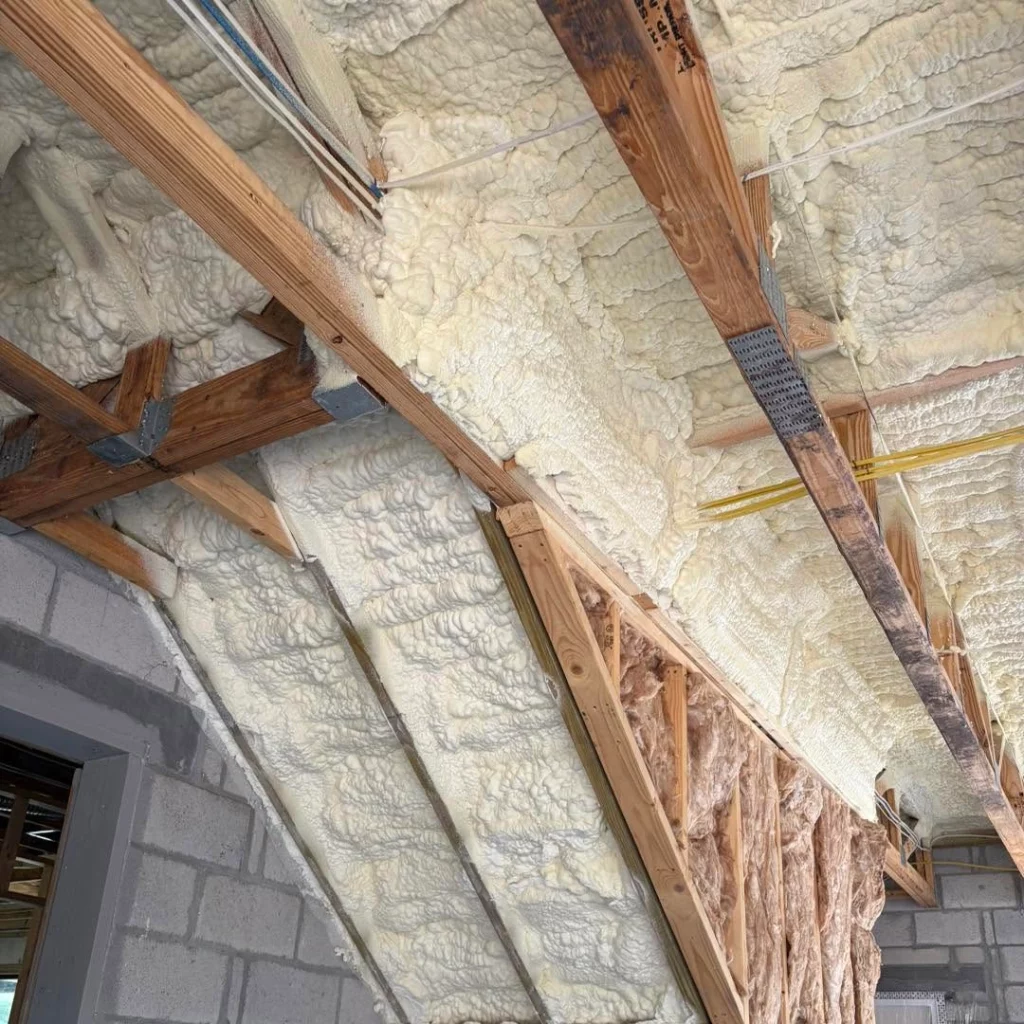
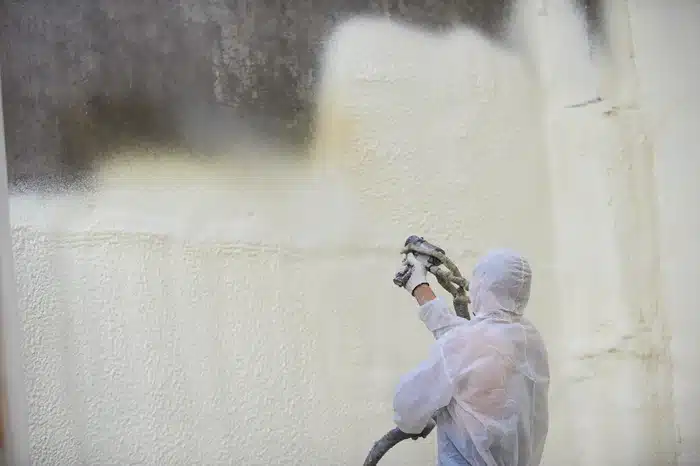
Open-cell spray foam is a type of polyurethane insulation, applied as a liquid that expands into a soft, flexible foam within seconds. It’s created on-site by combining two chemical components. When sprayed onto a roof deck or into a wall cavity, the mixture expands up to 100 times its original volume, filling every crack and crevice it touches.
The name “open cell” describes its internal structure. Picture a sponge: its cells aren’t fully sealed off from one another, which is what makes the foam soft, light, and flexible and what allows water vapor to pass through it, a detail that matters for how moisture behaves inside your walls and roof.
This structure is what separates open-cell foam insulation from denser closed-cell spray foam, and it’s why open-cell spray foam has become the go-to choice for most above-grade residential applications.
Benefits of Open-Cell Spray Foam Insulation
Open-cell spray foam insulation is often chosen for its lower price point compared to closed-cell foam, but the real value goes well beyond cost.
Unmatched Air Sealing
The single biggest advantage of open-cell spray foam is its ability to create a near-continuous air barrier. Because it expands so aggressively, it seals the tiny gaps, joints, and penetrations that let conditioned air leak in and out, something batt insulation simply can’t do. The U.S. Department of Energy notes that air sealing can save homeowners 10% to 20% on heating and cooling costs.
R-Value That Performs in the Real World
Open cell foam insulation runs roughly R-3.5 to R-3.8 per inch delivered as a seamless, gap-free seal rather than a compressible batt, so real-world performance is higher than the number alone suggests. See the full comparison table below.
Lower Cost Than Closed Cell
Open-cell spray foam costs less per board foot than closed-cell foam to install, making it the practical choice for filling full attics and wall cavities without the higher material cost of denser foam.
Superior Sound Dampening
Its soft, spongy texture absorbs sound waves effectively, making open-cell foam a popular choice for media rooms, home offices, nurseries, and walls next to bathrooms or laundry rooms.
Smart Moisture Management
Open-cell foam is vapor-permeable, so trapped moisture can dry out through the material instead of getting sealed in behind it. If a roof or plumbing leak occurs, water passes through and shows up on the drywall, alerting you to the problem early rather than rotting silently behind a sealed barrier.
R-Value: What the Numbers Actually Mean
R-value measures a material’s resistance to conductive heat flow. Open-cell spray foam insulation has an R-value of about R-3.5 to R-3.8 per inch, compared to roughly R-6.0 to R-7.0 per inch for closed-cell foam.
| Feature | Open Cell Spray Foam | Closed Cell Spray Foam |
| R-Value per inch | ~R-3.5 to R-3.8 | ~R-6.0 to R-7.0 |
| Density | Low (~0.5 lbs/cu ft) | High (~2.0 lbs/cu ft) |
| Air barrier | Excellent | Excellent |
| Vapor permeability | Permeable (lets vapor pass) | Non-permeable (acts as a vapor barrier) |
| Sound control | Excellent | Good |
| Structural rigidity | No — stays flexible | Yes, adds structural strength |
| Cost | Lower | Higher |
| Expansion | Up to 100x | Up to 30x |
A lower R-value per inch doesn’t tell the whole story. The U.S. Department of Energy notes that heat also moves through convection (air movement) and radiation, not just conduction. A wall of R-13 fiberglass batts can badly underperform its rating if air is leaking through gaps around it. Because open-cell foam seals those gaps completely, it often delivers better real-world comfort and lower bills than a higher-R-value product installed with leaks.
Does Open-Cell Foam Act as a Barrier? Air vs. Vapor
This is one of the most common points of confusion, so it’s worth being precise: open-cell spray foam is an excellent air barrier, but it is not a vapor barrier.
-
- Air barrier: Yes. Its dense expansion seals gaps, seams, and penetrations, stopping the airflow responsible for most energy loss and drafts.
-
- Vapor barrier: No. Its open-cell structure is vapor-permeable, meaning water vapor can pass through it rather than getting trapped behind it.
That permeability is a feature in most applications; it lets damp framing dry out naturally instead of rotting behind a sealed barrier. The trade-off: in locations with sustained bulk-water exposure (below grade, flood-prone areas), closed-cell foam or a dedicated vapor barrier is the better choice.
Open Cell Spray Foam in Raleigh’s Climate
North Carolina’s humid summers and mild, damp winters make moisture management a real consideration. Because open-cell foam is vapor-permeable, it allows roof decks and wall assemblies to dry inward, a genuine advantage here, where trapped moisture behind an impermeable barrier can lead to mold and wood rot over time.
Local building codes also require exposed spray foam to be covered by a thermal barrier, commonly a 15-minute-rated barrier such as 1/2-inch drywall, before a space can be occupied. A properly installed, code-compliant open-cell foam system handles both the humidity and the fire-safety requirements Raleigh homes need to meet.
Where Open-Cell Spray Foam Insulation Is Used
-
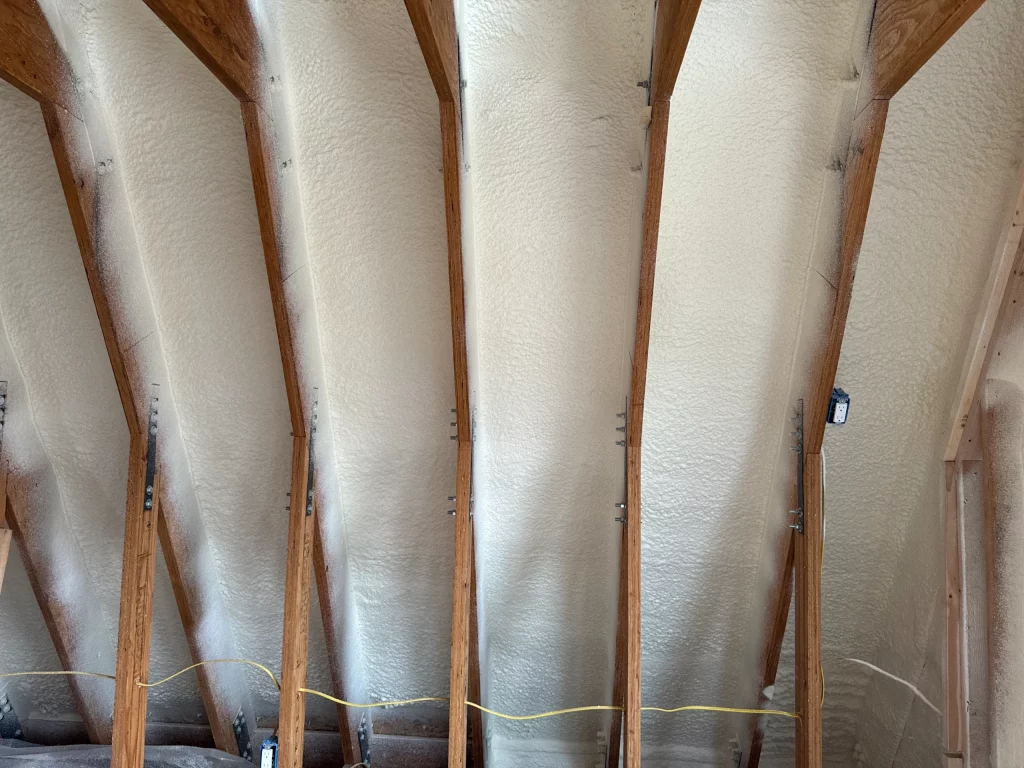
- Attics and roof decks: Spraying the underside of the roof deck creates an unvented, conditioned attic, bringing ductwork and HVAC equipment inside the thermal envelope, where they run far more efficiently. This is the single most common application we install.
-
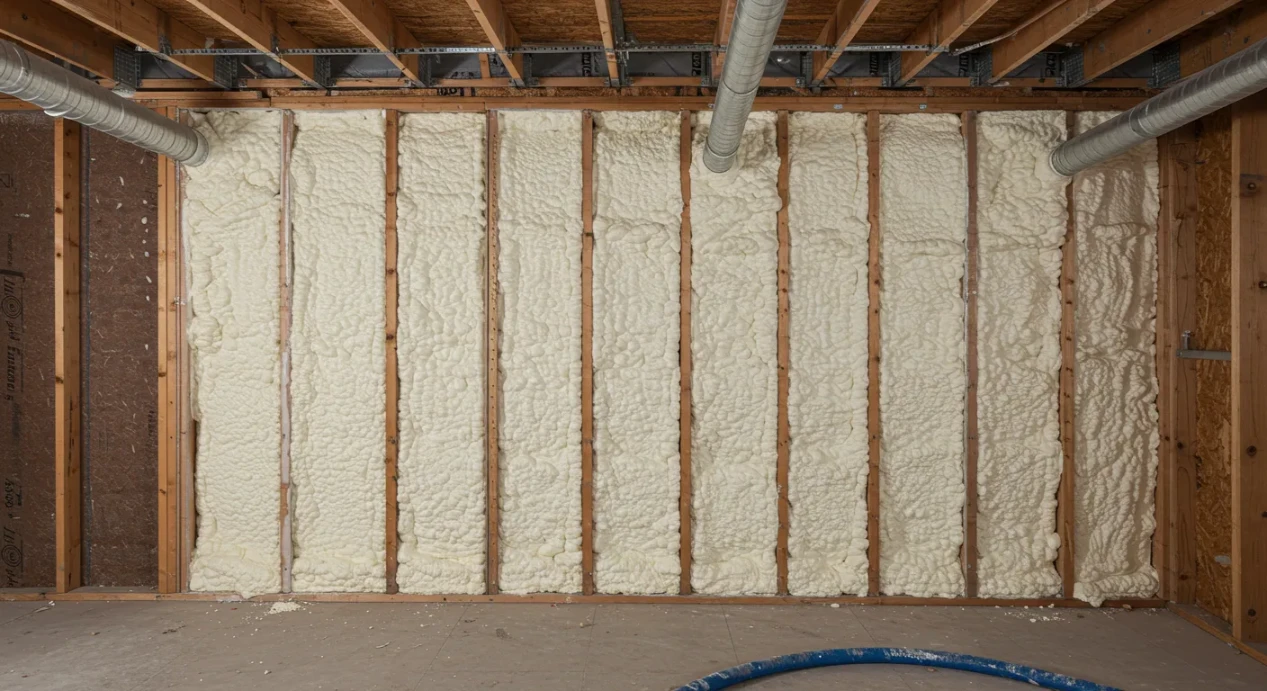
- Exterior walls: In new construction or renovation, filling wall cavities with open-cell foam delivers insulation and air sealing in one step.
-
- Floors over garages or crawl spaces: Eliminates cold floors in bonus rooms and living spaces above unconditioned areas.
- Interior walls for soundproofing: A common choice around home theaters, home offices, nurseries, and bathrooms.
One caution: avoid open-cell foam anywhere it may contact bulk water directly, like the exterior of a foundation or a flood-prone basement, since its open structure can absorb and hold water in those specific spots.
Open Cell vs. Closed Cell Spray Foam: Which Should You Choose?
Neither option is universally “better”; they’re suited to different jobs. Open-cell foam wins on air-sealing performance per dollar and sound control, making it the right call for most above-grade attics and walls. Closed-cell foam wins where you need a higher R-value in a tight cavity, added structural rigidity, or a true vapor barrier- think basements, foundations, and space-constrained assemblies. Many well-designed homes use both: closed-cell below grade, open-cell above.
The Installation Process
Spray foam is not a DIY project; it requires specialized equipment, training, and safety protocols. Here’s what a professional installation with Raleigh Excel Spray Foam Insulation looks like:
-
- Preparation: The crew protects surfaces not being sprayed and sets up ventilation to exhaust fumes.
-
- Application: Certified technicians in full PPE, including fresh-air respirators, apply the two-part liquid with a specialized spray gun that heats and mixes the components at the nozzle.
-
- Expansion and curing: The foam expands almost instantly, is tack-free within a minute, and is fully cured within a few hours. The property stays unoccupied during this window.
- Trimming and cleanup: Once cured, excess foam is trimmed flush for drywall, and all protective coverings are removed.
Putting It All Together
Open-cell spray foam insulation is a versatile, cost-effective way to build a comfortable, quiet, energy-efficient home. Its air-sealing performance is its biggest strength, and its vapor permeability makes it a smart, climate-appropriate choice for Raleigh’s humid summers. Combined with excellent sound dampening, it’s frequently the right call for homeowners who want high performance without paying closed-cell prices.
Need Expert Guidance?
If you’re considering an insulation upgrade and want to know whether open-cell spray foam is right for your home, Raleigh Excel Spray Foam can assess your needs and give you a clear recommendation. Call (919) 301-9435 or reach out through our contact page.
Frequently Asked Questions About Open Cell Spray Foam
How long does open-cell spray foam last?
Installed correctly, open-cell spray foam is inert and doesn’t degrade. It should last the life of the home without sagging, settling, or losing performance.
Is open-cell spray foam waterproof?
No. Its open structure lets bulk water pass through, which is why it’s not used below grade or in areas with direct water exposure. Closed-cell foam is the right choice there.
Does it have an odor?
There’s a distinct odor during application and curing, which is why the home is vacated during that period. Once fully cured, typically within 24 hours, it’s inert and odorless.
Can you install open-cell foam in an existing home?
Yes. It’s commonly used to retrofit attics, crawl spaces, and rim joists. Finished walls are more complex and usually call for a different approach.
What is the fire rating of open-cell foam?
Like most building materials, spray foam is combustible, so building codes require it to be covered by a 15-minute thermal barrier, typically 1/2-inch drywall, before occupancy. Properly covered, it meets residential and commercial code.
Will it increase my home’s resale value?
Energy efficiency is a strong selling point for buyers today. A home insulated with spray foam is quieter, more comfortable, and has lower utility bills, features that tend to appeal to prospective buyers.