


Every month, homeowners across North Carolina pay more than they should on energy bills—without even realizing why. The culprit? Often, it’s right above your head. A poorly insulated roof lets your hard-earned money slip through the cracks—literally.
If your home’s roof isn’t insulated properly, especially with high-performance materials like spray foam, you’re likely losing a significant portion of your heating and cooling. And that means your HVAC system is working overtime—and your wallet is taking the hit. Let’s break down just how much you could be saving with proper roof insulation and why spray foam is one of the smartest investments a homeowner can make.
Why Roof Insulation Impacts Energy Bills So Much
Most people assume windows and doors are the main culprits of energy loss. While they do play a role, studies show that up to 25% of heat escapes through the roof. Since warm air naturally rises, your roof becomes a major exit point for conditioned air—especially if the insulation is outdated, compressed, or poorly installed.
How much energy escapes through a poorly insulated roof?
According to Energy Star, even in well-built homes, the attic and roof areas are responsible for one-quarter of energy waste. In older homes, that number can be even higher—especially those with fiberglass insulation that’s thinned or shifted over time.
How Much Can You Actually Save with Spray Foam Roof Insulation?
So, what does this energy loss cost you? On average:
- Homeowners can save 15% or more on heating and cooling bills with proper insulation, per the U.S. Department of Energy.
- In some cases, spray foam users have reported up to 30% monthly energy savings—especially in homes with previously uninsulated attics or roof decks.
Let’s say your monthly energy bill is $250. A 20% reduction equals $50 saved every month—or $600 annually. Over 10 years, that’s $6,000 in savings—and that doesn’t even include system wear-and-tear or future energy rate hikes.
Spray Foam vs. Traditional Insulation: A Savings Comparison
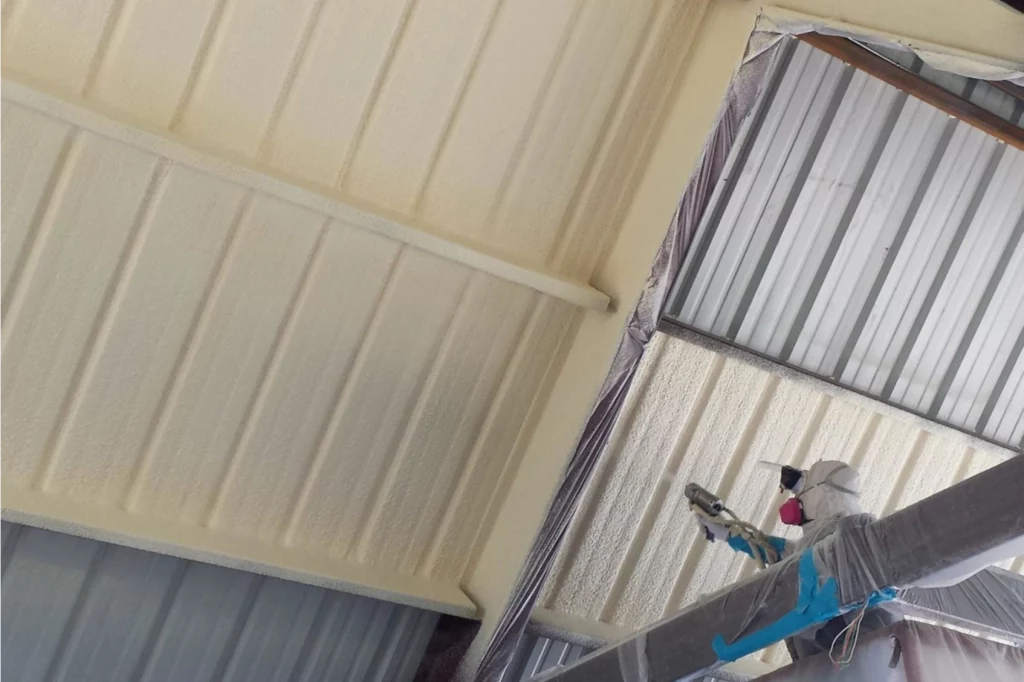
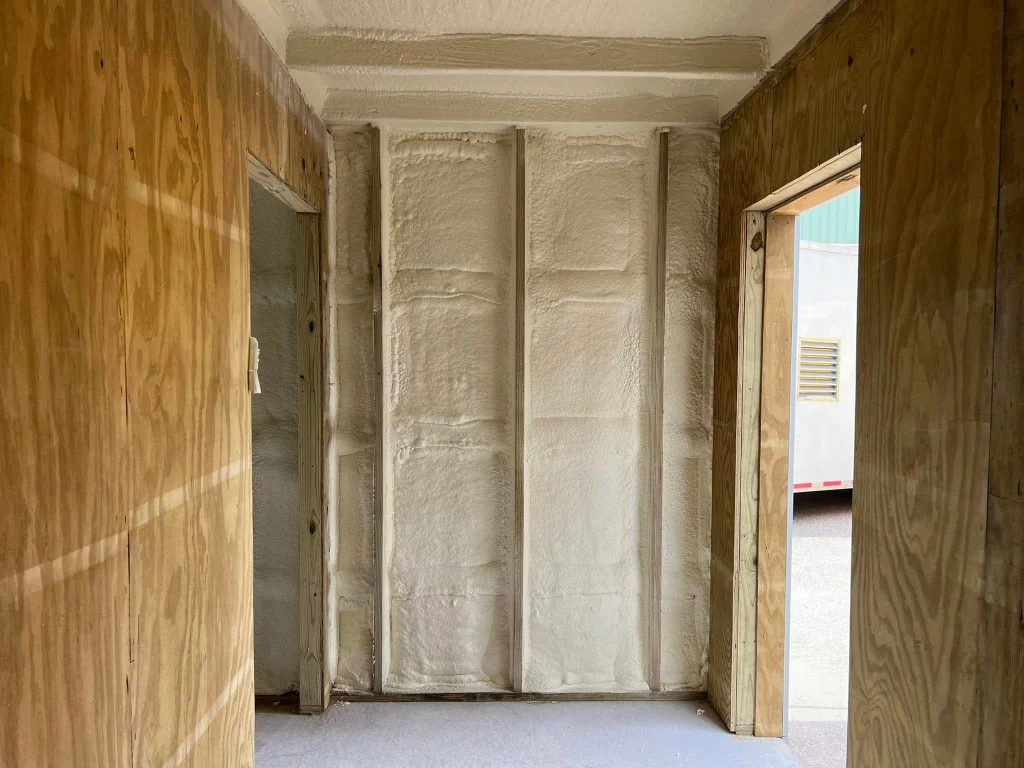
Not all insulation is created equal. Spray foam combines air sealing and insulation in a single application, which is why it often outperforms traditional options like fiberglass or cellulose.
| Insulation Type | Air Sealing? | R-Value per Inch | Energy Savings Potential |
|---|---|---|---|
| Fiberglass Batts | ❌ No | ~2.9 – 3.8 | Moderate |
| Cellulose | ❌ No | ~3.1 – 3.7 | Moderate |
| Spray Foam | ✅ Yes | ~6.0 – 7.0 | High |
Comparing spray foam R-value vs fiberglass
Because of its higher R-value and seamless coverage, spray foam reduces both conductive and convective heat loss, giving it a significant advantage—especially in attics and rooflines exposed to high temperature fluctuations.
Real-World Examples of Roof Insulation Savings
- A homeowner in Raleigh switched from fiberglass to open-cell spray foam in their attic. Their average summer AC bill dropped from $310 to $230.
- A family in Cary, NC, had closed-cell spray foam applied to their roof deck and attic knee walls. Their heating cost during winter fell by 27% compared to the previous year.
These aren’t exaggerations—they’re the real-world result of improving a home’s building envelope where it matters most.
Beyond Energy Bills: Long-Term Value of Proper Roof Insulation
Energy savings are only part of the equation. Proper roof insulation with spray foam also delivers long-term value in ways that often go overlooked:
How spray foam helps with:
- HVAC Longevity: Your system runs less, meaning fewer breakdowns and longer lifespan.
- Indoor Air Quality: Spray foam seals out pollen, dust, and outdoor pollutants.
- Moisture Resistance: Closed-cell spray foam adds a vapor barrier, reducing the risk of roof leaks or mold.
- Home Value: Energy-efficient homes sell faster and often for 4–8% more than similar non-efficient homes, according to Zillow.
How to Maximize Your ROI from Roof Insulation
To get the most out of your insulation investment:
- Seal Air Leaks First: Don’t just insulate—seal. Spray foam does both.
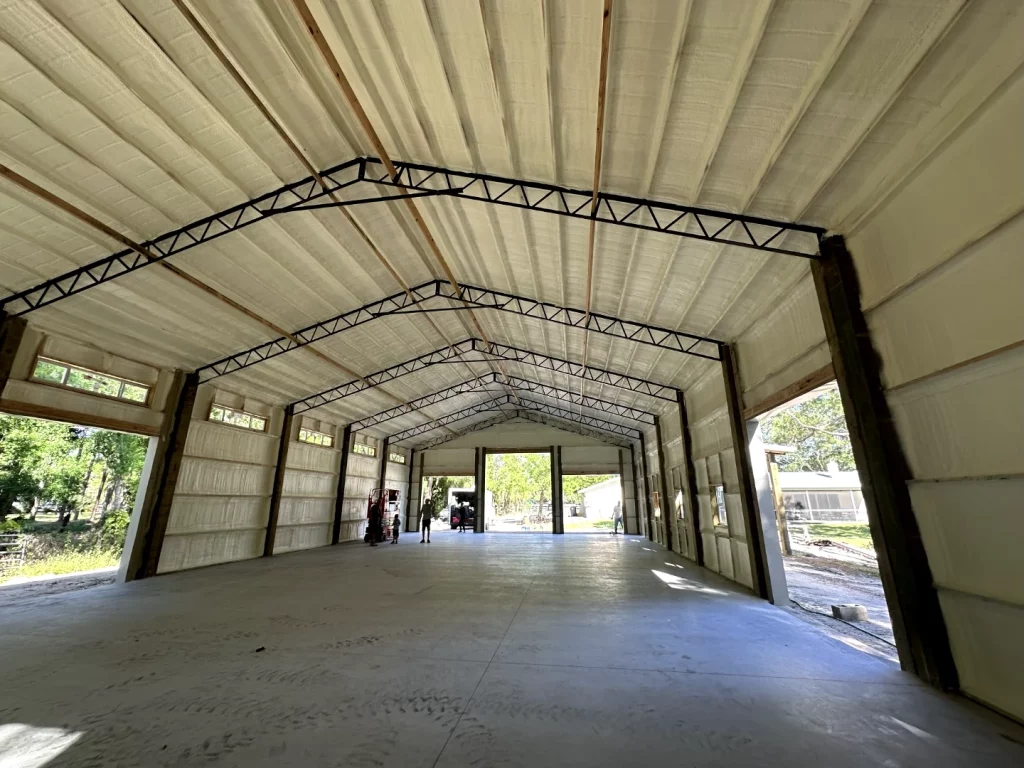
- Target the Roof Deck: Insulating just the attic floor leaves roof temps extreme. Sealing the roofline keeps attic temperatures stable.
- Use Real Performance Metrics: Look at R-value, air sealing, and thermal bridging—not just material cost.
Is Spray Foam Worth the Upfront Cost?
Yes—because unlike fiberglass, spray foam keeps performing for decades without sagging or shifting. While it may cost more upfront, the ROI is faster:
- Payback period: 3–5 years depending on energy use and climate
- Savings after 10 years: $4,000–$7,000+
- Peace of mind: No drafts, no hot spots, no noise leaks
Want to Start Saving on Energy Bills Every Month?
Proper roof insulation is one of the smartest home upgrades you can make—and spray foam offers some of the best return on investment in the insulation world. From lower monthly utility bills to a more comfortable, energy-efficient home year-round, this upgrade pays for itself faster than most homeowners expect.
Contact Raleigh Excel Spray Foam today for a free roof insulation estimate and find out how much you could be saving.
Contact Us:
Raleigh Excel Spray Foam
📞 (919) 301-9435
✉️ [email protected]
🌐 Visit Website
Frequently Asked Questions
How much can I save annually with spray foam roof insulation?
Most homeowners save between 15–30% annually on energy bills, depending on home size, climate, and previous insulation levels.
Does spray foam make a big difference in mild climates like North Carolina?
Absolutely. In areas with hot summers and chilly winters, spray foam helps stabilize indoor temps year-round, reducing strain on your HVAC.
Is spray foam roof insulation better than attic insulation alone?
Yes. Insulating the roof deck creates a conditioned attic space, improving energy efficiency more than just insulating the floor.
What is the R-value of spray foam vs. fiberglass?
Spray foam offers R-6 to R-7 per inch, while fiberglass is around R-3.5 per inch. Plus, spray foam seals air gaps—fiberglass doesn’t.
Will proper insulation help my AC run less in summer?
Yes. A well-insulated roof reduces heat gain, so your AC doesn’t have to work as hard to cool your home.
Can insulation alone really lower my electric bill?
Absolutely. Many homeowners report $50–$100+ in monthly savings after upgrading roof insulation.
Is spray foam insulation eligible for tax credits or rebates?
Yes. Spray foam insulation often qualifies for federal tax credits and local utility rebates—check with your provider.
How long does it take to recover the cost of spray foam?
Typically 3 to 5 years—faster in homes with high energy use.
Will roof insulation help with noise reduction too?
Yes, especially closed-cell spray foam, which helps dampen outdoor noise.
Can roof insulation increase my home’s resale value?
Yes. Energy-efficient upgrades like spray foam add to your home’s market appeal and value.