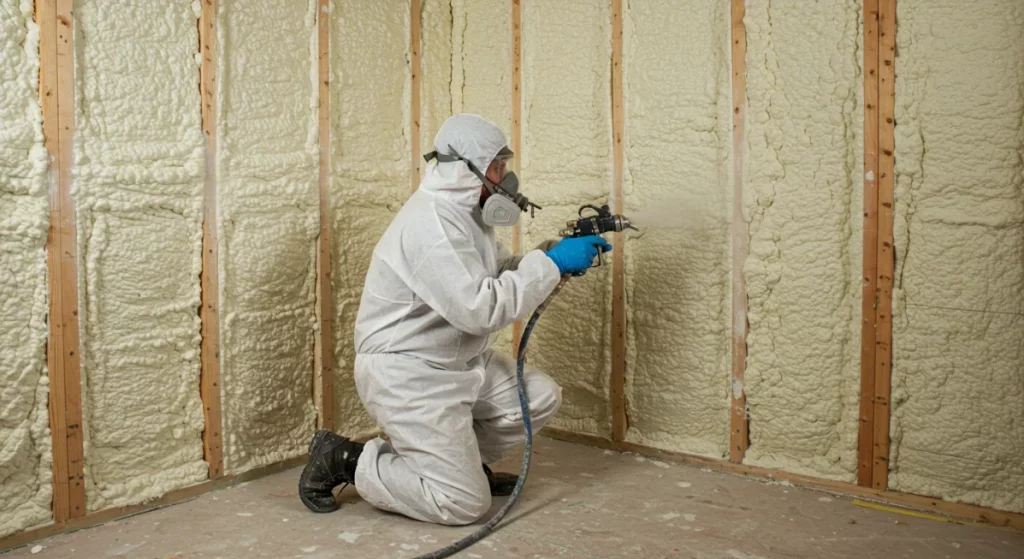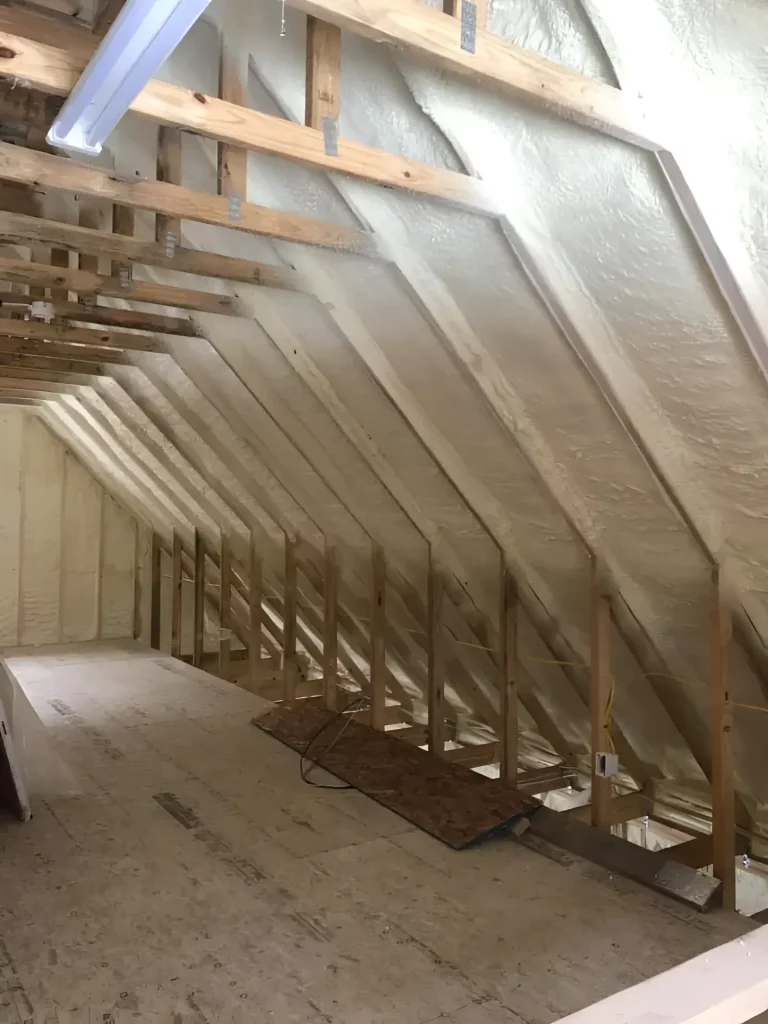




Quick answer: If you’re weighing closed-cell spray foam insulation moisture Raleigh, NC options, here’s the short version. Closed-cell foam is dense and rigid, and it barely soaks up water. When it’s thick enough, it seals air leaks and slows water vapor in one pass. That makes it a strong match for crawl spaces, rim joists, and foundation walls that fight Raleigh’s muggy summers.
TL;DR
- Closed-cell foam holds up against moisture and air leaks better than open-cell foam, but it costs more.
- FEMA rates closed-cell foam as acceptable in floodwater. Fiberglass and open-cell foam fail that test.
- It works best on crawl space walls, rim joists, and below-grade walls.
- It won’t fix an active leak, and a sealed crawl space still needs humidity control.
Why Moisture Is a Problem in Raleigh Buildings
Raleigh summers bring long stretches of hot, sticky air. That air drifts into the lowest and coolest parts of a building, where it can condense on wood, concrete, and ductwork.
The damage builds up slowly: musty smells, mold on floor joists, sagging insulation, and floors that cup in July. Closed-cell spray foam is a two-part polyurethane that sprays on, expands, and hardens into tiny sealed cells. According to the U.S. Department of Energy, closed-cell foam beats open-cell foam on R-value and on resisting both moisture and air leaks, though it’s heavier and pricier.
Why Closed Cell Foam Works Where Other Insulation Struggles
Four traits set closed-cell foam apart from batts and open-cell foam in damp spots. Each one handles a different part of the moisture problem.
Sealed Cells That Don’t Act Like a Sponge
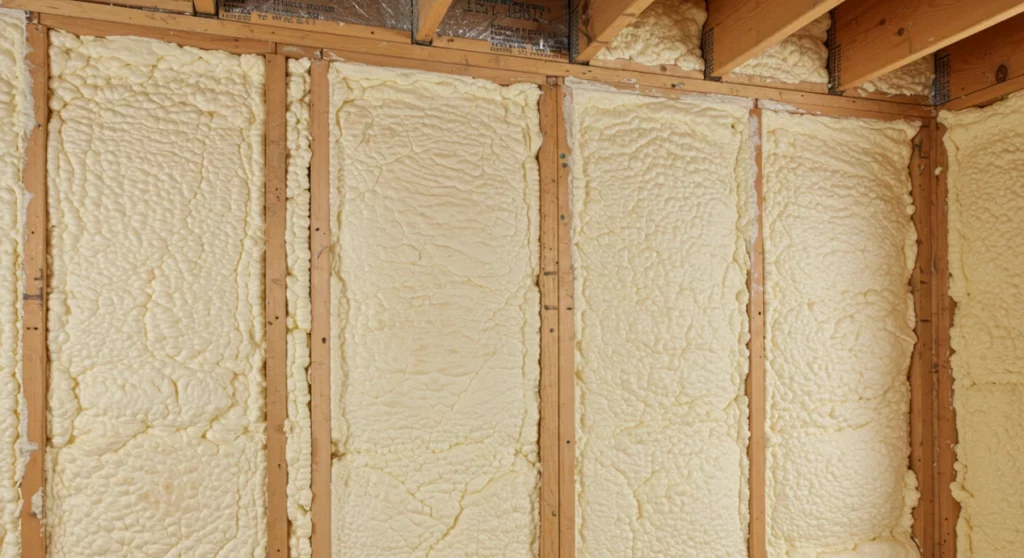
Fiberglass and open cell foam have open pockets that can hold water. Closed-cell foam’s cells are sealed, so water mostly stays on the surface instead of soaking in. That’s where closed-cell foam moisture resistance Raleigh, NC homeowners count on really comes from. Understanding the closed-cell spray foam benefits can also help homeowners see how this insulation supports moisture control and energy efficiency. A wet fiberglass batt under your floor, by contrast, can sag and hold water against the wood.
An Air Seal That Blocks Humid Air
Most crawl space moisture rides in on air, through vents, sill gaps, and holes around pipes and wires. As spray foam expands, it fills those gaps. When you stop the airflow, you also stop most of the water that air carries.
Vapor Control at the Right Thickness
Once it’s thick enough, closed-cell foam also slows water vapor moving through a wall. The thickness needed depends on the product, so ask your installer for the technical data sheet. One catch: some building codes don’t count sprayed foam as a vapor barrier, so you may still need a separate vapor retarder, the DOE notes.
It Holds Up in Floodwater
In FEMA’s Technical Bulletin 2, sprayed polyurethane and closed-cell plastic foam insulation are rated acceptable for flood damage resistance, while fiberglass, mineral wool, cellulose, and open-cell foams are rated unacceptable. FEMA’s standard means a material can sit in floodwater for at least 72 hours without needing more than cosmetic repair. After a storm, that can mean cleaning the space instead of tearing everything out.
| Feature | Closed Cell | Open Cell | Fiberglass |
|---|---|---|---|
| Soaks up water | Very little | Can absorb | Holds water |
| Seals air leaks | Yes | Yes | No |
| Slows vapor | Yes, if thick enough | No | No |
| FEMA flood rating | Acceptable | Unacceptable | Unacceptable |
| Upfront cost | Highest | Lower | Lowest |
Where Moisture-Prone Areas Show Up in Raleigh Buildings
Moisture tends to collect in the same few places. These are the spots where we see closed-cell foam application pay off most.
- Crawl space foundation walls: Carolina Country describes insulating the foundation walls with closed-cell foam or rigid board, and leaving the floor system uninsulated, as one accepted approach.
- Rim and band joists: This area is full of corners, wires, and pipes. Foam seals all of it in one pass, whereas foam board would take a lot of cutting.
- Basement and below-grade walls: Concrete and block pull moisture in from the soil. The DOE says open-cell foam shouldn’t go below ground, where it could absorb water.
- Metal buildings and pole barns: Warm, damp air hitting cold steel can drip on stored equipment. Closed-cell foam building protection on the panels keeps that air off the metal.
What Closed Cell Foam Won’t Do on Its Own
Closed cell foam is good at its job, but it isn’t a cure-all. Knowing its limits up front saves money and callbacks.
- It won’t stop an active leak. Bad gutters, poor grading, or a plumbing leak need fixing first.
- A sealed crawl space still needs drying. Plan on a ground vapor barrier plus a dehumidifier or conditioned air.
- Exposed foam needs a fire covering. The DOE says installed foam must be covered by an approved thermal barrier rated like half-inch gypsum board.
- It costs more per inch. Carolina Country notes that cost is the main reason closed-cell foam is used less often in North Carolina homes.
- Floor foam has limits. Experts recommend spray foam in the floor system only if the crawl space is kept extremely dry.
Is Closed Cell Spray Foam the Right Fit for Your Moisture Problem?
Not every damp building needs it. Run through this checklist before you get quotes.
- Musty smell, or mold on floor joists
- Insulation sagging or falling out under the floor
- Hardwood floors that cup in summer
- Sweating ductwork or dripping metal panels
- A crawl space or basement that has taken on water before
If two or more of these sound familiar and the water source is under control, moisture-resistant spray foam insulation Raleigh, NC property owners use is worth a look. If water still pours in every storm, fix the drainage first. Closed-cell foam water protection for Raleigh, NC buildings works best as one part of a dry, sealed system.
Get Straight Answers From Raleigh Excel Spray Foam Insulation
If your crawl space, basement, or metal building fights dampness every summer, we’ll look at where the moisture is coming from. Then we’ll tell you honestly whether closed-cell foam fits or whether something else needs fixing first. Call Raleigh Excel Spray Foam Insulation in Raleigh, NC at (919) 301-9435 or email [email protected].
FAQs
Does closed cell spray foam absorb water?
Very little. Its cells are sealed, so water beads on the surface instead of filling the foam the way it fills a batt.
Is closed cell spray foam a vapor barrier?
At enough thickness, it works as a vapor retarder, meaning it slows vapor a lot but doesn’t block it completely. Whether it counts for code depends on the product and your local inspector.
Should I use open cell or closed cell foam in my crawl space?
Use closed cell on crawl space walls and anywhere below grade. Open cell is better suited to above-grade spots like attic rooflines and interior walls.
Do I still need a dehumidifier after spray foaming my crawl space?
Usually, yes. Foam stops new humid air from coming in, but something still has to remove the moisture already in the space and whatever comes up from the ground.
Can closed-cell spray foam go on damp concrete or block?
The surface needs to be dry for the foam to bond well. A simple test is to tape a square of plastic to the wall overnight. If moisture shows up under it, deal with the water first.
Sources
- U.S. Department of Energy, Types of Insulation – closed vs. open cell moisture and air resistance, cost, below-grade use, thermal barrier, and the vapor barrier code note.
- FEMA NFIP Technical Bulletin 2 (2025) – flood damage-resistance ratings for insulation types and the 72-hour standard.
- Carolina Country, Foaming a Crawl Space – North Carolina crawl space wall vs. floor approach and cost context.

- What Role Does Insulation Thickness Play in Building Durability and Material Performance? - October 23, 2026
- How Can Spray Foam Insulation Improve Coverage Around Irregular Framing? - October 23, 2026
- Why Is Closed Cell Spray Foam Effective Around Moisture-Prone Building Areas in Raleigh, NC? - October 21, 2026