


Thickness decides how much heat and moisture your walls, roof, and floors can handle. Too thin, and the assembly runs colder, damper, and under more stress. The right depth protects the structure and keeps the material working for decades.
TL;DR
- Thickness sets R-value, but only if the material keeps its full depth.
- Compressed or settled insulation loses rated performance.
- Changing thickness can change where moisture condenses inside a wall or roof.
- Your climate zone should set the target, not guesswork.
- Check labels, measure depth, and get installed thickness in writing.
What Insulation Thickness Actually Does
Thickness is the depth of material between your living space and the outdoors. According to the DOE Insulation Fact Sheet, an R-value depends on the material, its thickness, and its density.
More depth usually means more resistance to heat flow, and that is where insulation material performance starts. It narrows the temperature swings your framing, sheathing, and finishes experience every day. Smaller swings mean fewer cold surfaces where moisture can collect.
Why Thickness Drives Long-Term Insulation Performance
A thick layer on paper means little if it packs down or leaves gaps. Long-term insulation performance depends on the depth you keep, not the depth you install.
- Compression: The DOE fact sheet says compressed insulation won’t deliver its full rated R-value, such as an R-19 batt made for 6 1⁄4 inches forced into a 5 1⁄2 inch cavity.
- Settling: Some materials need extra starting thickness to offset settling later.
- Stacking: Heavier insulation laid over lighter insulation squeezes the layer below it.
- Thermal bridging: Studs and joists carry heat around the insulation. In metal-framed walls, the overall R-value can fall to half the insulation’s rating.
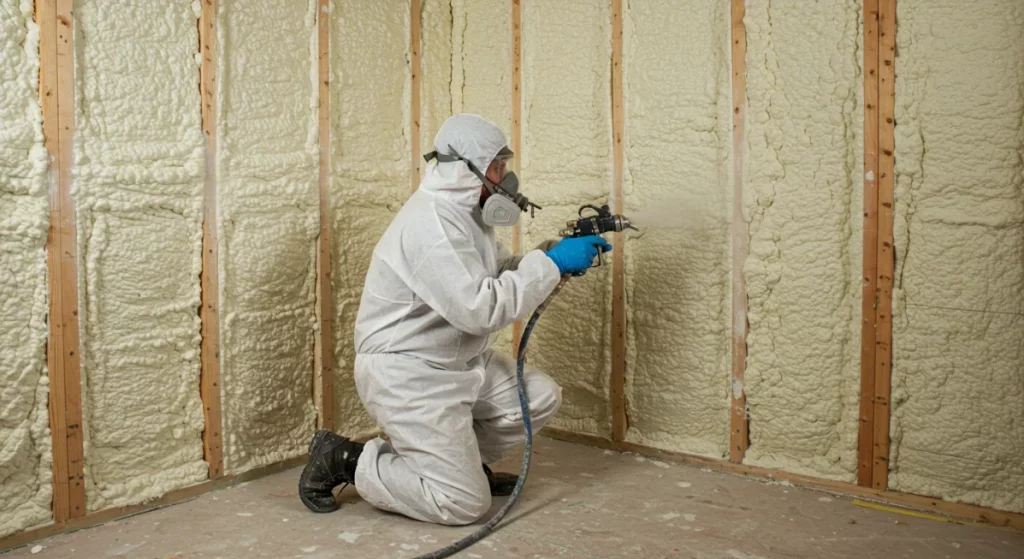
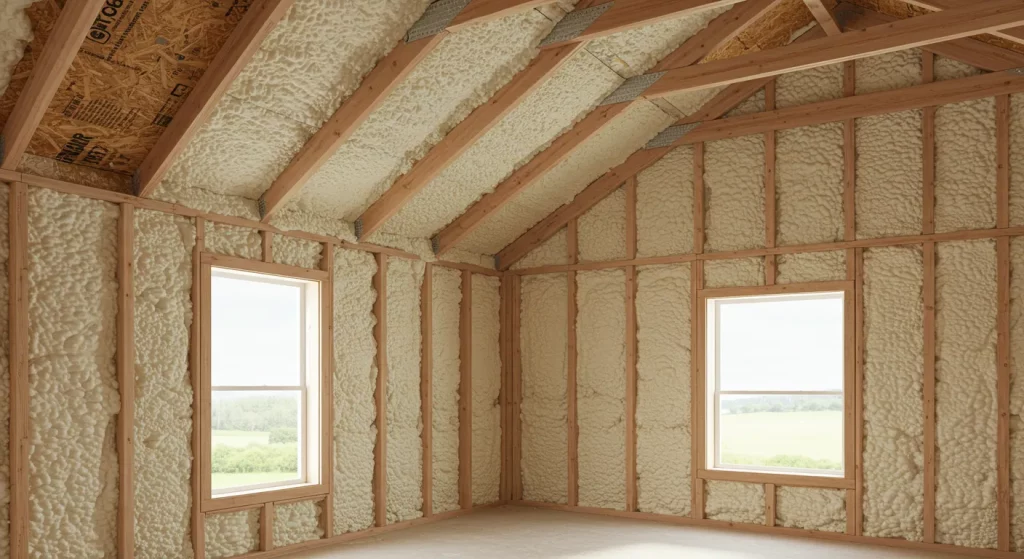
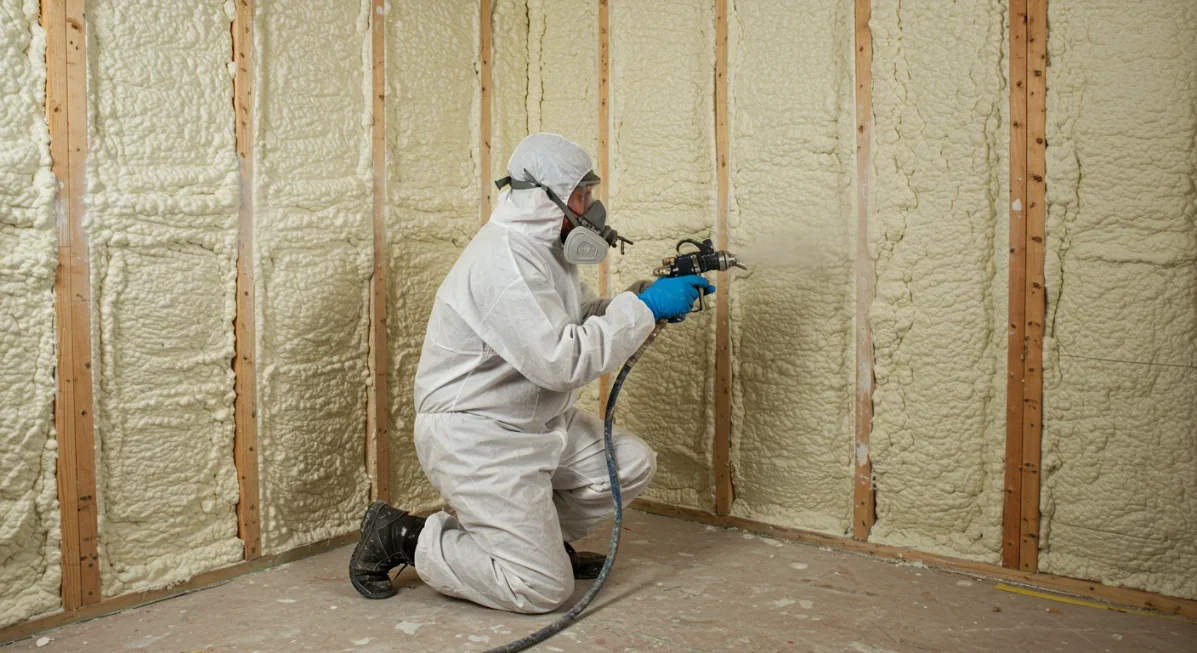
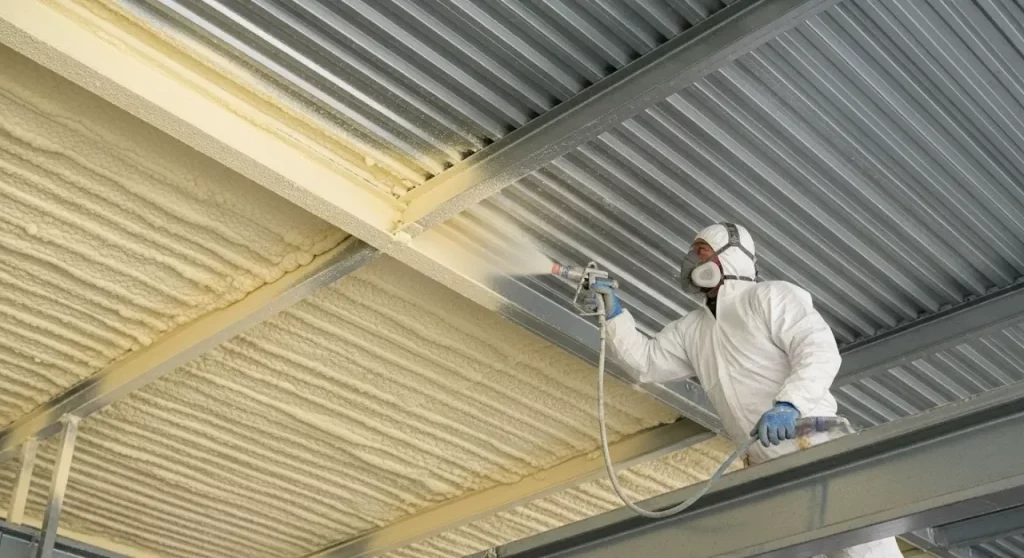
Spray foam fills the cavity as it goes on, so batt-style compression is less of a worry. The depth still has to match the R-value you need.
How Thickness Changes Moisture Risk and Building Insulation Durability
Wet insulation doesn’t work well, and wet framing doesn’t last. That’s why building insulation durability often comes down to how thickness changes moisture behavior.
The same fact sheet notes that adding insulation can either cause or cure a moisture problem. A colder wall changes the temperature inside the assembly, and the sheathing behind the siding may become a surface where vapor condenses in winter.
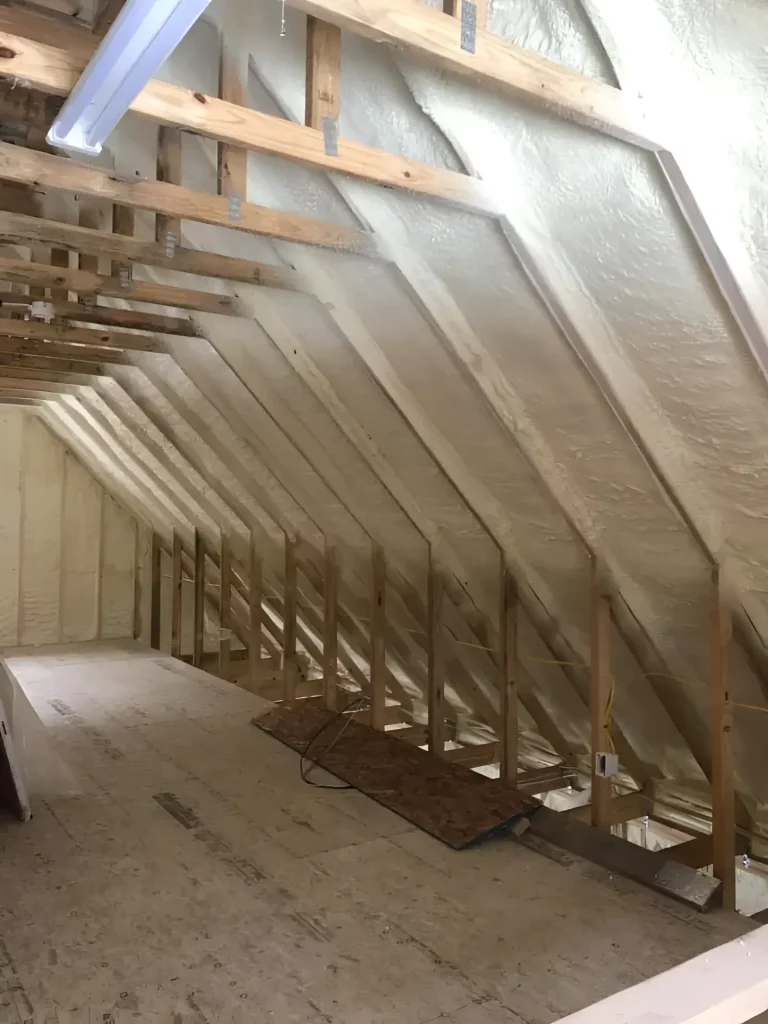
Roofs show the stakes. The Building America Spray Foam Case Study from the Department of Energy found no known risks with spray foam under plywood or OSB roof decks when these conditions are met. Proper roof insulation solutions and the correct installation thickness help support thermal performance and manage moisture risks within the roof assembly.
- The install follows the 2012 International Residential Code.
- A fully adhered, leak-free roof membrane is in place.
- Sheathing and framing are below 18% moisture before spraying.
- Open-cell foam gets a low-perm Class II vapor retarder where required.
In that modeling, closed-cell foam kept the sheathing most stable. Thickness helps, but it won’t replace air sealing and a dry roof deck. The fact sheet also warns that air leaks carry moisture and energy into walls and attics, and that attic insulation alone usually won’t stop them. Seal first, then insulate, or the extra depth won’t deliver the savings you expect.
What Insulation Thickness Requirements Look Like
DOE splits the country into eight climate zones and recommends R-values for each. Your target R-value and your material choice set the depth you need. Insulation thickness standards also vary by local code, so confirm yours before you order.
| Material | Thickness | R-Value |
|---|---|---|
| Closed-cell spray foam | 1 inch | 6.5 |
| Open-cell spray foam | 3.5 inches | 12.6 |
| Polyiso foam board | 1 inch | 6.5 |
Those figures come from the DOE Guide to Home Insulation, which also says adding insulation and cutting air leaks can save up to 20% on heating and cooling costs. The fact sheet adds that codes set minimums, and going beyond them may make sense where the minimum falls below DOE’s recommendation.
Checklist for Getting the Right Thickness
Use this list before you approve any insulation job. Each step protects the depth you pay for.
- Find your climate zone and target R-value.
- Divide the target by the material’s R-value per inch to get the depth.
- Confirm the cavity can hold that depth without compressing it.
- Ask for product labels and the installed thickness in writing.
- Seal air leaks first, since they carry moisture into walls and attics.
Here’s an example. If a wall needs R-20 and your material gives R-5 per inch, you need 4 inches of depth. A 3½ inch cavity can’t hold that, so you’d need a denser material or added sheathing.
Get a Thickness Check From Raleigh Excel Spray Foam Insulation
If you’re unsure whether your walls, attic, or crawl space have enough depth, we can look at what you have and explain what makes sense for your building. Call Raleigh Excel Spray Foam Insulation at (919) 301-9435 or email [email protected].
Frequently Asked Questions About Insulation Thickness
Is thicker insulation always better?
Not always. DOE’s recommended levels balance future energy savings against installation cost, so the right depth depends on your climate, energy prices, and equipment. Extra depth may cost more than it saves, and it should never block attic vents.
Can I add new insulation on top of old insulation?
Usually yes, but stacking squeezes the old layer. The Department of Energy suggests about one extra inch over fiberglass, or about half an inch over rock wool or cellulose, to make up for it.
What if my cavity is too shallow for the R-value I need?
Choose a material with more R-value per inch, or add continuous insulative sheathing outside the cavity. DOE guidance treats sheathing and cavity insulation as one system.
How can I confirm the right thickness was installed?
Ask for the product label from every package, then compare its R-value with the depth you can measure. For new homes, federal rules require the seller to state insulation type, thickness, and R-value in the sales contract.
Is closed-cell or open-cell foam better when space is tight?
Closed-cell foam usually gives more R-value for a given thickness, so it can reach your target in a shallow cavity. Open-cell foam generally lets water vapor move through more easily, so the choice also affects moisture planning.
Sources
- DOE Insulation Fact Sheet – R-value basics, compression, settling, stacking, moisture, labeling
- Building America Spray Foam Case Study – roof deck conditions and moisture results
- DOE Guide to Home Insulation – R-values by thickness, climate zones, savings

- What Role Does Insulation Thickness Play in Building Durability and Material Performance? - October 23, 2026
- How Can Spray Foam Insulation Improve Coverage Around Irregular Framing? - October 23, 2026
- Why Is Closed Cell Spray Foam Effective Around Moisture-Prone Building Areas in Raleigh, NC? - October 21, 2026