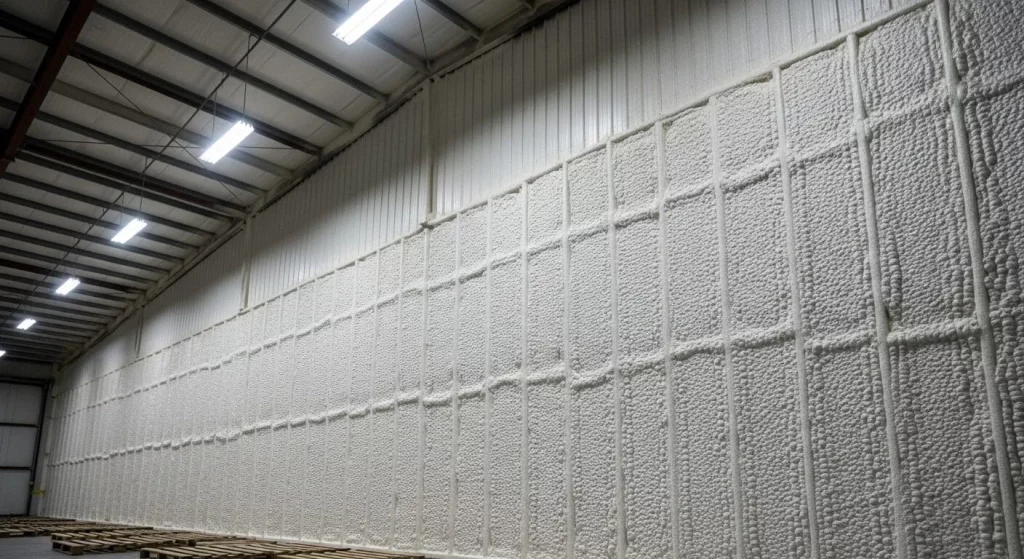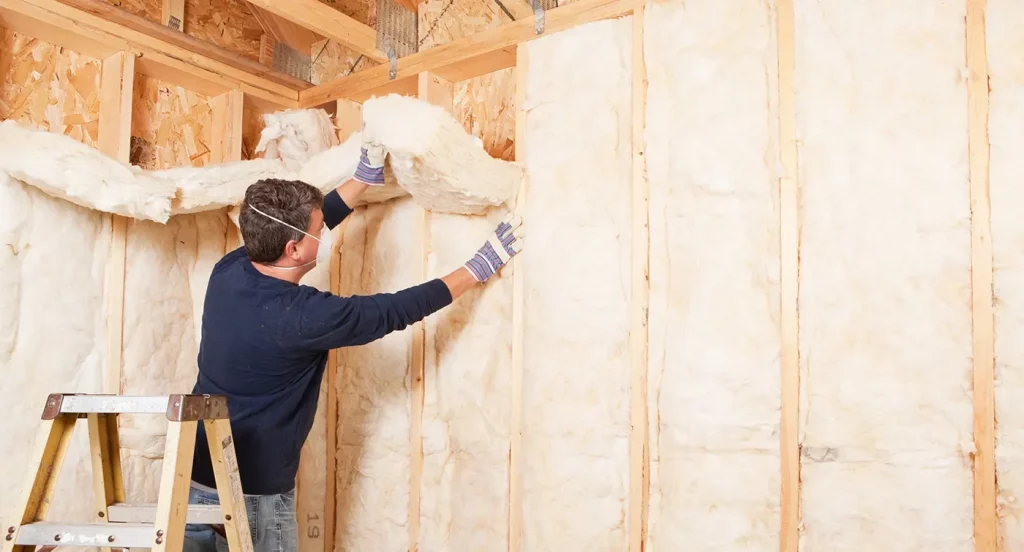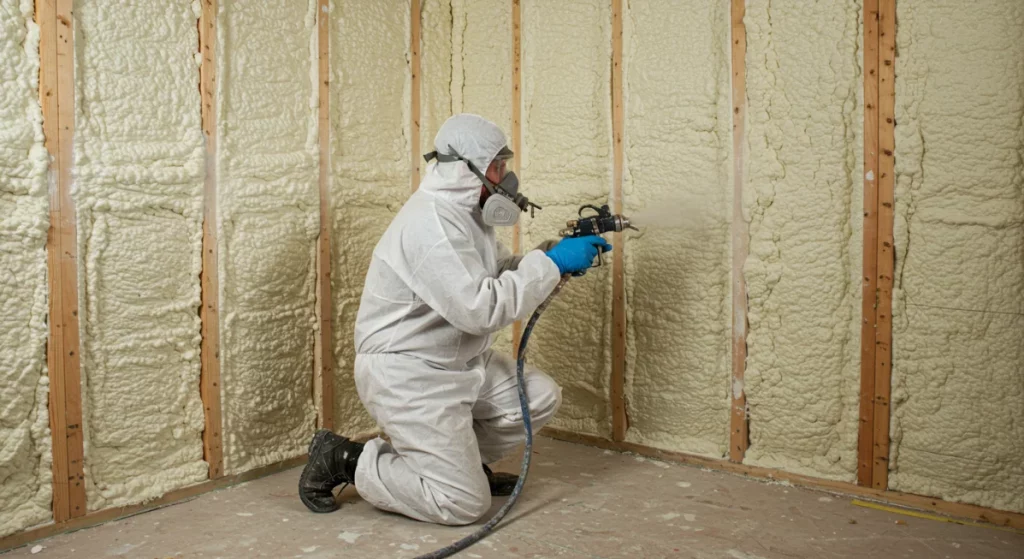



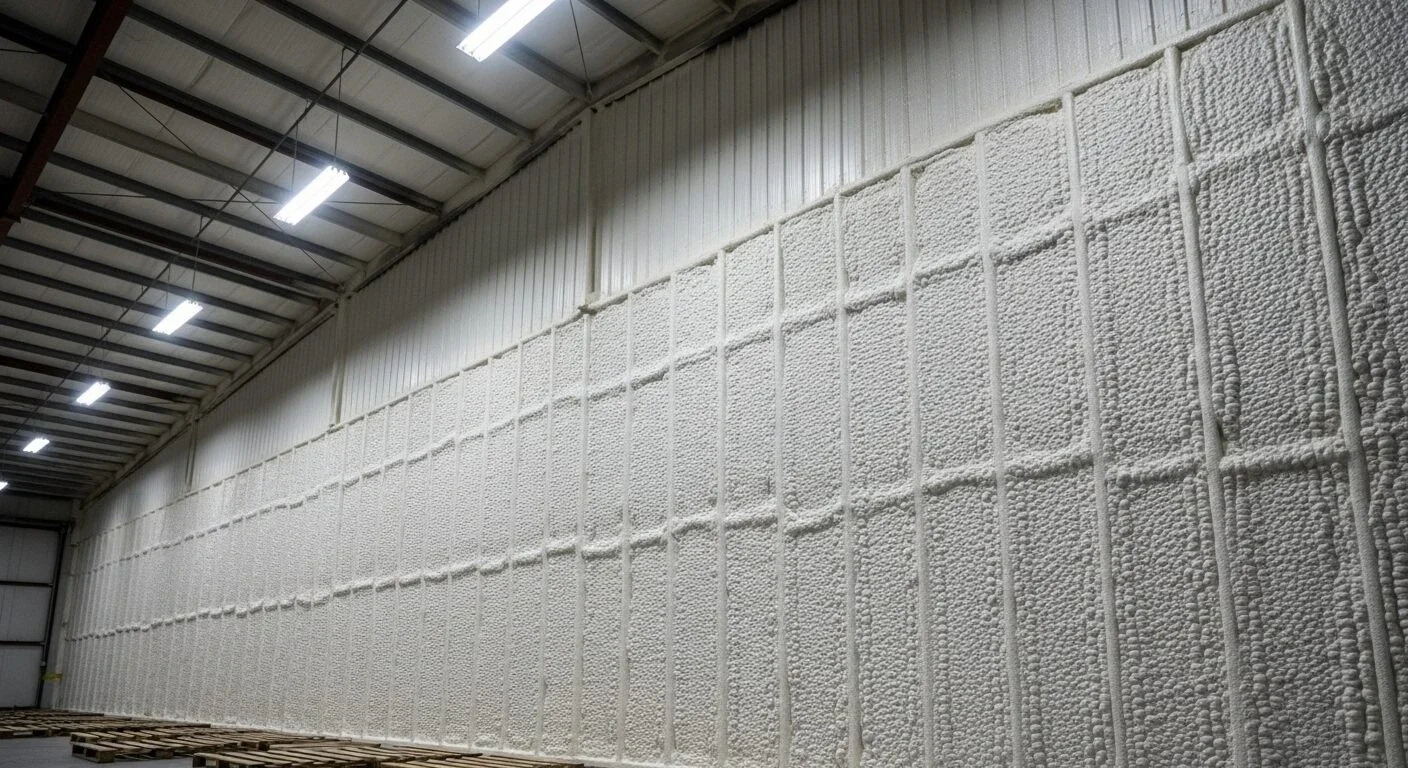
Commercial insulation can support large buildings with complex layouts because it isn’t one product. It’s a system. Spray foam fills odd shapes and seals gaps, rigid board and mineral wool cover long walls and fire-rated joints, and a continuous air barrier ties every section together. In Durham’s hot, humid summers and cool winters, taking a comprehensive approach to Commercial Building Insulation Durham, NC projects ensures proper control over air and moisture, which often matters as much as the R-value on the label.
TL;DR
- Big, complex buildings leak air at joints, additions, roof steps and penetrations, not just through flat walls.
- Spray foam conforms to irregular surfaces, so it’s often the best fit for the hardest-to-reach spots.
- A mix of materials, matched zone by zone, usually beats one material everywhere.
- Air sealing can cut heating and cooling costs, according to federal research.
- North Carolina’s code rules are in transition, so confirm which edition applies to your permit.
What Makes a Building Layout “Complex”?
A complex layout is any building where the envelope changes direction, height or material often. Every change creates a seam, and seams are where air, heat and moisture get through.
Common examples in commercial work include:
- Multiple roof levels, parapets and mezzanines
- Additions joined to older structures, often steel against masonry
- Curved walls, angled corners and tall open bays
- Heavy rooftop equipment, ducts and pipes punching through walls and decks
- Mixed uses under one roof, such as offices next to a warehouse or cold storage
A plain box with four walls is fairly easy to insulate. A building with 30 transitions isn’t. Each missed transition can mean a cold spot, a condensation stain or a comfort complaint from the people inside.
Why Commercial Insulation Works in Large, Complex Buildings
When it comes to Large Building Insulation Durham, NC properties rely on, tailored solutions are essential because installers can match the specific material to each part of the structure. A better understanding of commercial insulation benefits can help businesses make informed decisions about energy use and building comfort. Here’s what that looks like in practice.
It Can Be Matched Zone by Zone
A large building rarely needs the same insulation everywhere. A metal warehouse roof, a masonry office wall and a mechanical room all behave differently. Picking the right product for each zone avoids paying for performance you don’t need in one area while falling short in another.
Spray Foam Fills Shapes Other Materials Can’t
Spray foam goes on as a liquid and expands to fill cracks, corners and uneven surfaces. According to the EPA’s guide to spray polyurethane foam types, professional two-component foam can expand to as much as 120 times its original volume, with closed-cell foam rated around R-6.5 per inch and open-cell foam around R-3.5 per inch. Find Us on Google Maps to explore our business profile and learn more about our insulation services. That expansion is why foam handles roof-to-wall joints, deck flutes and pipe penetrations that batts and boards struggle to seal.
Air Sealing Does the Heavy Lifting
R-value only tells part of the story. If air moves freely through the envelope, insulation can’t do its job. A study from the National Institute of Standards and Technology found that typical U.S. commercial buildings are leakier than people assume, and modeled heating and cooling cost savings of 3% to 36% from an effective air barrier, with the smallest savings in hot, cooling-dominated climates. The same report links air leakage to comfort problems, ventilation trouble, poor indoor air quality and moisture damage. Those are the exact problems that show up first in buildings with lots of seams.
Commercial Insulation Materials Durham NC Buildings Commonly Use
Most large projects combine two or more Commercial Insulation Materials Durham, NC options. This table shows where each one usually fits.
| Material | Best Spots | Main Strength | Trade-Off |
|---|---|---|---|
| Closed-cell spray foam | Roof decks, metal walls, irregular joints | Insulates and air seals in one pass | Higher cost per inch |
| Open-cell spray foam | Interior cavities, sound control | Fills cavities well, lower cost | Lower R-value per inch |
| Rigid board (polyiso, XPS) | Long flat walls, roofs | Continuous layer, fast on big areas | Joints must be taped and sealed |
| Mineral wool | Fire-rated assemblies, slab edges | Fire resistance | Doesn’t air seal by itself |
| Fiberglass batts | Standard stud cavities | Low cost | Gaps and compression cut performance |
The right mix depends on the structure, the use of each space and the budget. A good plan spends money where it moves the needle.
How Do Durham’s Climate and Code Affect the Job?
Durham deals with both heating and cooling seasons, plus summer humidity. That makes moisture control a real design issue, not an afterthought.
North Carolina’s energy code maps place Durham County in Climate Zone 4, which sets the baseline insulation levels for commercial work. Code also reaches past walls and roofs. Under the 2018 North Carolina Energy Conservation Code, supply and return ducts located outdoors in Climate Zones 3 and 4 need at least R-8 insulation.
The bigger issue right now is timing. The NC Office of State Fire Marshal has said the 2024 State Building Code takes effect 12 months after certain publication and council conditions are certified, that the 2018 code stays in effect until then, and that an owner may request the 2024 code as an alternative method. Before you lock in a design, ask your designer or the local inspections office which edition governs your permit.
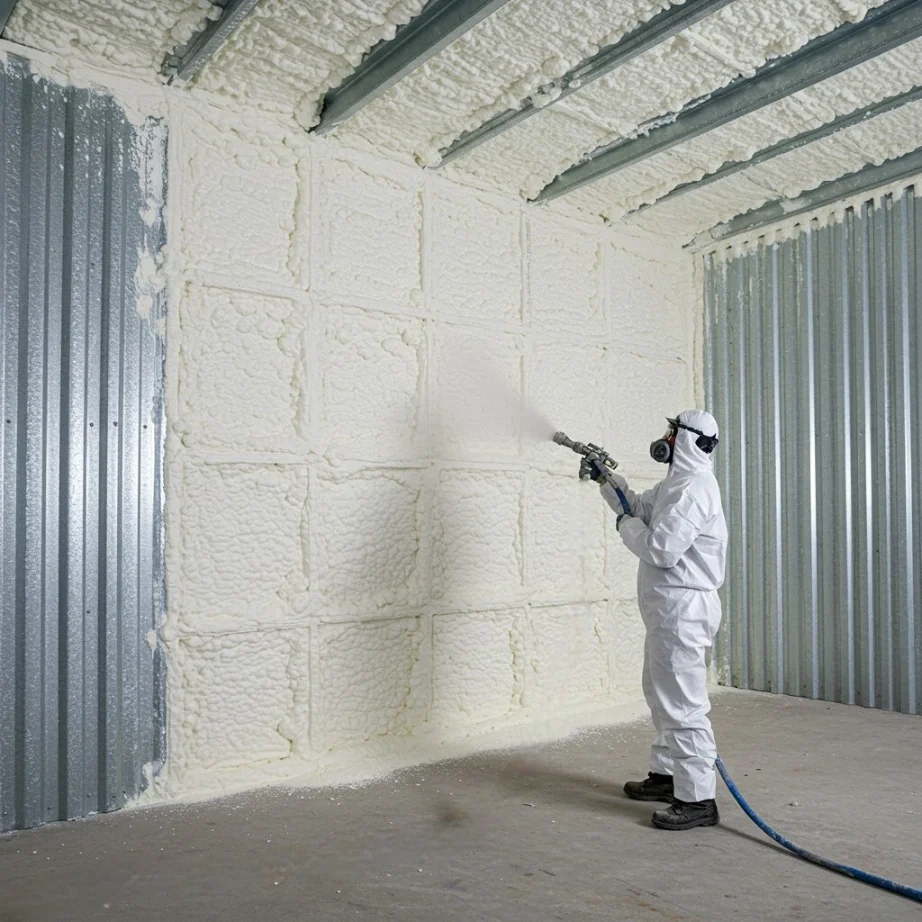
Common Problems on Complex Commercial Insulation Installation
When managing Complex Building Insulation challenges, most issues arise during execution. Most failures on large jobs come from planning gaps rather than bad materials. During Commercial Insulation Installation, watch for these:
- Missed transitions. Where a new addition meets an old wall, crews often stop at the joint. That line becomes a leak path.
- Unsealed penetrations. Every duct, conduit and roof curb needs a sealed edge.
- Mixed trades, no sequence. If electricians or HVAC crews cut through finished insulation, someone has to come back and repair it.
- Occupied buildings. Spray foam needs planning in buildings that stay open. The EPA notes that some manufacturers recommend waiting 24 hours before re-occupancy, but the time varies by product, and it advises asking the manufacturer for specific guidance.
Each of these costs money twice: once in wasted energy and again in repair work.
Pre-Project Checklist for Large Buildings
Use this list before you request bids:
- Walk the building and mark every roof step, addition joint and major penetration.
- Note which areas stay occupied and when work can happen.
- Confirm which code edition applies to your permit.
- Ask each bidder which material goes in which zone, and why.
- Ask how they’ll seal transitions between materials.
- Get the manufacturer’s re-occupancy time in writing for any spray foam product.
- Plan the work sequence with other trades so finished insulation isn’t cut open later.
Talk to Raleigh Excel Spray Foam Insulation About Your Durham Building
If your building has odd roof lines, additions or areas that never stay comfortable, a zone-by-zone look is a smart first step. Raleigh Excel Spray Foam Insulation works on commercial building insulation in Durham, NC, and we can walk through your layout, flag the trouble spots and talk through spray foam and other options that fit each area.
Call us at (919) 301-9435 or email [email protected] to set up a conversation about your project.
FAQs
Is spray foam insulation code compliant for commercial buildings?
It can be, when the product and the full assembly meet the code that applies to your permit. Code compliance depends on the installed system, including any required thermal or ignition barrier, not just the foam itself. Your designer and inspector make the final call.
Does an existing building have to meet the current insulation code?
Not automatically. Requirements usually kick in for the parts of the building you’re altering, adding or changing in use. Check with the local inspections office before the work starts so the scope is clear.
Can a building stay open during commercial spray foam installation?
Often, yes, if the work is phased. Crews can isolate one section at a time, keep people out of active spray zones and reopen each area once the manufacturer’s re-occupancy time has passed.
Why is combining multiple insulation materials better than using just one?
Different areas have different needs. Spray foam seals complex joints and penetrations, while rigid board or mineral wool efficiently covers long, flat walls and fire-rated zonesoptimizing both performance and budget.
How does Durham’s Climate Zone 4 impact commercial moisture control?
With humid summers and cool winters, moisture moves both in and out of the building envelope throughout the year. Continuous air sealing and proper vapor control are essential to stop humid air leaks that cause condensation and mold.
Sources
- NIST: Investigation of the Impact of Commercial Building Envelope Airtightness on HVAC Energy Use – commercial air leakage, modeled 3% to 36% HVAC cost savings, and effects of infiltration.
- NC Office of State Fire Marshal: North Carolina Delays Implementation of 2024 State Building Code – current status of the 2018 and 2024 North Carolina codes.
- EPA: Spray Polyurethane Foam Product Types – foam expansion, R-value per inch, and re-occupancy guidance.

- Why Commercial Insulation Can Support Large Buildings With Complex Layouts in Durham, NC - October 15, 2026
- How Does Wall Insulation Help Limit Heat Transfer Through Exterior Walls? - October 15, 2026
- How Should Raleigh, NC Property Owners Evaluate Insulation for Long-Term Use? - September 23, 2026