


Commercial buildings face unique insulation challenges that directly impact energy consumption, occupant comfort, and long-term maintenance costs. Poor insulation installation and inadequate material selection result in energy losses of 25% to 40% in commercial properties, according to industry research. Addressing these problems systematically leads to measurable savings, with buildings that receive proper insulation and air sealing upgrades reducing annual HVAC energy usage by 25% to 40% compared to those with standard installations.
TL;DR
- Air leakage accounts for most insulation-related problems in commercial buildings, not material defects or diffusion
- Incorrect material selection and improper installation represent the two biggest challenges, cited by 49% of production builders surveyed
- Commercial insulation upgrades can reduce energy use by 7% to 9% in schools and similar facilities
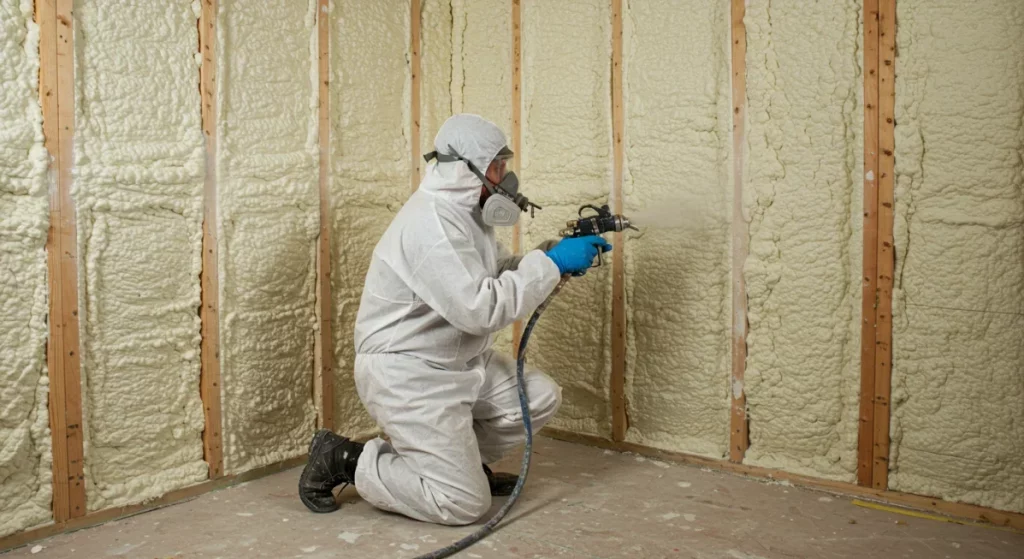
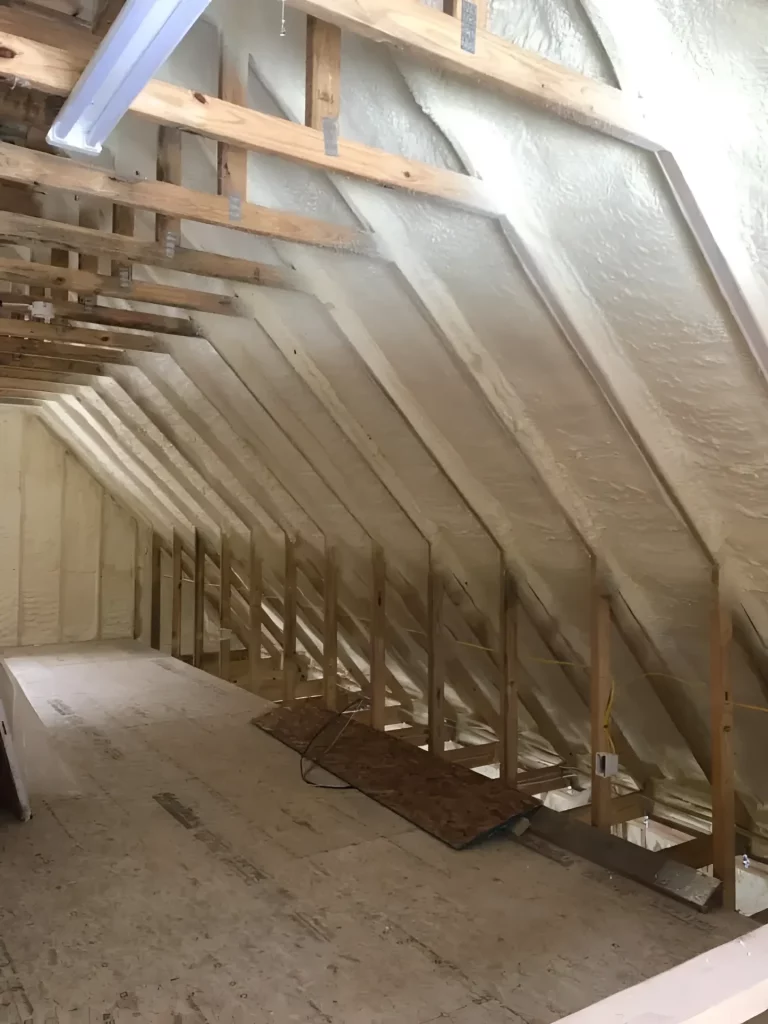
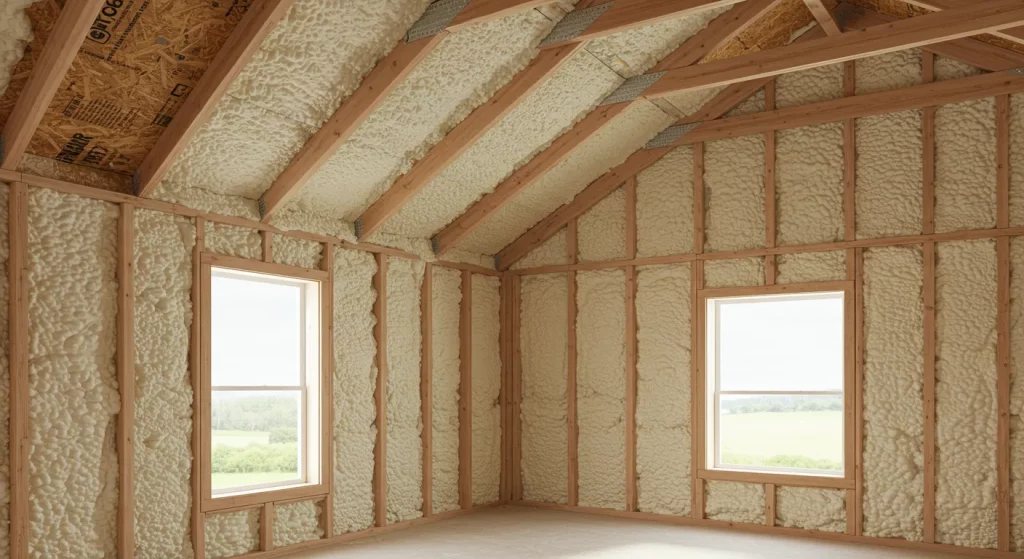
- Spray foam insulation provides both thermal resistance and air sealing in a single application for commercial applications
- Condensation control requires proper insulation placement relative to structural framing, particularly in cold climates
- Professional installation quality verification prevents the most common failures that compromise performance
- Upgrading roof and pipe insulation in just 25% of existing commercial floor space could save more than 700 therms of natural gas annually
Understanding the Core Problems
Commercial insulation failures fall into several distinct categories. Each category requires different approaches to diagnose and resolve, and understanding commercial insulation solutions helps property owners and contractors target their remediation efforts more effectively and avoid repeating expensive mistakes.
Inadequate Insulation Levels
Many older commercial buildings were constructed before modern energy codes established minimum insulation requirements. These structures often lack sufficient insulation in walls, roofs, and foundations, leading to significant heat transfer and elevated utility costs. A recent study found that upgrading roof and pipe insulation in just 25% of existing commercial building floor space in the United States would save more than 700 therms of natural gas each year, equivalent to having 800,000 fewer gasoline-powered passenger vehicles on the road.
Buildings with inadequate insulation force HVAC systems to work harder to maintain comfortable interior temperatures. This extra workload accelerates equipment wear, increases maintenance intervals, and shortens system lifespan, making insights from commercial insulation challenges especially relevant. The financial impact compounds over time, making early remediation increasingly valuable.
Air Leakage and Thermal Bridging
Air leakage through gaps, cracks, and penetrations in the building envelope represents the primary cause of insulation performance problems. Unlike material R-value degradation, which occurs gradually, air leakage creates immediate and ongoing energy losses that compound during extreme weather conditions.
Thermal bridging occurs when structural elements like steel studs penetrate insulation layers, creating pathways for heat transfer that bypass the insulation entirely. A wall with R-19 insulation between steel studs can have an overall R-value of only R-6 to R-8 due to thermal bridging at the studs. Placing continuous insulation on the exterior of such assemblies raises sheathing temperatures above 60°F on nights when outdoor temperatures drop to 4°F, practically eliminating condensation risk within the wall cavity.
Moisture and Condensation Issues
Condensation within walls during cold weather results primarily from outward air leakage, not vapor diffusion through materials. Air leaking outward through enclosure walls contacts the back of sheathing in framed assemblies, where it can accumulate as frost in cold weather and cause leaks when thawing or lead to rot if moisture does not dry quickly.
Controlling damaging condensation requires both air barriers to stop airflow and vapor control layers to limit diffusion flow. Building Science – Controlling Cold-Weather Condensation Using Insulation. The solution involves ensuring the temperature at the back of the sheathing remains warmer than the interior air dewpoint temperature. Buildings with sufficient exterior insulation achieve this automatically, as the dewpoint temperature of interior air falls below the temperature of the back of the sheathing.
Insulation Types for Commercial Applications
Selecting the appropriate insulation for commercial applications requires understanding each option’s thermal performance, air sealing capability, and moisture resistance characteristics. Department of Energy – Types of Insulation
| Insulation Type | R-Value per Inch | Air Barrier | Moisture Resistance | Best Applications |
|---|---|---|---|---|
| Closed-cell spray foam | 6.0 to 7.0 | Yes | Excellent | Walls, roofs, and below-grade |
| Open-cell spray foam | 3.5 to 4.0 | Partial | Moderate | Interior wall cavities |
| Polyisocyanurate board | 5.5 to 6.5 | With facing | Good | Continuous exterior insulation |
| Fiberglass batts | 3.0 to 4.0 | No | Poor | Stud cavities with air sealing |
| Mineral wool | 3.0 to 3.3 | No | Good | Fire-rated assemblies |
Closed-cell spray foam provides the highest R-value per inch while simultaneously serving as an air barrier and vapor retarder. These characteristics make it particularly valuable for commercial applications where air sealing and moisture control are critical concerns.
The Five Most Common Installation Flaws
Installation quality directly determines insulation performance. Insulation Institute – 5 Most Common Insulation Installation Flaws identified incorrect materials used as the top challenge at 27%, followed very closely by improper installation at 22%. These issues create problems that persist for the life of the building.
Improper Sealing Around Openings
Air leakage through penetrations around windows, doors, and rough openings creates comfort problems, moisture issues, and higher energy bills. Proper air sealing in these areas is cost-effective and represents a significant portion of meeting code requirements for air-tight buildings. Quality assurance personnel should inspect for proper air sealing around all penetrations during and after installation.
Plate Penetrations and Chases Not Sealed
The top plate to attic drywall junction represents the area with the greatest potential to reduce air changes per hour at 50 pascals (ACH50) scores. Air sealing plates and chases significantly reduce leakage within the building and contribute to better energy performance and interior comfort. Contractors frequently overlook these hidden pathways during installation.
Missing Air Barriers Around Tubs and Showers
Because tubs and shower inserts are sometimes installed before insulation goes in, missing or improperly installed air barriers occur frequently in these areas. Continuous insulation and an air barrier prevent moisture and air leakage issues, but only when installed correctly and continuously around all penetrations.
Drywall Not Sealed to Top Plates
Improper or absent air sealing of drywall to top plates at attic and wall interfaces allows significant air leakage. Contractors should apply caulk, sealant, or gasket to the face of the top plate before installing drywall, and ensure the sealant remains intact during the installation process.
Misalignment of Insulation
Insulation misalignment occurs when insulation does not maintain significant contact with the air barrier or material connected to the air barrier. For example, when housewrap is installed on exterior sheathing, the cavity insulation should contact the sheathing directly. If the thermal boundary does not align 100% with the air barrier, insulation effectiveness drops substantially.
Real-World Contractor Scenarios
The following scenarios illustrate common commercial insulation problems and how proper diagnosis and remediation produce measurable results.
| Scenario | Building Type | Problem Identified | Solution Applied | Measured Outcome |
|---|---|---|---|---|
| Office complex retrofit | 1980s office building | R-11 fiberglass with no air sealing, thermal bridging through metal studs | Closed-cell spray foam in cavity, R-10 continuous exterior insulation | 31% reduction in heating costs |
| Warehouse conversion | Industrial warehouse | Inadequate roof insulation, multiple air leaks at penetrations | Spray foam roof application, sealing of all penetrations | 28% reduction in total energy use |
| School gymnasium | Primary school | Condensation on interior walls during winter, and mold growth | Exterior continuous insulation, improved vapor control | 9% average energy reduction, eliminated moisture issues |
| Retail strip mall | Stand-alone retail | Insufficient wall insulation, poor window-to-wall ratio | High-density spray foam in all exterior walls | 35% reduction in HVAC runtime |
| Medical office | Mid-rise office building | Steel stud thermal bridging, intermittent air leakage | Two-inch closed-cell foam sheathing, hybrid interior approach | Sheathing temperatures raised above 60°F on the coldest days |
Actionable Strategies for Property Owners
Commercial property owners can take concrete steps to identify and resolve insulation problems before they compound into expensive repairs.
Step 1: Conduct a Comprehensive Energy Assessment
Hire a qualified energy auditor to perform a blower door test and thermal imaging scan of the building envelope. These diagnostic tools identify air leakage pathways and insulation gaps that are invisible to visual inspection alone. The assessment should include all exterior walls, roof assemblies, foundation interfaces, and penetrations for mechanical systems.
Step 2: Prioritize Remediation by Impact
Address the highest-impact issues first. Air sealing at the building envelope typically provides the fastest return on investment because it addresses the root cause of both energy loss and moisture problems. Focus on top plate connections, penetrations around windows and doors, and foundation sill plate connections.
Step 3: Select Materials Matched to the Assembly
For framed wall assemblies with metal studs, prioritize continuous exterior insulation to control thermal bridging. For concrete block construction, insulate the interior or exterior surface continuously to maintain thermal mass within the conditioned space. Spray foam products work well in most commercial applications because they provide air sealing and thermal resistance simultaneously.
Step 4: Verify Installation Quality
Require contractors to document installation practices and provide post-installation verification. Quality assurance should include visual inspection of air sealing at all penetrations, measurement of insulation depth and coverage, and blower door testing before and after remediation.
Step 5: Plan for Long-Term Performance
Insulation upgrades represent long-term investments with useful lives of 30 to 50 years. Select materials and details that maintain performance over time, particularly in areas prone to moisture exposure or physical disturbance. Document the work performed to inform future maintenance and renovation decisions.
Factors That Affect Performance
Several variables influence insulation performance in commercial applications. Understanding these factors helps property owners and contractors make better decisions about material selection and installation approaches.
Building Age and Construction Type
Older buildings typically have lower baseline insulation levels and more air leakage pathways. Historic buildings may have construction constraints that limit remediation options. Newer construction generally offers better opportunities for high-performance envelope solutions but may have been value-engineered to reduce initial costs at the expense of long-term performance.
Climate Zone Classification
Cold climates require more exterior insulation relative to interior insulation to control condensation risk. The ratio of exterior to interior insulation should increase as outdoor temperatures drop. Buildings in mild climates have more flexibility in insulation placement but still benefit from air sealing and appropriate moisture control.
Occupancy Type and Interior Conditions
Office, retail, and school buildings typically maintain interior relative humidity between 25% and 35% during the winter months due to ventilation requirements. Buildings with higher moisture loads, such as pools, spas, or food processing facilities, require more conservative design approaches and higher exterior insulation ratios.
HVAC System Integration
Insulation and air sealing improvements reduce heating and cooling loads, allowing smaller HVAC equipment to maintain comfortable conditions. Right-sizing HVAC equipment after envelope improvements prevents over-conditioning and maximizes the financial benefits of the insulation investment.
Long-Term Return on Investment
Commercial insulation upgrades deliver returns through multiple channels over their operational lifetime.
Energy savings represent the most visible benefit. Insulation Institute – New Study Details Enormous Insulation Retrofit Benefits. Research demonstrates that insulation upgrades reduce energy use in primary schools by an average of nearly 9%, with secondary schools saving more than 7%. Over a 30-year service life, cumulative carbon dioxide equivalent emissions savings from commercial insulation upgrades reach nearly 360 million metric tons, equivalent to the annual energy use of more than 45 million American households.
Equipment lifespan extension results from reduced heating and cooling loads. Smaller equipment cycles less frequently and operates under less stress, leading to longer intervals between major maintenance and delayed replacement cycles.
Occupant comfort improvements affect productivity, attendance in schools, and customer satisfaction in retail environments. Temperature fluctuations and cold drafts from poor insulation contribute to complaints and requests for service adjustments.
Contact Our Team
Raleigh Excel Spray Foam Insulation specializes in solving commercial insulation problems with proven solutions tailored to your building’s specific needs. Our experienced professionals assess your property, identify the root causes of insulation failures, and implement lasting remedies that improve energy efficiency and occupant comfort.
Contact us today to schedule an assessment of your commercial property. We provide detailed proposals that outline the problems identified, solutions recommended, and expected outcomes for your project.
You can reach our team by email at [email protected] or by phone at (919) 301-9435. Our specialists will answer your questions and help you develop a plan to resolve your commercial insulation challenges.
Frequently Asked Questions
How do I know if my commercial building has insulation problems?
Signs of insulation problems include inconsistent interior temperatures between rooms, unusually high heating or cooling costs compared to similar buildings, condensation on interior surfaces during cold weather, and drafts near exterior walls. A professional energy assessment with thermal imaging can confirm insulation deficiencies even when visual signs are not apparent.
Can spray foam insulation solve moisture problems in commercial buildings?
Yes, closed-cell spray foam provides an effective air barrier and moisture resistance that addresses the primary causes of condensation in commercial walls. By sealing air leakage and providing high thermal resistance, spray foam keeps interior surfaces warm enough to prevent condensation formation even during extreme cold weather.
What is the typical payback period for commercial insulation upgrades?
Payback periods vary based on existing conditions, energy prices, and the scope of work required. Many commercial insulation projects achieve payback within 5 to 10 years through energy savings alone. When including reduced HVAC maintenance and extended equipment lifespan, the total return on investment typically exceeds the energy savings alone.
How long does commercial spray foam insulation last?
Properly installed spray foam insulation maintains its performance characteristics for the life of the building, typically 30 to 50 years or longer. Unlike fibrous insulation, spray foam does not settle, degrade, or lose R-value over time when protected from physical damage and UV exposure.
Do I need to evacuate the building during spray foam installation?
Commercial spray foam installation typically requires temporary evacuation during the curing process, which varies from 24 to 48 hours depending on the product and environmental conditions. Our team coordinates with building occupants to schedule work during low-activity periods and ensures proper ventilation before re-occupancy.
Sources
- Department of Energy – Types of Insulation – Comprehensive overview of insulation materials, R-values, installation methods, and applications for commercial and residential buildings.
- Insulation Institute – 5 Most Common Insulation Install Flaws – Industry research identifying the top installation problems that compromise insulation performance in commercial and residential construction.
- Building Science – Controlling Cold-Weather Condensation Using Insulation – Technical guidance on insulation placement strategies that prevent condensation in cold climates and high-humidity environments.
- Insulation Institute – New Study Details Enormous Insulation Retrofit Benefits – ICF study quantifying energy savings, carbon emission reductions, and economic benefits of insulation upgrades across commercial, residential, and industrial sectors.

- What Role Does Insulation Thickness Play in Building Durability and Material Performance? - October 23, 2026
- How Can Spray Foam Insulation Improve Coverage Around Irregular Framing? - October 23, 2026
- Why Is Closed Cell Spray Foam Effective Around Moisture-Prone Building Areas in Raleigh, NC? - October 21, 2026