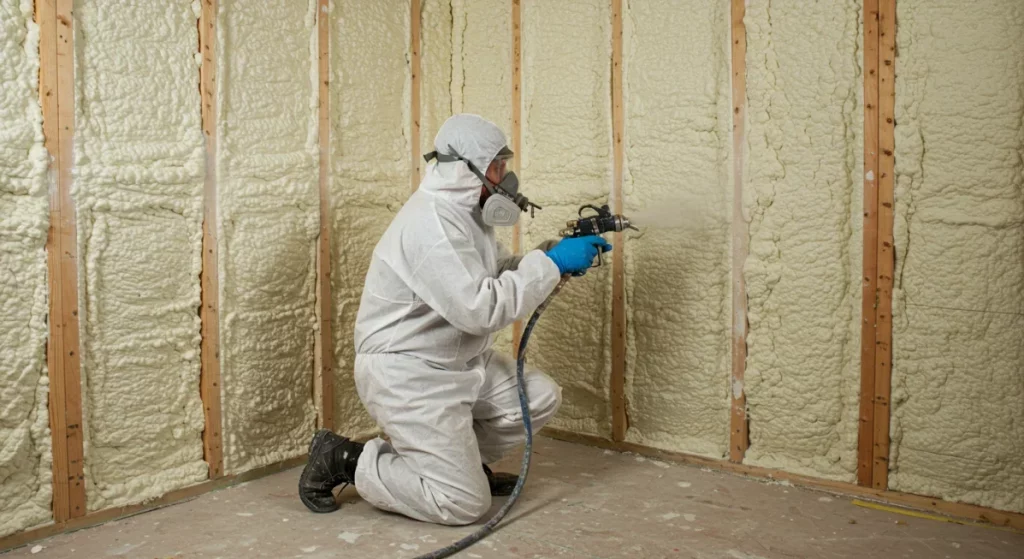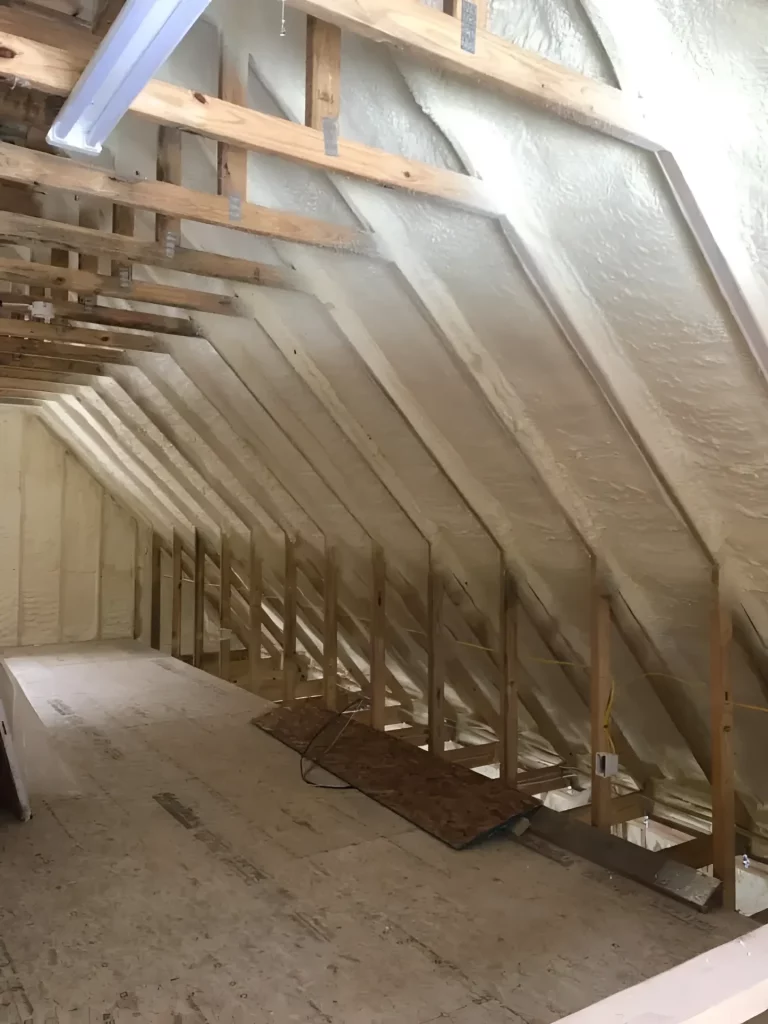



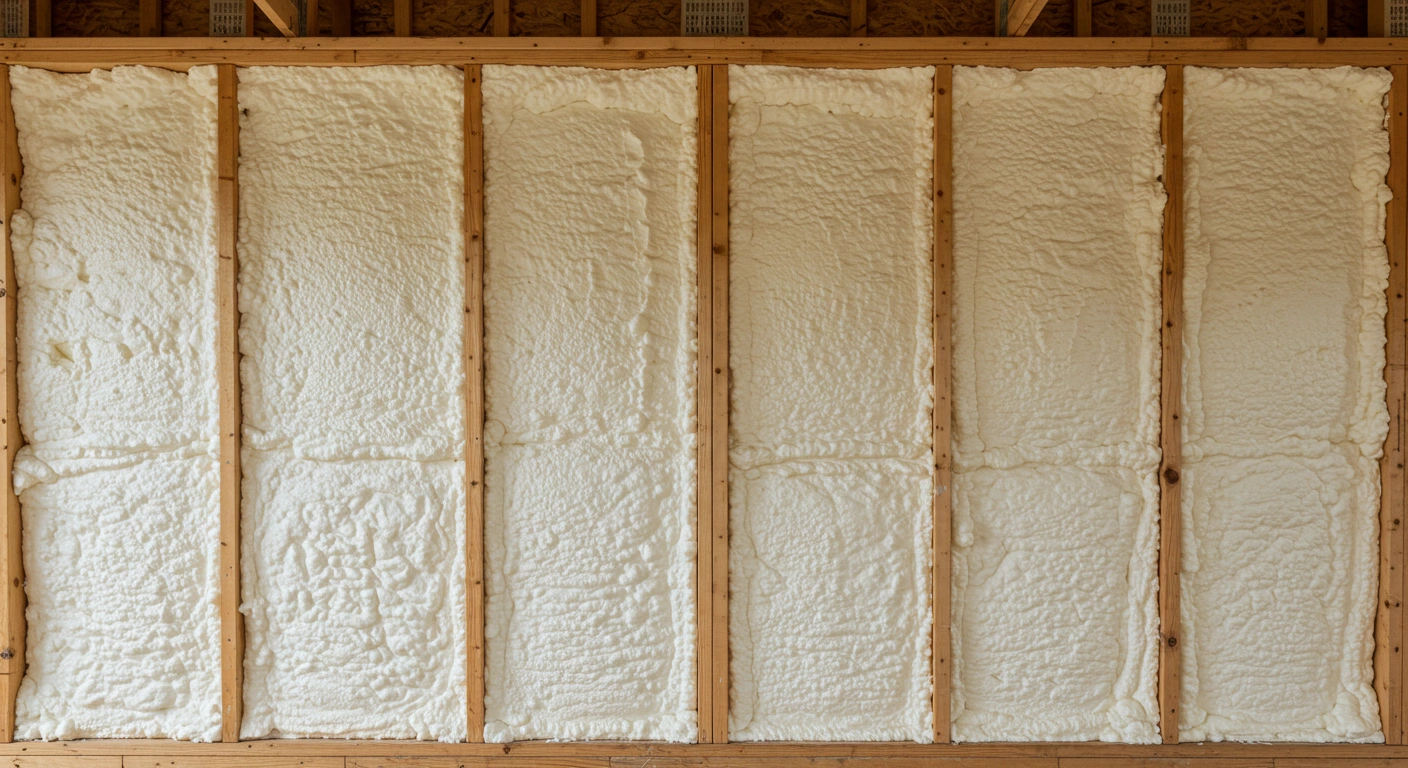
Closed-cell spray foam insulation provides superior moisture protection by creating a continuous, impermeable barrier that prevents water vapor from penetrating building assemblies. Unlike traditional insulation materials that allow moisture to pass through, closed-cell foam achieves an R-value of R-6.0 to R-7.0 per inch while simultaneously acting as both an air barrier and a vapor retarder, qualifying as a Class I vapor barrier (0.1 perm or less) under building science standards. This combination of thermal resistance and moisture blocking makes closed cell foam insulation systems one of the most effective solutions for protecting properties against humidity, condensation, and water intrusion.
TL;DR
- Closed-cell spray foam achieves R-6.0 to R-7.0 per inch, significantly higher than open-cell foam’s R-3.5 to R-3.7 per inch
- At 2 inches or thicker, closed-cell foam qualifies as a Class I vapor barrier that blocks moisture migration
- FEMA classifies closed-cell spray foam as a flood-resistant material that maintains structural integrity during flooding
- By preventing humid air from reaching cold surfaces, closed-cell foam eliminates condensation within wall cavities
- EPA estimates air sealing through proper insulation can save homeowners an average of 15% on heating and cooling costs
- The dense cell structure creates an impermeable seal that also blocks pollen, dust, and allergens from entering the home
Understanding Moisture Threats to Your Property
How Water Enters Building Assemblies
Water enters buildings in three primary forms: liquid (rain and groundwater), solid (snow and ice), and vapor (humidity). While liquid water has been understood for centuries, vapor phase moisture causes significant problems that often go unnoticed until major damage occurs. When warm, humid air from inside your home travels through walls and encounters a cold surface, it condenses into liquid water. Over time, this hidden moisture accumulation leads to wood rot, mold growth, and structural degradation.
The fundamental principle of moisture control requires keeping water out and allowing assemblies to dry if water gets in. Closed-cell spray foam addresses both requirements by creating a continuous seal that prevents moisture-laden air from entering wall cavities in the first place. According to the U.S. Department of Energy, spray polyurethane foam insulation provides both air barrier and vapor retarder properties in a single application, eliminating the gaps and seams that plague traditional insulation products.
Why Traditional Insulation Fails Against Moisture
Fiberglass and cellulose insulation materials are porous and air-permeable, meaning they allow significant amounts of air to pass through them, carrying moisture vapor. When these materials become wet, they lose their insulating properties and can support mold growth. Additionally, traditional batt insulation leaves gaps around wiring, plumbing, and irregular framing members, creating pathways for humid air to reach cold surfaces within wall cavities, which is why learn more about insulation solutions is important for better performance decisions.
Vapor barriers used with traditional insulation often create new problems. According to Building Science Corporation, vapor barriers were originally intended to prevent assemblies from getting wet, but they often prevent assemblies from drying. When installed on the interior of assemblies in air-conditioned homes, traditional vapor barriers can trap moisture inside wall cavities, leading to mold and rot even without obvious water leaks.
How Closed-Cell Spray Foam Creates a Moisture Barrier
The Science Behind Closed-Cell Structure
Closed-cell spray foam consists of millions of tiny cells that are completely enclosed by solid foam walls. This structure makes the material dense, rigid, and impermeable to both air and moisture. When applied, the foam expands to fill every gap, crack, and void in the building envelope, creating a continuous seal that traditional insulation products cannot match.
The perm rating measures how easily water vapor passes through a material. According to Why Spray Foam, closed-cell spray foam often qualifies as a Class II vapor retarder, with some formulations achieving Class I status (0.1 perm or less). This means that at sufficient thickness, closed-cell foam blocks moisture vapor from passing through building assemblies entirely.
The Air Barrier Connection
Closed-cell spray foam simultaneously addresses both air leakage and vapor diffusion. Air barriers prevent the bulk movement of air that carries moisture, while vapor retarders slow the diffusion of water molecules through building materials. Most insulation products provide only one of these functions, requiring additional products and careful installation to achieve complete moisture protection.
When spray foam adheres to walls, boards, and studs, it creates a tight seal that limits potential intrusions from outside contaminants while preventing conditioned air from escaping. This air-sealing capability is critical because moving air carries significantly more moisture than diffused vapor alone. The ENERGY STAR program estimates that air sealing homes can save an average of 15% on heating and cooling costs, demonstrating the substantial impact of proper air barrier installation.
Performance Comparison: Closed-Cell vs. Other Solutions
| Feature | Closed-Cell Spray Foam | Open-Cell Spray Foam | Fiberglass Batt | Cellulose |
|---|---|---|---|---|
| R-Value per Inch | R-6.0 to R-7.0 | R-3.5 to R-3.7 | R-3.1 to R-4.0 | R-3.2 to R-3.8 |
| Air Barrier | Yes | Yes | No | No |
| Vapor Retarder | Class I/II (Yes) | Class III (Limited) | Varies ( kraft facing) | No |
| Water Absorption | None | Can absorb water | Can hold moisture | Can hold moisture |
| Mold Resistant | Yes (when cured) | Semi-permeable | No | No |
| Flood Resistant | Yes (FEMA classified) | No | No | No |
Real-World Protection Scenarios
| Scenario | Problem | Solution | Outcome |
|---|---|---|---|
| Coastal home in humid climate | Persistent condensation on interior walls during summer | Closed-cell foam in exterior walls and attic | Eliminated condensation, reduced AC usage by 25% |
| Older home with drafty basement | Mold growth on rim joists and foundation walls | Closed-cell spray foam applied to rim joist and foundation interior | Stopped moisture infiltration, eliminated mold recurrence |
| New construction in cold climate zone | Ice damming and interior moisture during winter | Closed-cell foam at roofline and exterior walls | Prevented ice dam formation, maintained consistent interior humidity |
| Property with history of flooding | Wooden structural elements at risk during heavy rains | Closed-cell foam in crawlspace and walls | Material maintained integrity during flooding, no water absorption |
Climate Considerations for Moisture Protection
Cold Climate Applications
In heating-dominated climates, warm interior air pushes moisture toward the cold exterior. Closed-cell spray foam installed at the exterior side of framing creates a warm-side vapor barrier that prevents condensation within wall cavities. This approach allows assemblies to dry inward while protecting against exterior moisture intrusion.
Building science research indicates that in very cold climates (Zone 6 and Zone 7), Class II vapor retarders are required on the interior of wall assemblies. Closed-cell spray foam satisfies this requirement while providing the thermal resistance needed to keep interior surfaces above dew point temperatures.
Hot-Humid Climate Applications
In humid climates, the moisture drive reverses during the air conditioning season. Closed-cell foam’s low perm rating prevents humid outdoor air from penetrating conditioned spaces. When properly specified and installed, closed-cell foam controls moisture from both directions, addressing condensation risks that occur when warm, humid air contacts cool interior surfaces.
The material’s resistance to water absorption makes it particularly valuable in humid regions. According to FEMA guidance, closed-cell spray foam is classified as a flood-resistant material, meaning it maintains its structure and insulating properties when exposed to floodwaters.
Installation Best Practices
Proper Thickness Matters
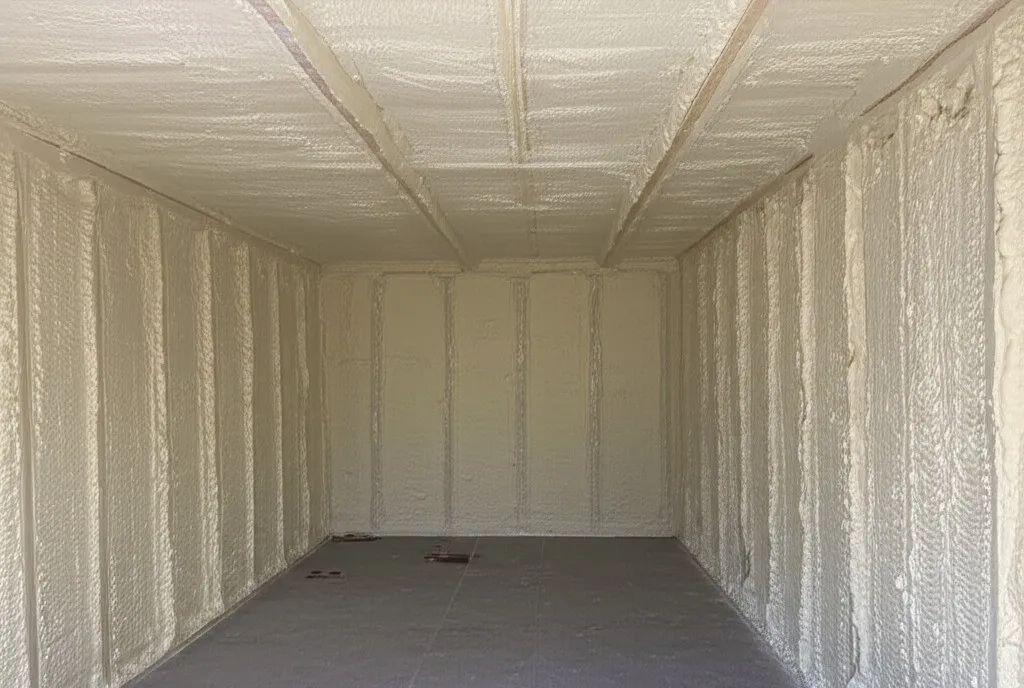
A minimum of 2 inches of closed-cell spray foam is typically required to achieve vapor barrier classification. Thinner applications may provide thermal benefits but will not block vapor diffusion effectively. For maximum moisture protection, work with experienced contractors who understand the relationship between foam thickness, climate conditions, and vapor control requirements.
Attention to Detail Areas
Moisture problems often occur at penetrations and transitions. Professional installers should pay special attention to:
- Electrical wire penetrations through the top plates
- Plumbing stack openings at roofs and floors
- Window and door rough openings
- Rim joist connections between floors
- Foundation to sill plate transitions
Professional Application Requirements
Spray foam installation requires specialized equipment, safety precautions, and training. Professional contractors understand proper mixing ratios, application temperatures, and curing times. DIY kits have limited coverage and may not achieve the consistent cell structure needed for reliable moisture protection. Working with licensed insulation contractors ensures proper code compliance and warranty coverage.
Long-Term Value and Return on Investment
Energy Efficiency Gains
The airtight seal created by closed-cell spray foam reduces heating and cooling costs significantly. By eliminating air leakage through walls and ceilings, HVAC systems operate more efficiently and can often be downsized. Green Builder Media spray foam insulation can reduce energy bills by 30% to 50% compared to traditional insulation products.
Moisture-Related Damage Prevention
The cost of repairing moisture damage far exceeds the investment in proper insulation. Mold remediation alone can cost thousands of dollars, while structural repairs for rotted framing members require removing walls, floors, and finishes. Closed-cell spray foam’s permanent moisture barrier protects your property’s structural integrity and maintains indoor air quality.
Property Value Protection
Homes with spray foam insulation command higher resale values due to their energy efficiency, comfort levels, and protection against moisture problems. The material’s 20+ year service life means property owners recover their investment through ongoing energy savings and avoided repair costs.
Frequently Asked Questions
Does closed-cell spray foam require an additional vapor barrier?
No. Closed-cell spray foam at 2 inches or thicker qualifies as a Class I or II vapor retarder under building codes. Adding a separate vapor barrier over closed-cell foam creates a double vapor barrier that prevents drying, potentially causing moisture problems within wall cavities.
Can closed-cell spray foam help with existing mold problems?
Closed-cell spray foam can stop additional moisture from reaching mold-prone areas, but existing mold must be remediated before installation. The foam seals the cavity, preventing humid air from reaching wood surfaces where mold grows, but it cannot kill or remove existing contamination.
Is closed-cell spray foam safe for occupied homes?
When properly installed by licensed contractors, closed-cell spray foam is safe for residential applications. Professional installers follow manufacturer guidelines and allow proper curing times before occupants return. The cured foam is inert and does not off-gas harmful substances.
How does closed-cell foam perform in flooding situations?
Closed-cell spray foam is FEMA-classified as a flood-resistant material. It does not absorb water, maintains its R-value when wet, and retains structural integrity. This makes it an excellent choice for below-grade spaces and flood-prone areas.
What maintenance does closed-cell spray foam require?
Once installed, closed-cell spray foam requires no maintenance. Unlike fiberglass insulation, it does not settle, degrade, or lose effectiveness over time. The material maintains its insulating and moisture-blocking properties for the life of the building envelope.
Expert Moisture Protection for Your Property
Raleigh Excel Spray Foam Insulation specializes in closed-cell spray foam applications that protect properties from moisture damage while maximizing energy efficiency. Our certified installers understand the science behind vapor control and apply building best practices to every project. Whether you are protecting a new construction project or addressing moisture problems in an existing property, our team delivers solutions that last.
Contact our team today to discuss your moisture protection needs. Call us at (919) 301-9435 or email [email protected] for a comprehensive assessment of your property’s insulation requirements.
Sources
- U.S. Department of Energy – EERE Spray Foam Guide – Comprehensive technical guidance on spray polyurethane foam performance benefits and limitations for residential and commercial building applications.
- Building Science Corporation – BSD-106: Understanding Vapor Barriers – Technical analysis of vapor barrier function, climate-based recommendations, and building assembly moisture control strategies.
- Why Spray Foam Coalition – R-Values and Performance – Industry guidance on spray foam thermal performance, air barrier properties, and vapor retarder classifications.
- ENERGY STAR – Methodology for Estimated Energy Savings – EPA methodology for calculating energy savings from air sealing and insulation improvements in residential buildings.
- Green Builder Media – 5 Outstanding Benefits of Closed Cell Spray Foam Insulation – Industry overview of closed-cell spray foam benefits including moisture barriers, energy efficiency, and building envelope protection.

- What Role Does Insulation Thickness Play in Building Durability and Material Performance? - October 23, 2026
- How Can Spray Foam Insulation Improve Coverage Around Irregular Framing? - October 23, 2026
- Why Is Closed Cell Spray Foam Effective Around Moisture-Prone Building Areas in Raleigh, NC? - October 21, 2026