


If your heating and cooling bills keep climbing, certain rooms feel drafty while others stay stuffy, or you notice ice building up along your roof edge in winter, your roof insulation is likely failing, and the problems will only get worse over time. The EPA estimates that 9 out of 10 homes in the U.S. are under-insulated, meaning your property is probably among the majority that stand to benefit from an upgrade. Source: ENERGY STAR. Roof insulation upgrades address heat transfer through conduction, convection, and radiation, and the right solution depends on your climate zone, existing insulation condition, and whether your attic is vented or unvented. Ignoring the warning signs leads to higher utility costs, moisture damage, and premature HVAC wear, while acting on them delivers measurable energy savings and year-round comfort.
TL;DR
- The EPA estimates homeowners can save an average of 15% on heating and cooling costs by air sealing and adding attic insulation. Source: ENERGY STAR
- 90% of U.S. homes are under-insulated, making outdated roof insulation one of the most common energy efficiency problems nationwide
- Ice dams along your roof edge signal that heat is escaping through your attic and warming the roof deck, a problem the National Weather Service links directly to inadequate insulation levels. Source: NWS
- Uneven indoor temperatures, drafts near the ceiling, and HVAC systems that run constantly are all practical indicators that your current insulation has degraded or was never sufficient
- Visible signs like compressed, wet, or pest-damaged insulation mean the material has lost its R-value and needs replacement, not just a top-off
- Moisture problems, including mold, mildew, and water stains on ceilings, often trace back to condensation caused by poor roof insulation and air sealing
- Federal tax credits of up to $1,200 are available for qualifying attic insulation projects, reducing the investment for homeowners
How Roof Insulation Works and Why It Fails
Insulation resists the flow of heat between your living spaces and the outdoors. In winter, heated air naturally rises and seeks escape routes through any gaps, cracks, or thin spots in your ceiling and attic floor. In summer, radiant heat from the sun beats down on your roof and pushes warmth inward. According to the U.S. Department of Energy, insulation provides resistance to this heat flow by slowing conductive, convective, and radiant transfer, which directly lowers your heating and cooling costs Source: DOE Energy Saver.
The effectiveness of insulation is measured by its R-value, which represents thermal resistance. Higher R-values mean better performance. However, R-value depends on the type of insulation, its thickness, its density, and whether it has been compressed, moisture-damaged, or improperly installed. Over time, fiberglass batts can sag and leave gaps, loose-fill materials settle and lose depth, and any insulation exposed to moisture permanently loses thermal resistance. This gradual degradation is why a home built 20 or 30 years ago may have had adequate insulation when constructed but falls well short of current standards today.
The Warning Signs to Watch For
Climbing Energy Bills
When your HVAC system works overtime to compensate for heat loss through the roof, your utility bills reflect that strain. If you have noticed a steady increase in heating or cooling costs without a corresponding rate hike from your utility provider, inadequate roof insulation installation is one of the most likely causes. The Department of Energy notes that proper insulation decreases the amount of heat flow that your mechanical systems must replace, directly reducing energy consumption.
Uneven Temperatures and Drafty Rooms
Rooms directly below the attic, especially those on the second floor or near vaulted ceilings, tend to feel noticeably colder in winter and hotter in summer when insulation is lacking. You may also feel drafts near ceiling-mounted light fixtures, attic hatches, or dropped soffits where air is leaking from conditioned space into the attic. ENERGY STAR points out that if you added up all the leaks, holes, and gaps in a typical home’s envelope, it would be the equivalent of having a window open every day of the year.
Ice Dams Forming Along the Roof Edge
Ice dams are one of the most visible and damaging signs of poor roof insulation. The National Weather Service explains that ice dams occur when heavy snow on the roof melts from heat escaping the attic, flows down to the colder eaves, and refreezes, creating a ridge that traps water behind it. This backed-up water can seep under shingles, into the attic, and eventually stain ceilings and damage walls. The University of Minnesota Extension notes that making the ceiling airtight and increasing insulation are the two most effective long-term solutions Source: UMN Extension.
Moisture, Mold, and Musty Odors
When warm indoor air escapes into a cold attic, condensation forms on the roof decking, framing members, and insulation itself. Over time, this moisture creates the conditions for mold and mildew growth. If you notice a persistent musty smell in upper floors, visible mold on attic surfaces, or water stains on ceilings, poor insulation and air sealing are likely contributors. Insulation that has been exposed to moisture cannot perform as rated and should be evaluated for replacement.
Visible Insulation Damage
If you can see your attic insulation and it appears compressed, thin, discolored, wet, or has been disturbed by pests, it is no longer providing its rated R-value. Fiberglass batts that have fallen away from framing, cellulose that has settled several inches below its original depth, or any material that has been chewed or nested in by rodents all represent compromised thermal barriers. In these cases, adding new insulation on top of damaged material will not deliver full performance because the degraded layer underneath still blocks very little heat transfer.
How Much Insulation Does Your Attic Actually Need?
The answer depends on your climate zone. The DOE and ENERGY STAR publish recommended R-values for attics based on geographic location Source: ENERGY STAR R-Values:
| Climate Zone | Uninsulated Attic | Existing 3-4 Inches of Insulation |
|---|---|---|
| Zone 1 | R30 to R49 | R25 to R30 |
| Zone 2 | R49 to R60 | R38 to R49 |
| Zone 3 | R49 to R60 | R38 to R49 |
| Zone 4 (non-marine) | R60 | R49 |
| Zones 4 (marine) and 5 | R60 | R49 |
| Zones 6, 7, and 8 | R60 | R49 |
Raleigh, North Carolina falls in Climate Zone 4, which means an uninsulated attic should have at least R-60, and an attic with 3 to 4 inches of existing insulation should be upgraded to R-49. Most older homes in this region were built with far less than these minimums, making an upgrade a practical necessity rather than a luxury.
A quick visual check can help: if you can see the joists (ceiling framing) sticking up above the insulation in your attic, you almost certainly do not have enough. The insulation should completely cover the joists for an effective thermal barrier.
Understanding Different Insulation Approaches for Roofs
Not all insulation materials perform the same way, and the right choice depends on your attic configuration, budget, and performance goals.
| Insulation Type | How It Works | Best Application | Key Advantage |
|---|---|---|---|
| Fiberglass batts | Pre-cut panels fitted between framing | Standard joisted attics with regular spacing | Low material cost, widely available |
| Loose-fill fiberglass or cellulose | Blown into cavities to fill irregular spaces | Attics with obstructions, low-clearance areas | Conforms to any shape, fills gaps |
| Open-cell spray foam | Expands to fill cavities and seal air leaks | Unvented attics, irregular framing | Air sealing and insulation in one step |
| Closed-cell spray foam | Dense foam with higher R-value per inch | Roof decks, conditioned attics, moisture-prone areas | Highest R-value per inch, moisture barrier |
| Rigid foam boards | Installed on roof deck or walls | Cathedral ceilings, continuous insulation applications | Adds R-value without adding bulk |
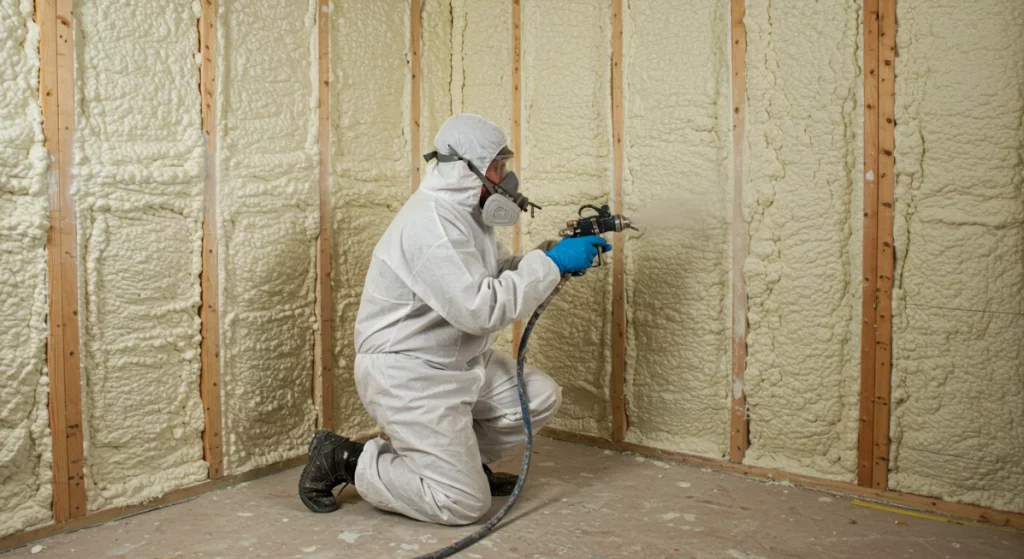
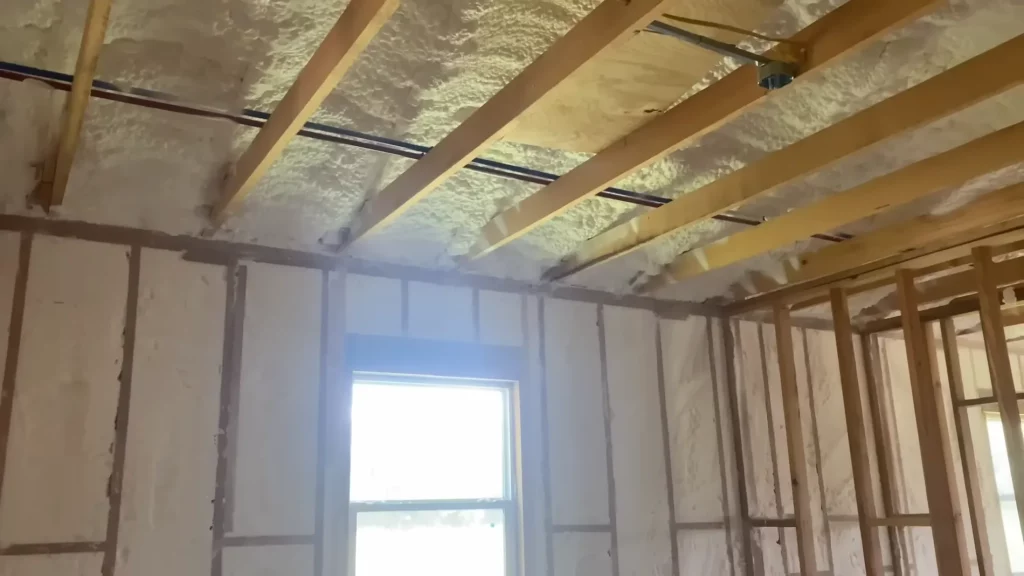
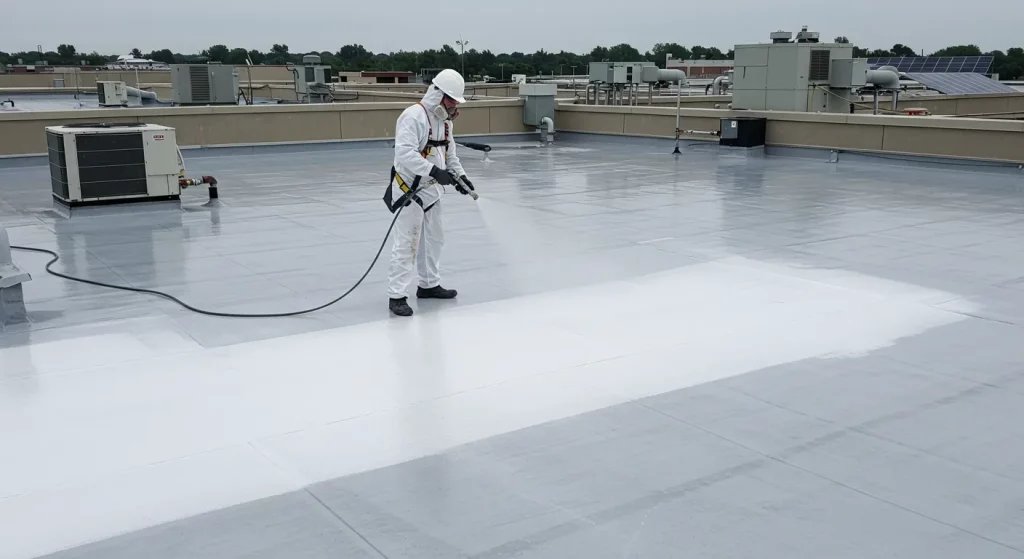
Spray foam insulation in particular offers the combined benefit of air sealing and thermal resistance in a single application, which is why it has become a preferred solution for roof and attic upgrades. By sealing gaps and penetrations at the same time it insulates, spray foam addresses both heat loss and air infiltration simultaneously.
Common Mistakes That Reduce Insulation Performance
Even with the right material and sufficient R-value, installation errors can dramatically reduce effectiveness. Some of the most frequent problems we see include:
- Blocking soffit ventilation with insulation, which restricts airflow and traps moisture in the attic
- Compressing insulation to fit around wiring, ductwork, or fixtures, which lowers its effective R-value
- Leaving gaps around penetrations such as plumbing stacks, electrical runs, and recessed lights, which allows continuous air leakage
- Failing to air seal first, so that new insulation simply covers leaks without stopping them
- Using the wrong insulation type for the application, such as batts in irregular spaces where loose-fill or spray foam would perform better
A professional assessment will identify these issues before they undermine the performance of your upgrade.
Recommendations by Property Type
Older Homes (Pre-1990 Construction)
Homes built before modern energy codes almost always have insufficient attic insulation. If the original insulation has never been upgraded, you are likely operating at well below recommended R-values. A full removal and replacement often delivers the best results, since layered or compressed old material reduces the effectiveness of anything added on top.
Recently Purchased Homes
If you have recently bought a property, the insulation condition is often unknown. A professional energy audit or attic inspection should be one of your first priorities, since insulation problems do not show up on standard home inspections. Look specifically at whether the attic floor is fully covered, whether soffit vents are clear, and whether there are signs of moisture or pest activity.
Homes with Vaulted or Cathedral Ceilings
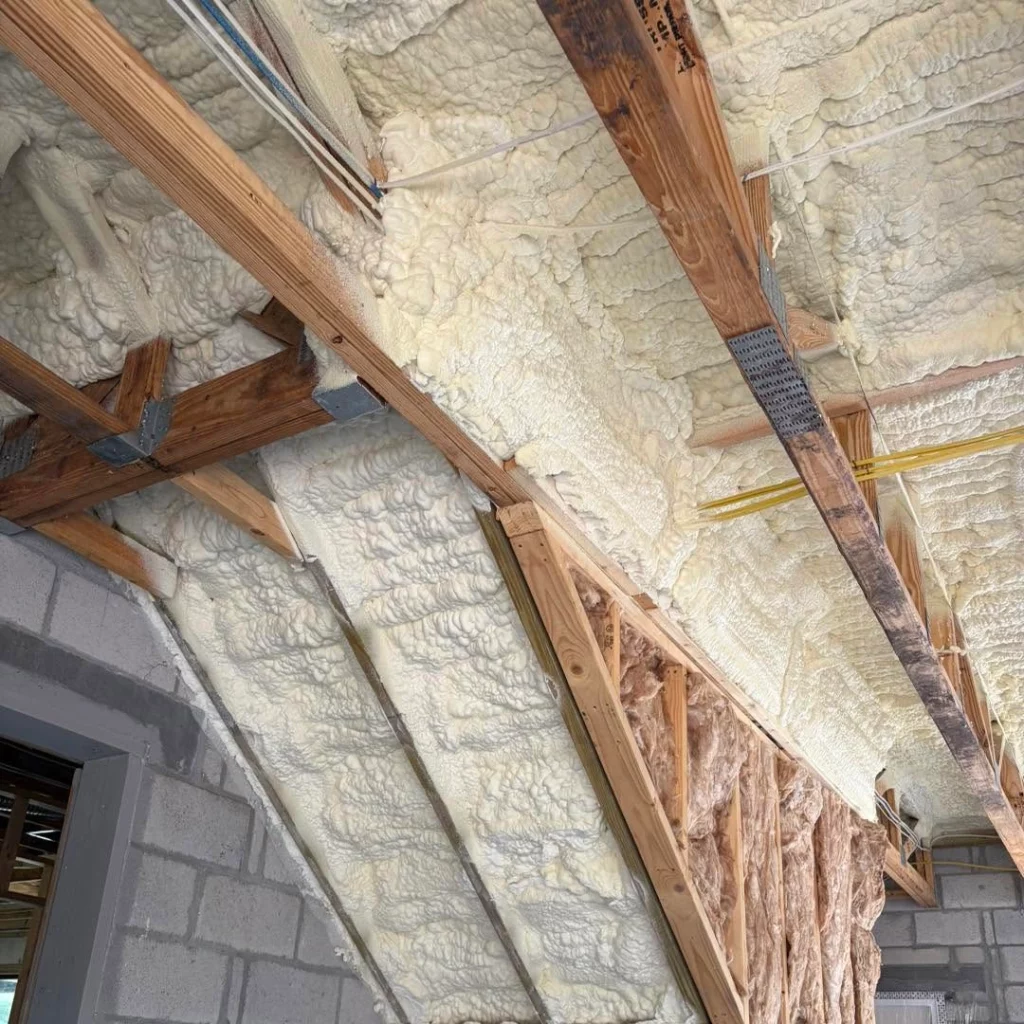
Vaulted ceilings present a different challenge because there is typically no attic floor to insulate. Instead, insulation must be installed between the rafters at the roof deck. Spray foam insulation is particularly effective here because it seals the rafter cavities and provides a continuous thermal barrier without the gaps that plague batt installations in angled spaces.
Properties with Ice Dam History
If your property has experienced ice dams in past winters, the priority is air sealing the ceiling plane and bringing insulation up to at least R-38 in the attic floor, or higher if your climate zone requires it. The National Weather Service recommends evaluating both insulation levels and ventilation as a combined solution.
Signs You Have Found the Right Insulation Contractor
Choosing the right professional for your roof insulation upgrade matters as much as selecting the right material. Look for these indicators:
- Thorough inspection process: The contractor should physically examine your attic, measure existing insulation depth, identify air leakage points, and assess ventilation before recommending any solution.
- Clear explanation of options: A strong contractor explains the difference between insulation types, what R-value your home needs, and why a specific approach fits your situation better than others.
- Attention to air sealing: The right provider understands that insulation without air sealing is only half the solution and includes air sealing as part of the scope of work.
- Transparency on scope and process: You should receive a detailed proposal that specifies the insulation type, target R-value, areas to be treated, and any preparatory work needed.
- Willingness to answer questions: A knowledgeable team takes the time to explain each step of the process, from assessment through installation and post-project inspection.
Ready to Address Your Roof Insulation Problems
Raleigh Excel Spray Foam Insulation provides professional roof and attic insulation assessments and installations for homeowners throughout the Raleigh area. Our team evaluates your current insulation levels, identifies air leakage points, and recommends the right solution to meet your comfort and efficiency goals. Whether your property needs a full insulation overhaul or a targeted upgrade, we deliver results that lower your energy costs and protect your home from moisture damage.
Reach us at [email protected] or call (919) 301-9435 to get started.
Frequently Asked Questions
Q: How do I know if my attic insulation is below current standards?
A: If you can see the ceiling joists above your insulation, it is likely below recommended levels. Most homes in Climate Zone 4 should have at least R-49 in the attic floor, which is roughly 14 to 16 inches of fiberglass batts or blown-in material.
Q: Can I add new insulation over old insulation?
A: In many cases, yes, but only if the existing insulation is dry, undamaged, and free of mold or pests. If the old material is compressed, wet, or contaminated, it should be removed before new insulation is installed.
Q: Will upgrading my roof insulation reduce ice dams?
A: Proper insulation and air sealing address the root cause of ice dams by keeping warm indoor air from reaching the roof deck and melting snow. The National Weather Service and University of Minnesota Extension both identify this as the most effective long-term prevention strategy.
Q: How long does a roof insulation upgrade take?
A: Most attic insulation projects for a typical residential property are completed in one day. More complex installations involving vaulted ceilings, insulation removal, or extensive air sealing may take longer.
Q: Is spray foam insulation worth the investment for roof applications?
A: Spray foam provides both insulation and air sealing in a single application, delivering higher effective R-values than traditional materials and eliminating the air leaks that reduce the performance of other insulation types. For roof decks, cathedral ceilings, and unvented attic assemblies, it offers advantages that batts and blown-in materials cannot match.
Sources
- Department of Energy – Insulation – Comprehensive guide on how insulation works, R-values, climate zone recommendations, and insulation types from the U.S. Department of Energy.
- ENERGY STAR – Why Seal and Insulate – EPA data on energy savings from sealing and insulating, including the 15% heating and cooling cost savings estimate and the statistic that 90% of U.S. homes are under-insulated.
- ENERGY STAR – Rule Your Attic – ENERGY STAR’s attic insulation campaign with savings data, federal tax credit information, and guidance on measuring existing insulation levels.
- National Weather Service – Preventing Roof Ice Dams – NOAA/NWS guide on how ice dams form, the role of insulation in preventing them, and recommended minimum R-values for attic insulation.
- University of Minnesota Extension – Dealing with and Preventing Ice Dams – Detailed explanation of heat transfer mechanisms that cause ice dams and long-term prevention strategies including air sealing and insulation upgrades.

- How Should Raleigh, NC Property Owners Evaluate Insulation for Long-Term Use? - September 23, 2026
- What Factors Affect Insulation Performance Across Different Parts of a Property? - September 23, 2026
- Could Spray Foam Insulation Be Useful Around Uneven Building Sections in Wake Forest, NC? - September 18, 2026