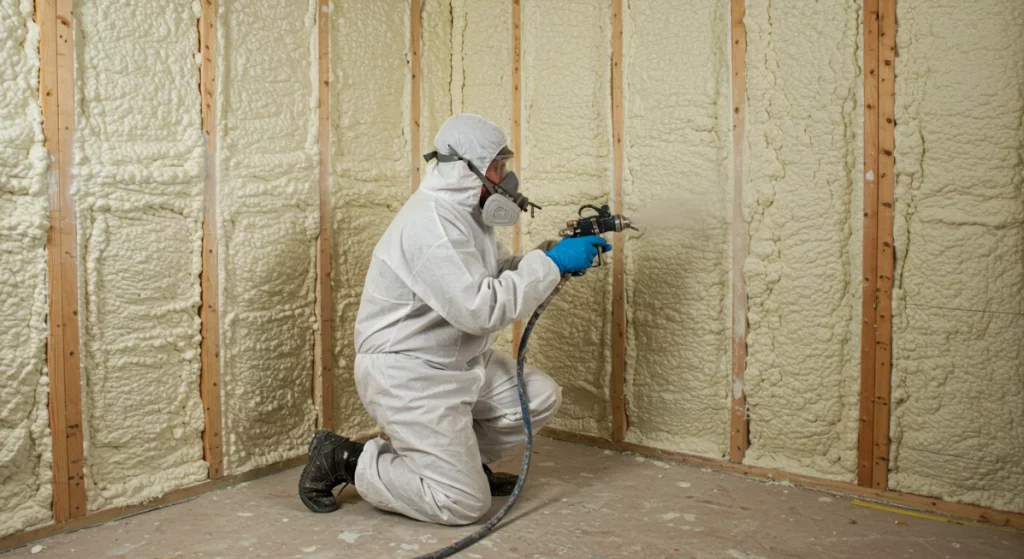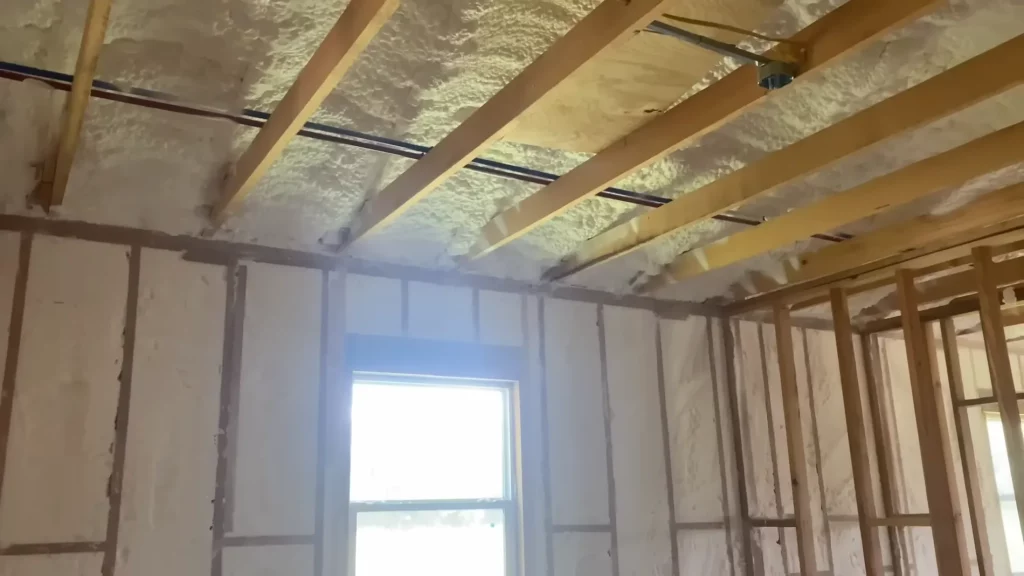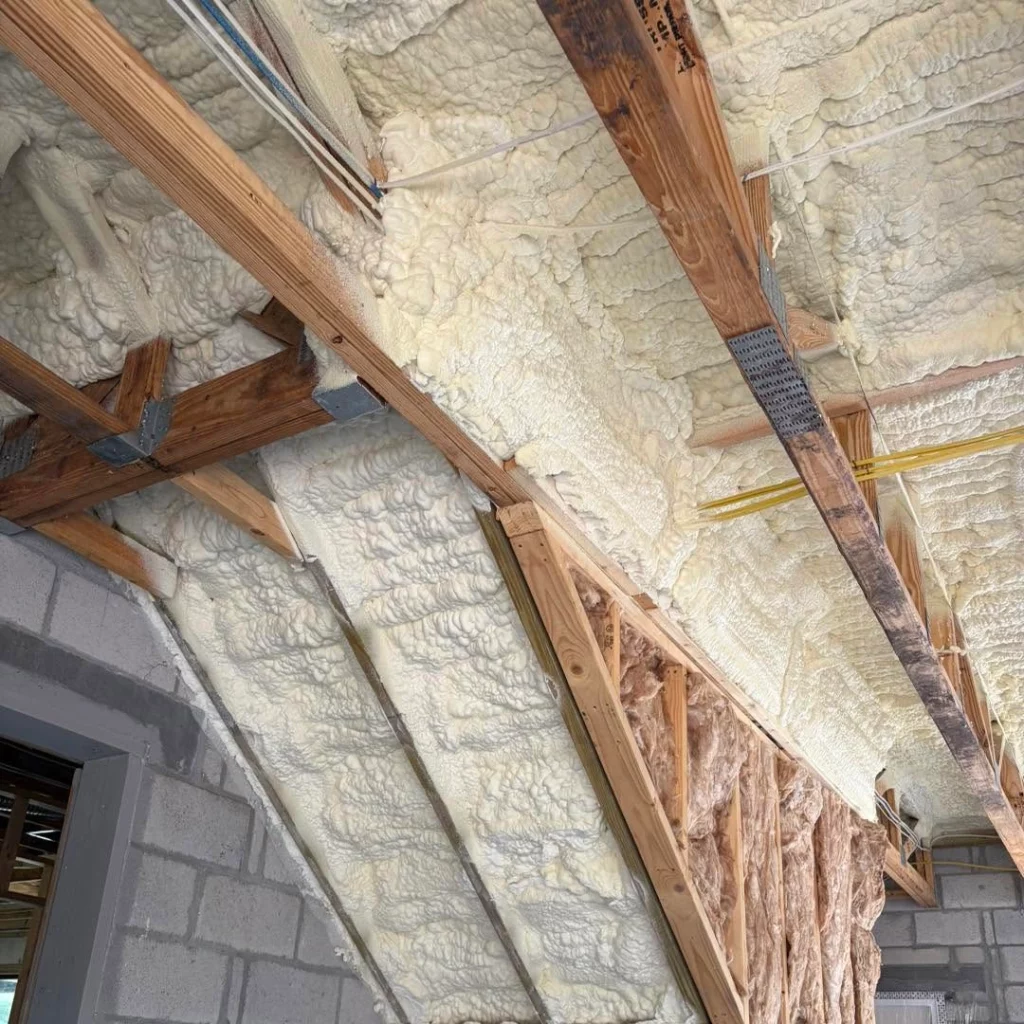



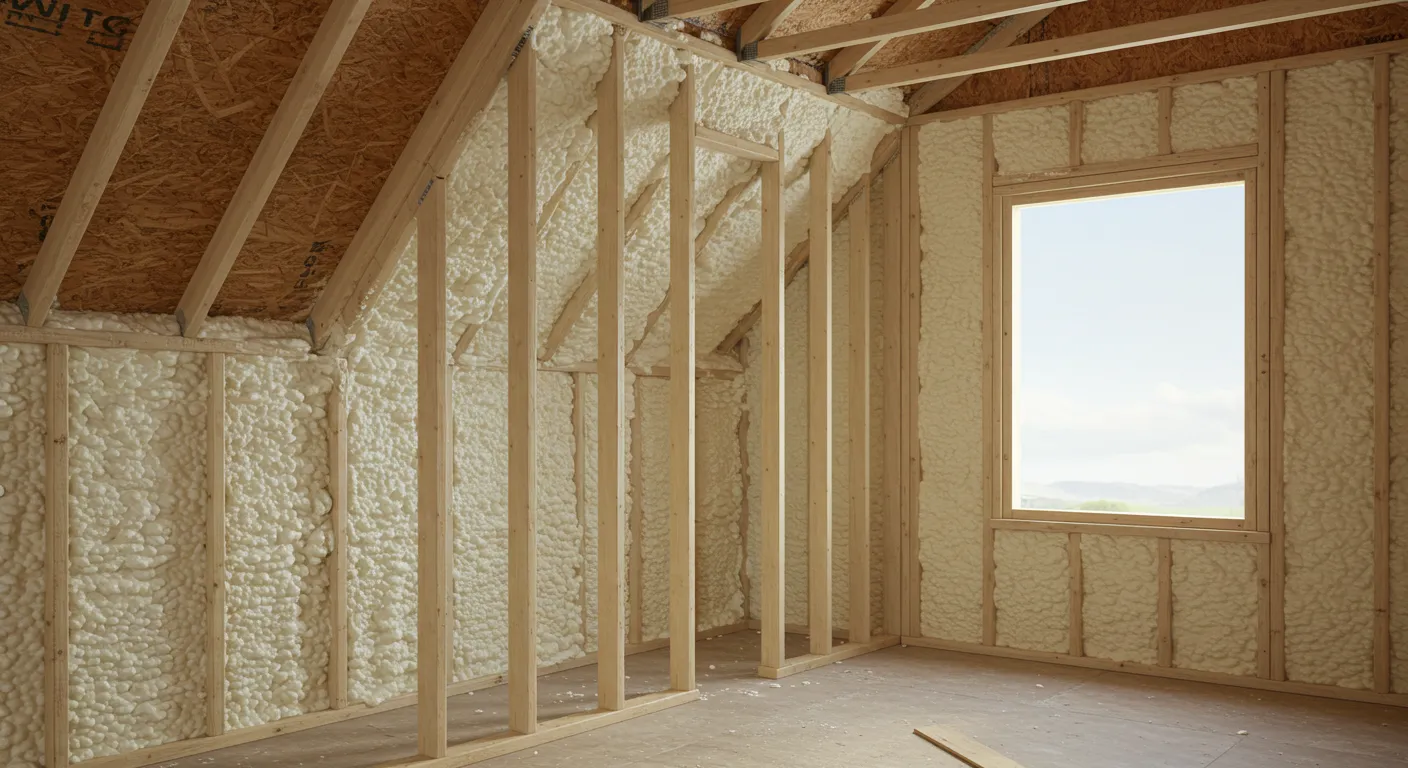
Spray foam roofing, formally known as spray polyurethane foam (SPF), is a seamless roofing and insulation system applied directly to a building’s roof deck. For commercial and residential property owners in Raleigh, NC looking to cut energy waste and extend roof life, SPF delivers two functions in one: a continuous insulation layer and an airtight seal that traditional roofing simply cannot match. The right choice between spray foam and conventional roofing depends on your building type, climate exposure, budget timeline, and whether you prioritize long-term operating savings over lower upfront material costs. Below, we break down how spray foam roofing services work, what the research says about their performance, and how to evaluate whether they fit your property.
TL;DR
- As much as 40% of a building’s energy is lost through air infiltration, and spray foam addresses this by serving as both insulation and an air barrier in a single application
- Closed-cell SPF used in roofing delivers an aged R-value of 6 to 7.5 per inch of thickness, outperforming most traditional insulation materials per inch
- Texas A&M University research on over 8 million square feet of SPF roofing found that energy savings paid for the system within three to four years
- Studies of more than 1,600 SPF roofs showed 97.6% did not leak, even when over half had never been maintained
- SPF roofing systems have demonstrated wind uplift resistance that exceeded laboratory testing equipment capacity during UL and FM Global testing
- Independent post-hurricane surveys by NIST and RICOWI confirmed SPF roofs outperformed other systems during major storms
- SPF bonds directly to the substrate with no mechanical fasteners, eliminating thermal bridging common in nailed-down roofing
- HVAC systems can be downsized by up to 35% in buildings with SPF insulation, reducing equipment and operating costs
How Spray Foam Roofing Works
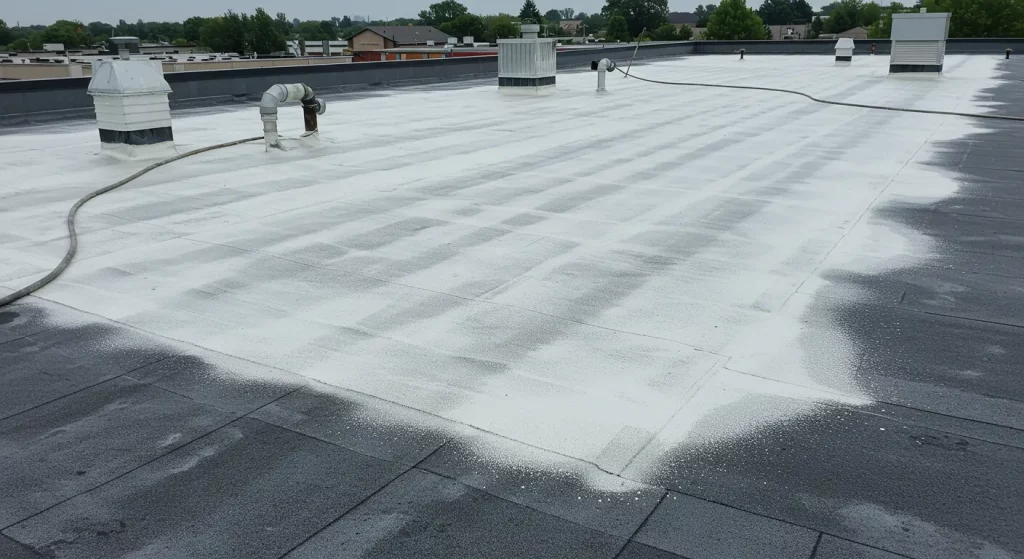
SPF roofing is applied as a liquid mixture of two chemical components that react on contact, expanding into a continuous foam layer that adheres directly to the roof deck. Once cured, the foam is topped with a protective coating, typically elastomeric silicone or acrylic, which guards against UV exposure and weather. This monolithic layer has no seams, joints, or fastener penetrations, which is where most conventional roofs develop leaks over time.
The U.S. Department of Energy explains that insulation provides resistance to heat flow and that R-value measures this thermal resistance. Higher R-values mean better insulating effectiveness. Unlike traditional insulation that leaves gaps at joints, studs, and fastener points, spray foam expands to fill every void and irregularity in the substrate, creating what building scientists call a continuous insulation and air barrier assembly.
Energy Efficiency Performance
Air Sealing and Thermal Resistance
The energy savings from spray foam roofing come from two mechanisms working together. First, the foam’s high R-value resists conductive heat transfer. Second, and arguably more important, SPF acts as a continuous air barrier that stops convective heat loss. According to Why Spray Foam, as much as 40% of a building’s energy is lost due to air infiltration through gaps, cracks, and penetrations. Spray foam seals these pathways in a single step.
Traditional roofing systems rely on mechanical fasteners to secure insulation boards and membranes to the deck. Each fastener creates a thermal bridge, a direct path for heat to travel from the interior to the exterior roof surface. On a hot summer day, dark-colored roof membranes can reach surface temperatures up to 190 degrees Fahrenheit. Fasteners alone can reduce effective insulation value by 1.5% to 31.5%, depending on quantity and type. SPF roofing eliminates this problem entirely because the foam bonds directly to the substrate without fasteners.
R-Value Advantages
Why Spray Foam’s R-Values and Performance data shows closed-cell roofing spray foam starts at R-5.5 per inch, while medium-density closed-cell foam used in wall and ceiling applications starts at R-5.7 per inch. By comparison, fiberglass batt insulation typically delivers R-3.2 to R-3.8 per inch. In real terms, a 2-inch application of closed-cell SPF roofing foam achieves R-11 to R-15, which would require roughly 4 inches of fiberglass to match.
Beyond the raw R-value, SPF’s air barrier function adds performance that standard insulation ratings do not capture. The EPA’s Energy Star program estimates that adding insulation and sealing air leaks can save up to 20% on monthly energy bills. Because SPF accomplishes both simultaneously, its effective energy savings often exceed what the R-value alone would predict.
Real-World Energy Data
Research documented by Green Building Solutions cites a Texas A&M University study covering more than 8 million square feet of roofing. The university tracked energy consumption before and after SPF retrofits across their campus buildings and concluded that the energy savings from those systems paid for the cost of installation within three to four years. Additionally, side-by-side energy efficiency comparisons have shown up to 40% energy savings when using SPF over commonly specified insulation materials.
The U.S. Department of Energy estimates that 56% of energy used in the average home goes to heating and cooling. When you combine high R-value per inch with complete air sealing, SPF reduces the workload on HVAC equipment significantly. In fact, with spray foam, HVAC sizing can be reduced as much as 35% without sacrificing comfort or efficiency.
Roof Durability and Weather Resistance
Lifespan and Maintenance
The most compelling durability data on SPF roofing comes from long-term performance surveys. Between 1983 and 1996, researcher Dean Kashiwagi surveyed more than 1,600 SPF roofing systems across multiple climates. In his 1996 report, the oldest performing SPF roofs were over 26 years old, 97.6% did not leak, and 93% had less than 1% deterioration. Perhaps most notable, 55% of those roofs had never received any maintenance.
A separate 1998 study by Rene Dupuis evaluated more than 160 SPF roofs in six different U.S. climates and reached similar conclusions about sustainability. SPF’s physical properties did not diminish over time, and more than 70% of the roofs surveyed were installed directly over existing roofing systems without tear-off.
Wind and Storm Performance
SPF roofing has a track record in severe weather that few other systems can claim. The foam’s tenacious bond to the substrate gives it exceptional wind uplift resistance. During laboratory testing at Underwriters Laboratories and FM Global, SPF’s wind uplift performance actually exceeded the capacity of the testing equipment. The material was also shown to increase the wind uplift resistance of existing built-up and metal roof coverings when applied over them.
Independent post-hurricane surveys by the National Institute of Standards and Technology (NIST) and the Roofing Industry Committee on Weather Issues (RICOWI) documented SPF’s performance during Hurricanes Allen, Hugo, Andrew, Katrina, Ike, Irma, and Michael. Researchers consistently noted that SPF roofs maintained structural integrity, resisted wind-driven debris, and prevented moisture intrusion more effectively than other roof types. RICOWI has published multiple field investigation reports confirming these findings across hurricanes and hailstorms dating back to 2004.
Hail and Impact Resistance
SPF is a closed-cell foam with a density that absorbs impact energy. Hail and wind-driven missiles rarely cause leaks because damage is typically limited to the top coating and upper foam layers. The underlying intact foam continues to prevent water intrusion. As Dr. Dupuis noted in his research, one unique property of SPF roofs is that they are not in immediate danger of leaking, provided the penetration does not extend all the way through the foam. Damaged areas can be repaired at a later date without compromising the system’s long-term performance.
Moisture Control
The Oak Ridge National Laboratory (ORNL) identifies moisture intrusion and lack of wind resistance as the two principal causes of premature roof failure. SPF directly addresses both. Its 90% closed-cell structure limits water movement, and its seamless application means there are no seams, laps, or fastener holes where water can enter. ORNL reports that moisture within roofing systems leads to dripping, accelerated insulation and membrane failure, structural deterioration, and poor thermal performance. SPF’s monolithic seal keeps moisture out of the building envelope.
How Spray Foam Compares to Traditional Roofing
| Feature | Spray Foam Roofing (SPF) | Traditional Membrane / BUR |
|---|---|---|
| R-Value per Inch | 5.5 to 7.5 | 2.3 to 4.0 |
| Air Barrier | Yes, continuous | No, requires separate system |
| Thermal Bridging | None, no fasteners | Present at all fastener points |
| Seams and Joints | None, monolithic | Multiple, leak-prone |
| Wind Uplift Resistance | Exceeds UL testing capacity | Varies by system and attachment |
| Hail Resistance | High, absorbs impact | Moderate to low, membrane-dependent |
| Renewable | Yes, re-coating extends life | No, full replacement needed |
| Installation Over Existing Roof | Yes, in most cases | Often requires tear-off |
| HVAC Downsizing Potential | Up to 35% | Minimal |
Who Benefits Most from Spray Foam Roofing
Commercial Building Owners
Flat and low-slope roofs on warehouses, retail spaces, and office buildings are ideal candidates for SPF. These roofs typically have large surface areas where energy loss through conduction and air infiltration is highest. The ability to apply SPF over existing roofing without tear-off also means commercial operations can avoid costly business interruptions.
Residential Property Owners with Flat or Low-Slope Roofs
Homes with flat roof sections, such as porches, additions, or modern designs, benefit from SPF’s seamless protection. In mixed-humid climates like central North Carolina, the combination of hot summers and cool winters makes a high-performance air barrier and insulation layer especially valuable for year-round comfort.
Property Owners with Aging Roofs
When an existing roof has structural integrity but failing membrane or insulation, SPF can be applied directly over it. This eliminates tear-off costs, reduces landfill waste, and adds a new insulated, monolithic roofing surface. More than 70% of SPF installations in the Dupuis study were re-covers over existing systems.
Signs You Have Found the Right Spray Foam Contractor
- They explain the specific foam thickness and coating type recommended for your building’s slope, substrate, and climate zone
- They discuss both the installation process and the ongoing maintenance schedule for re-coating
- They provide specific warranty terms covering both materials and workmanship, with clear call-back procedures
- They hold certifications or affiliations with recognized industry organizations such as SPFA
- They walk you through a detailed scope of work rather than giving a vague verbal estimate
- They offer references from projects similar in scale and building type to yours
- They ask questions about your building’s use, occupancy, and HVAC system before recommending a solution
Protect Your Roof and Lower Your Energy Costs
Raleigh Excel Spray Foam Insulation has the experience and expertise to help property owners across the Triangle region make smart, lasting decisions about their roofing and insulation needs. Our team evaluates each project individually, recommending the right foam type, thickness, and protective coating for your specific building and goals. Whether you are dealing with an aging commercial roof or building new construction, we deliver a seamless, energy-saving solution built to last.
Contact: [email protected] | (919) 301-9435
Frequently Asked Questions
Can spray foam roofing be applied over my existing roof?
Yes, in most cases SPF can be installed directly over existing roofing membranes, built-up roofs, metal panels, and concrete decks, provided the substrate is structurally sound and properly prepared.
How does spray foam roofing handle North Carolina’s humidity and heat?
SPF’s closed-cell structure prevents moisture infiltration while its high R-value reduces heat transfer, making it well-suited for the hot, humid summers and cool winters common in central North Carolina.
What kind of maintenance does a spray foam roof need?
SPF roofs require periodic re-coating of the protective top layer, typically every 10 to 20 years depending on the coating type and environmental exposure. The foam itself does not degrade structurally when protected from UV.
Does spray foam roofing qualify for energy efficiency tax credits or incentives?
Federal and state tax credits may be available for insulation upgrades that improve building energy performance. We recommend checking current DSIRE database listings and consulting a tax professional for your specific eligibility.
Will spray foam roofing add structural strength to my building?
Yes, closed-cell SPF adds rigidity and can improve wind uplift resistance. Research has shown SPF increases racking strength in wall assemblies by up to 50% and enhances the structural performance of framed building systems.
Sources
- U.S. Department of Energy – Insulation – Government resource covering how insulation works, R-value ratings, climate zone recommendations, and the relationship between thermal resistance and energy savings.
- Why Spray Foam – Energy Efficiency – Industry educational resource documenting that up to 40% of building energy is lost to air infiltration, EPA Energy Star savings estimates, and HVAC downsizing data of up to 35% with spray foam.
- Why Spray Foam – R-Values and Performance – Detailed R-value comparison chart for open-cell, closed-cell, and roofing spray foam, plus technical properties including air barrier and vapor retarder classifications.
- Green Building Solutions – Sustainability Characteristics of SPF Roofing – Comprehensive research summary covering Texas A&M energy savings data, Kashiwagi and Dupuis roof performance surveys of over 1,700 SPF roofs, ORNL durability findings, and UL/FM Global wind uplift testing.
- RICOWI – Published Investigation Reports – Non-profit organization’s independent post-disaster field investigation reports on roofing system performance during hurricanes Katrina, Ike, Irma, Michael, and major hailstorms across the United States.

- How Should Raleigh, NC Property Owners Evaluate Insulation for Long-Term Use? - September 23, 2026
- What Factors Affect Insulation Performance Across Different Parts of a Property? - September 23, 2026
- Could Spray Foam Insulation Be Useful Around Uneven Building Sections in Wake Forest, NC? - September 18, 2026