


Wall insulation is one of the most impactful investments a homeowner can make toward year-round indoor comfort. By slowing heat transfer through the building envelope, properly insulated walls reduce the load on heating and cooling systems, stabilize indoor temperatures, and protect against moisture damage. According to the U.S. According to the Energy Information Administration, U.S. households consumed an average of 76.7 million Btu of site energy in 2020, and that consumption is largely driven by outdoor temperature, with space heating and cooling accounting for the biggest seasonal swings . The right insulation strategy depends on your climate zone, wall construction type, and existing conditions, but the fundamental physics remain the same: Wall Insulation Explained creates a thermal barrier that keeps conditioned air inside and extreme temperatures outside. Different materials, from fiberglass batts to spray foam, address different modes of heat transfer including conduction, convection, and radiation
TL;DR
- Wall insulation targets all three modes of heat transfer: conduction through solid materials, convection through air movement, and radiation across wall cavities.
- Buildings account for roughly 40% of global energy consumption, and the majority of that goes toward heating and cooling [Wikipedia – Building Insulation].
- The effectiveness of insulation is measured by its R-value, with higher values indicating greater resistance to heat flow.
- ASHRAE 90.1 sets minimum prescriptive R-value requirements for walls based on climate zone, ranging from R-13 in warm zones to R-21+ in cold zones .
- Thermal bridging through studs and framing can significantly reduce the effective R-value of a wall assembly, even when cavity insulation is present .
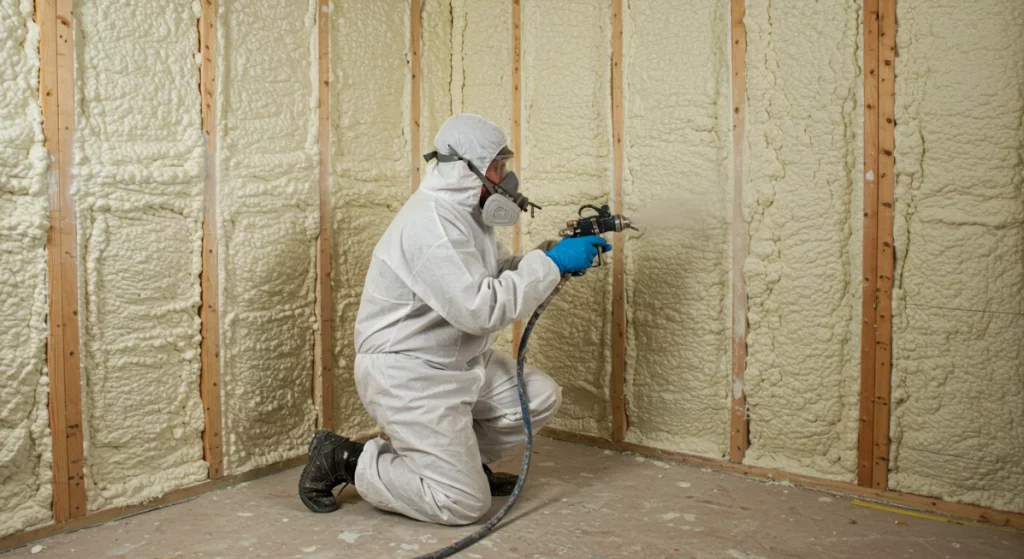
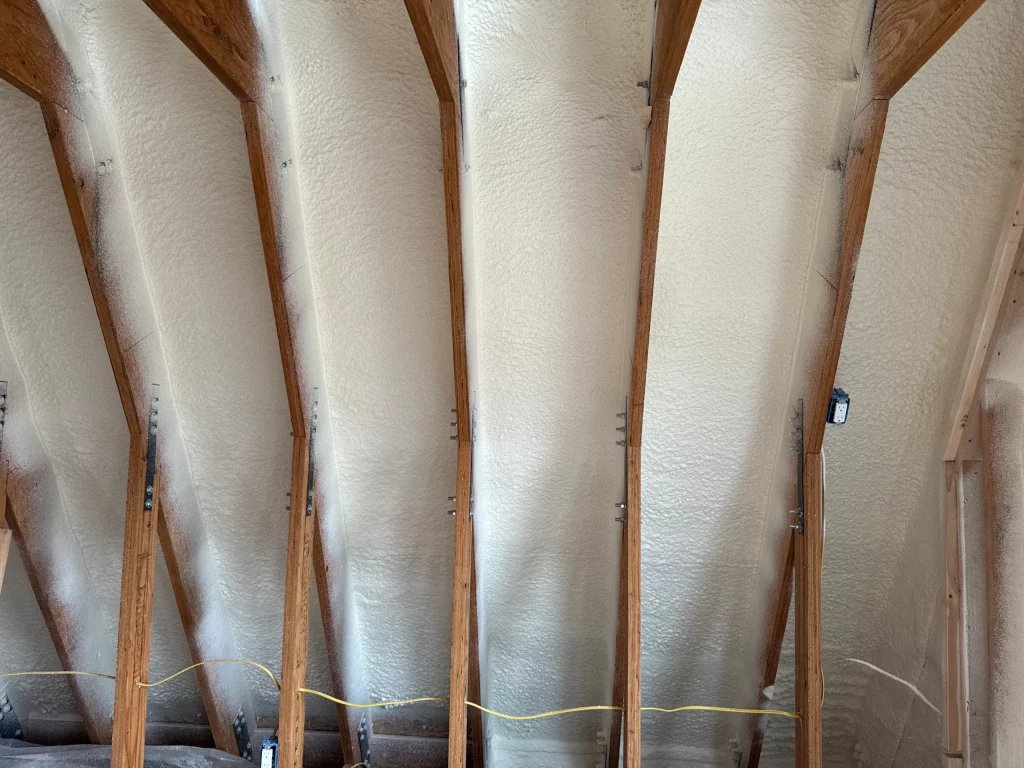
- Spray foam insulation provides both high R-value and air sealing in a single application, addressing conduction and air leakage simultaneously .
- Homes in colder climates consume substantially more site energy than homes in warmer climates, making wall insulation especially valuable in regions with cold winters .
- Proper installation matters as much as material choice; gaps, compression, and voids all undermine real-world performance .
How Heat Moves Through Your Walls
Understanding why wall insulation matters starts with understanding how heat moves. Heat transfer occurs through three mechanisms, and your walls are vulnerable to all of them:
- Conduction: Heat flows directly through solid materials like drywall, framing lumber, and exterior cladding. Materials with low thermal conductivity, like insulation, slow this process.
- Convection: Air currents within wall cavities and around the building envelope carry heat from warm surfaces to cold ones. Gaps and voids in insulation allow convective loops to form, accelerating heat loss.
- Radiation: Heat radiates from warm surfaces to cooler ones across wall cavities, particularly in hot climates where exterior wall surfaces absorb solar radiation.
Wall insulation works by trapping small pockets of air or gas within its structure. Since air is a poor conductor of heat, these pockets slow all three modes of heat transfer. The insulating capability of a material is measured by its thermal conductivity, with lower values indicating better performance. In practice, the building industry uses the R-value, which is the inverse of thermal conductivity and expressed per unit of thickness . Higher R-values mean the material resists heat flow more effectively.
Why Walls Specifically Matter Most
While attics often get the most attention during energy upgrades, walls represent the largest portion of your home’s exterior surface area. Here is why wall insulation deserves priority attention:
- Surface area: Exterior walls typically account for more exposed surface area than the roof or floor, making them the primary pathway for heat exchange.
- Thermal bridging: Wall assemblies contain structural framing members (wood or steel studs) that conduct heat more readily than the insulation between them. According to building science research, studs and fasteners create continuous paths for heat conduction that bypass cavity insulation entirely.
- Year-round exposure: Unlike attic insulation, which primarily prevents heat loss in winter and heat gain through the roof in summer, walls face direct sun exposure, wind-driven rain, and cold air on all sides throughout the year.
- Indoor comfort zones: Walls define the rooms where people spend the most time. Poorly insulated walls create cold spots in winter and hot surfaces in summer, making occupied spaces uncomfortable regardless of thermostat settings.
The ASHRAE 90.1 energy standard establishes prescriptive minimum R-values for wall assemblies in the United States, with requirements increasing for colder climate zones. These standards reflect the direct relationship between wall insulation levels and thermal comfort, as noted in the EIA analysis of household energy consumption.
Wall Insulation Materials Compared
Not all insulation materials perform the same way in wall applications. The table below compares common wall insulation types by their key characteristics:
| Insulation Type | R-Value per Inch | Air Sealing | Best Application | Key Limitation |
|---|---|---|---|---|
| Fiberglass batts | 3.1-4.3 | None | Standard stud cavities, new construction | Gaps and compression reduce effectiveness |
| Cellulose loose-fill | 3.0-3.8 | Moderate | Existing wall cavities (dense-pack retrofit) | Can settle over time reducing R-value |
| Closed-cell spray foam | 5.5-6.5 | Excellent | Wall cavities, rim joists, irregular spaces | Higher initial investment |
| Open-cell spray foam | 3.6 | Good | Wall cavities where flexibility is needed | Lower R-value per inch than closed-cell |
| Rigid foam board | 4.0-6.5 | Varies | Continuous exterior insulation, basement walls | Requires separate air sealing |
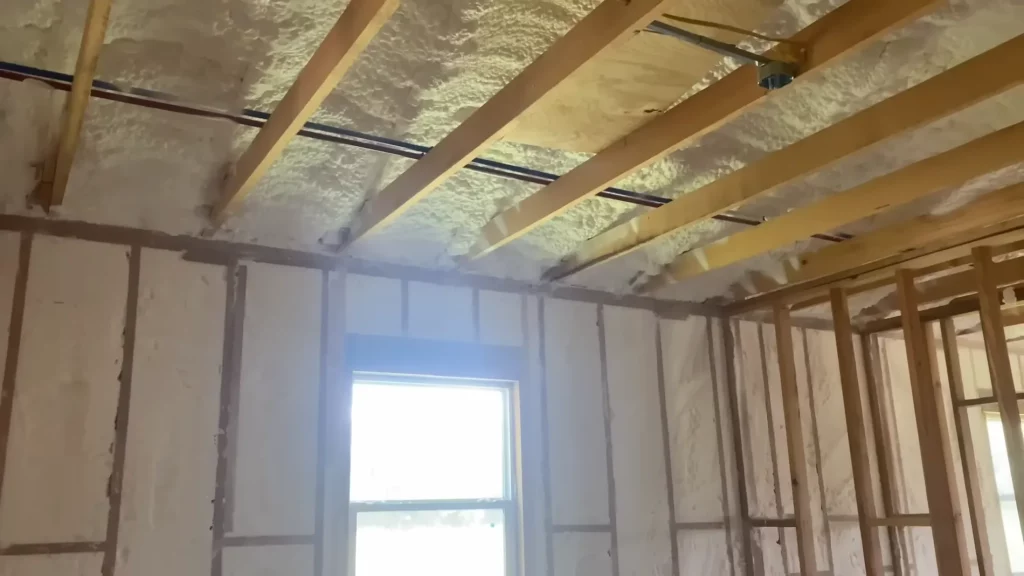
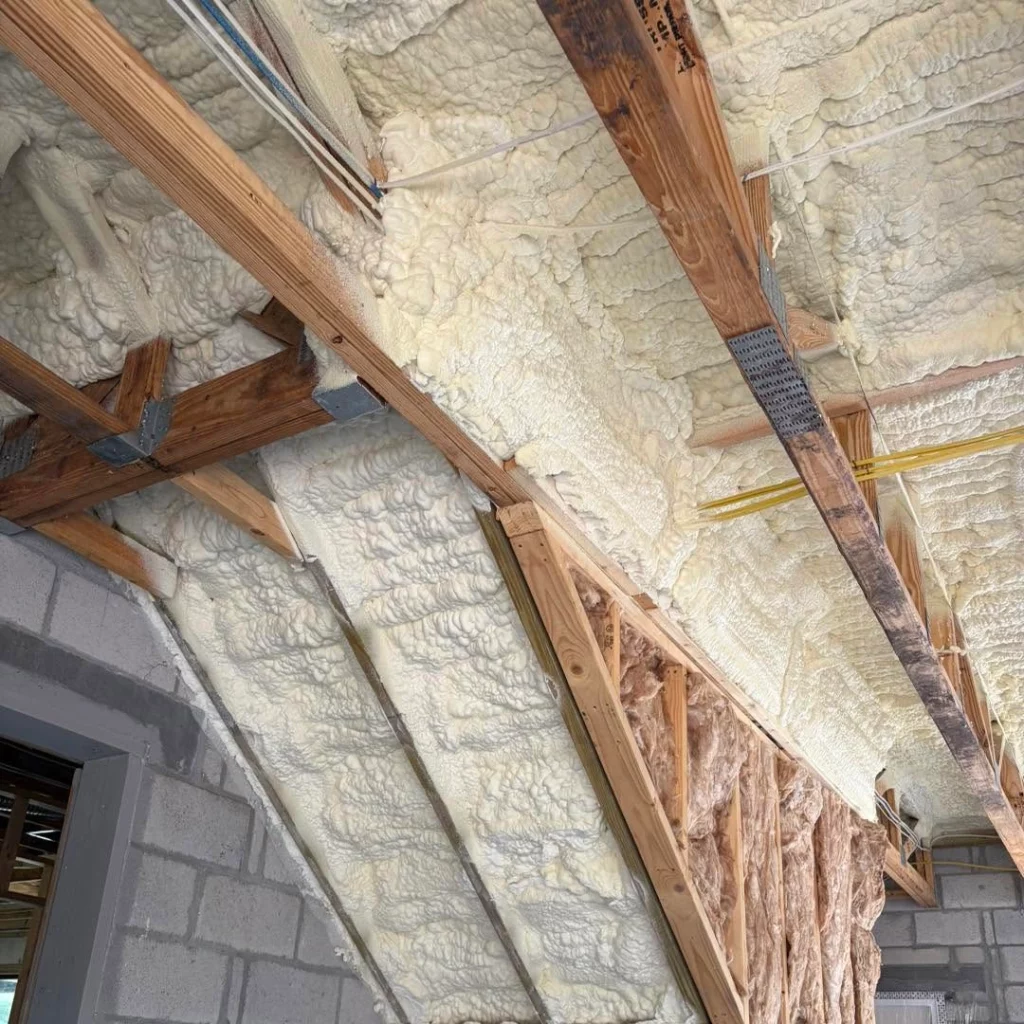
Data sourced from R-value reference tables. Spray foam stands out for wall applications because it expands to fill cavities completely, sealing air leaks while providing insulation in a single step. This dual function addresses both conductive heat loss and convective air movement through gaps and cracks.
The Connection Between Insulation and Energy Consumption
The relationship between wall insulation and energy use is well documented. According to the EIA’s Residential Energy Consumption Survey, U.S. households in colder states consume far more site energy than those in warmer states, primarily because of space heating demands . In 2020, homes in Alaska averaged 125.1 MMBtu per household, compared to just 30.3 MMBtu in Hawaii.
Building insulation is recognized as an important economic and environmental investment because it directly reduces the energy required for heating and cooling . When walls lack adequate insulation:
- Heating systems work harder in winter to compensate for continuous heat loss through exterior surfaces
- Air conditioning systems run longer in summer as radiant heat from sun-warmed walls transfers inward
- Temperature swings between rooms become noticeable, creating uneven comfort levels
- HVAC equipment cycles more frequently, leading to more wear and shorter equipment lifespan
The math behind this is straightforward. R-value determines the rate of heat flow through a barrier for a given temperature difference. A wall with R-13 insulation allows roughly half the heat transfer of a wall with R-6.5, all else being equal . Doubling the R-value of your wall assembly does not guarantee halving your energy bills because other factors (windows, air leakage, duct losses) contribute, but wall insulation remains the single largest controllable factor for most homes.
Recommendations by Home Type and Situation
The right wall insulation approach depends on your home’s construction, age, and climate zone.
| Home Type / Situation | Recommended Approach | Key Considerations |
|---|---|---|
| New construction (wood frame) | Cavity insulation plus continuous exterior rigid foam | Eliminates thermal bridging through studs, meets or exceeds ASHRAE requirements |
| Existing home with empty wall cavities | Dense-pack cellulose or spray foam injection | Requires drilling and patching, but adds significant R-value and air sealing |
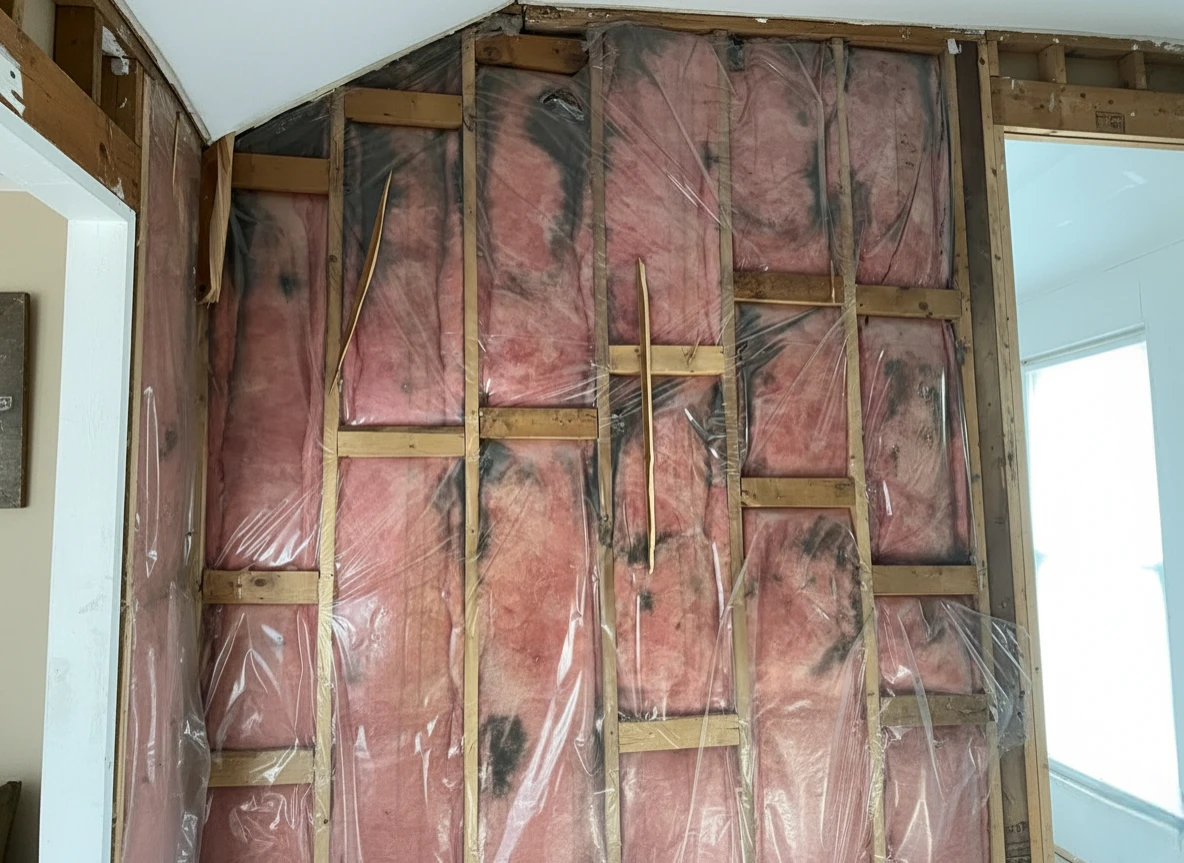
| Existing home with older fiberglass | Top off with spray foam or add continuous exterior insulation | Address gaps and compression in existing batts, supplement with continuous layer |
| Basement or crawl space walls | Closed-cell spray foam against foundation | Provides moisture resistance in addition to thermal performance |
| Homes in hot climates (Zone 1-3) | Focus on radiant barriers plus wall cavity insulation | Solar radiation is the primary heat gain source; reflective strategies complement bulk insulation |
Common Wall Insulation Mistakes to Avoid
Even with quality materials, mistakes during selection or installation can undermine performance:
- Ignoring thermal bridging: Adding insulation between studs without addressing the studs themselves leaves a significant portion of heat transfer uncontrolled. Continuous exterior insulation or insulated lumber framing can reduce this effect .
- Compressing batt insulation: Fiberglass and mineral wool batts lose R-value when compressed into thinner cavities than intended .
- Skipping air sealing: Insulation without proper air sealing allows convective heat transfer through gaps around electrical boxes, plumbing penetrations, and framing connections.
- Using the wrong R-value for your climate zone: ASHRAE 90.1 specifies different minimum R-values for each climate zone because the consequences of under-insulating vary by region.
- Moisture management failures: Wall insulation must work with appropriate vapor barriers. In some climates, trapping moisture within the wall cavity can lead to condensation, mold growth, and structural damage.
Signs You Have Found the Right Insulation Contractor
Choosing the right professional is as important as choosing the right material. Look for these indicators:
- Detailed assessment before quoting: A thorough evaluation should include a review of your existing wall assembly, climate zone requirements, and potential air leakage points before any recommendations are made.
- Clear explanation of R-value targets: Your contractor should be able to explain what R-value they plan to achieve and how it aligns with ASHRAE standards for your area .
- Comprehensive approach: The best proposals address air sealing, vapor management, and thermal bridging alongside insulation installation, not just material placement.
- Transparency about limitations: An honest contractor will tell you what wall insulation can and cannot do, rather than promising unrealistic energy savings.
- Warranty and documentation: Quality installers provide documentation of installed R-values, coverage areas, and material specifications for your records.
Schedule Your Wall Insulation Project
Raleigh Excel Spray Foam Insulation specializes in helping homeowners achieve consistent, year-round comfort through expert wall insulation installation. Our team evaluates your home’s specific needs based on climate zone, wall construction, and existing conditions, then recommends the spray foam solution that delivers the best combination of R-value and air sealing performance.
Ready to stop fighting with uneven temperatures and high energy bills? Reach out to us today:
Call us at (919) 301-9435 or email [email protected]. Our specialists are ready to assess your walls and build a plan that keeps your home comfortable through every season.
Frequently Asked Questions
How does wall insulation actually keep my house cooler in summer?
Wall insulation slows the transfer of heat from hot exterior surfaces into your living spaces. When outdoor temperatures rise, insulated walls prevent that heat from penetrating, reducing the workload on your air conditioning system and keeping interior temperatures more stable.
Can I add insulation to existing walls without removing drywall?
Yes, depending on the construction type. Dense-pack cellulose and spray foam can be injected through small holes drilled in the wall, then patched. This approach is effective for adding both insulation and air sealing to existing cavity walls.
What R-value should my walls have?
The appropriate R-value depends on your climate zone. ASHRAE 90.1 sets minimum prescriptive requirements, which range from R-13 in warmer zones up to R-13 plus continuous insulation in colder zones. A qualified contractor can identify the right target for your specific location .
Does insulation help with soundproofing too?
Yes. Many insulation materials, particularly fiberglass, cellulose, and spray foam, reduce sound transmission through walls by absorbing sound energy within their fibrous or cellular structure. This is a secondary benefit alongside thermal performance.
How long does wall insulation last?
Most wall insulation materials maintain their thermal performance for the life of the building when properly installed. Some materials, like closed-cell spray foam, are resistant to moisture and settling, helping them retain R-value over decades without degradation .
Sources
- Wikipedia – Building Insulation – Comprehensive reference covering thermal insulation principles, heat transfer mechanisms, material classifications, ASHRAE 90.1 standards, and building envelope considerations.
- EIA – U.S. Households in Warmer States Consume Less Site Energy – 2020 RECS data analysis showing the correlation between climate, household energy consumption, and the role of space heating and cooling in total energy use.
- Wikipedia – Thermal Insulation – Technical overview of thermal insulation physics, including conduction, convection, radiation, thermal conductivity, and applications in building envelopes.
- Wikipedia – R-value (Insulation) – Detailed explanation of R-value definitions, calculation methods, typical R-values for common insulation materials, and factors affecting real-world performance.
- EIA – 2020 RECS Consumption and Expenditures Data – Official U.S. residential energy consumption survey data including end-use breakdowns for space heating, cooling, and other household energy applications.

- How Should Raleigh, NC Property Owners Evaluate Insulation for Long-Term Use? - September 23, 2026
- What Factors Affect Insulation Performance Across Different Parts of a Property? - September 23, 2026
- Could Spray Foam Insulation Be Useful Around Uneven Building Sections in Wake Forest, NC? - September 18, 2026