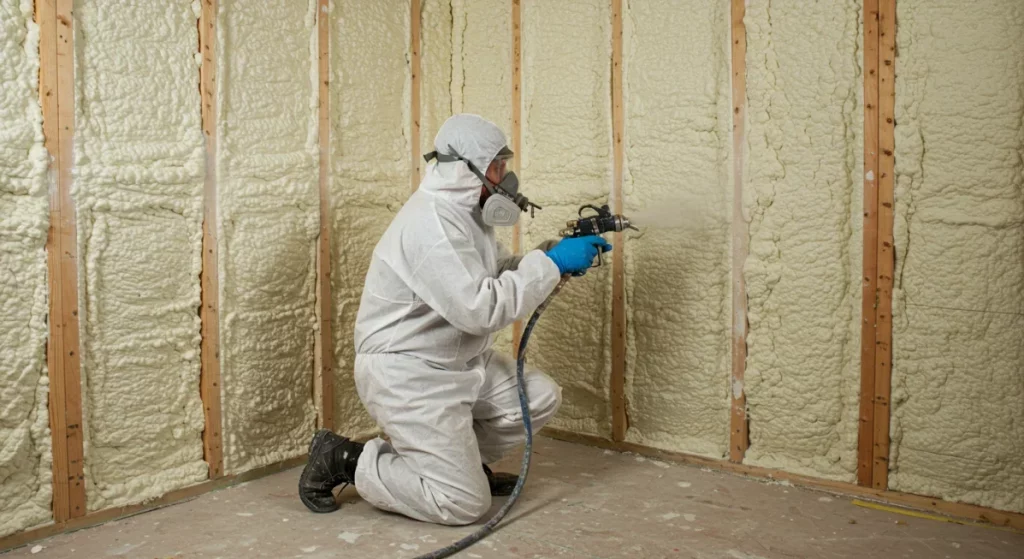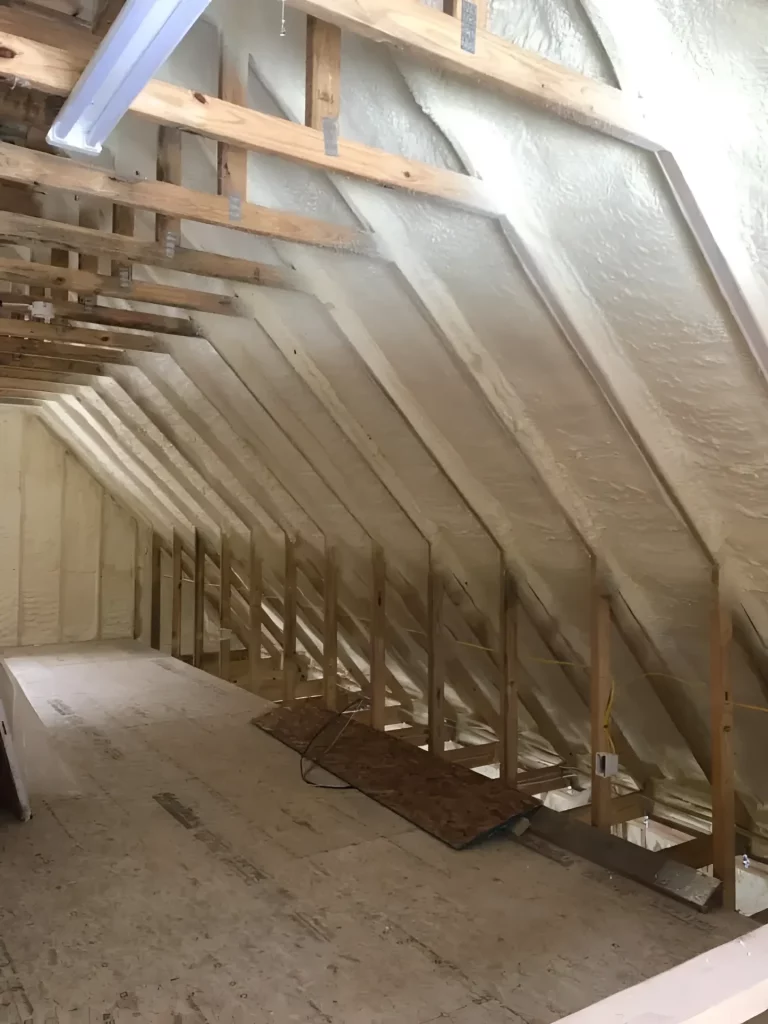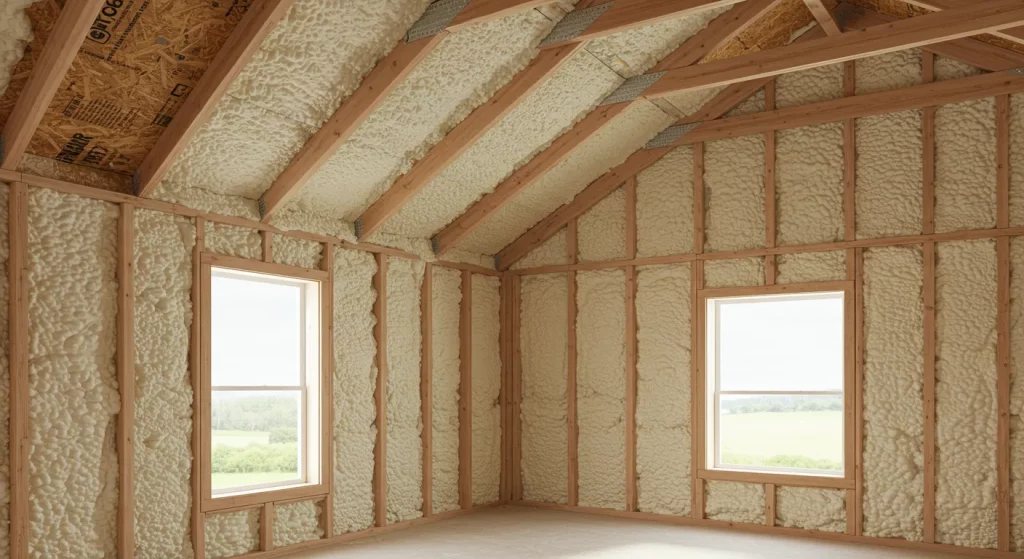



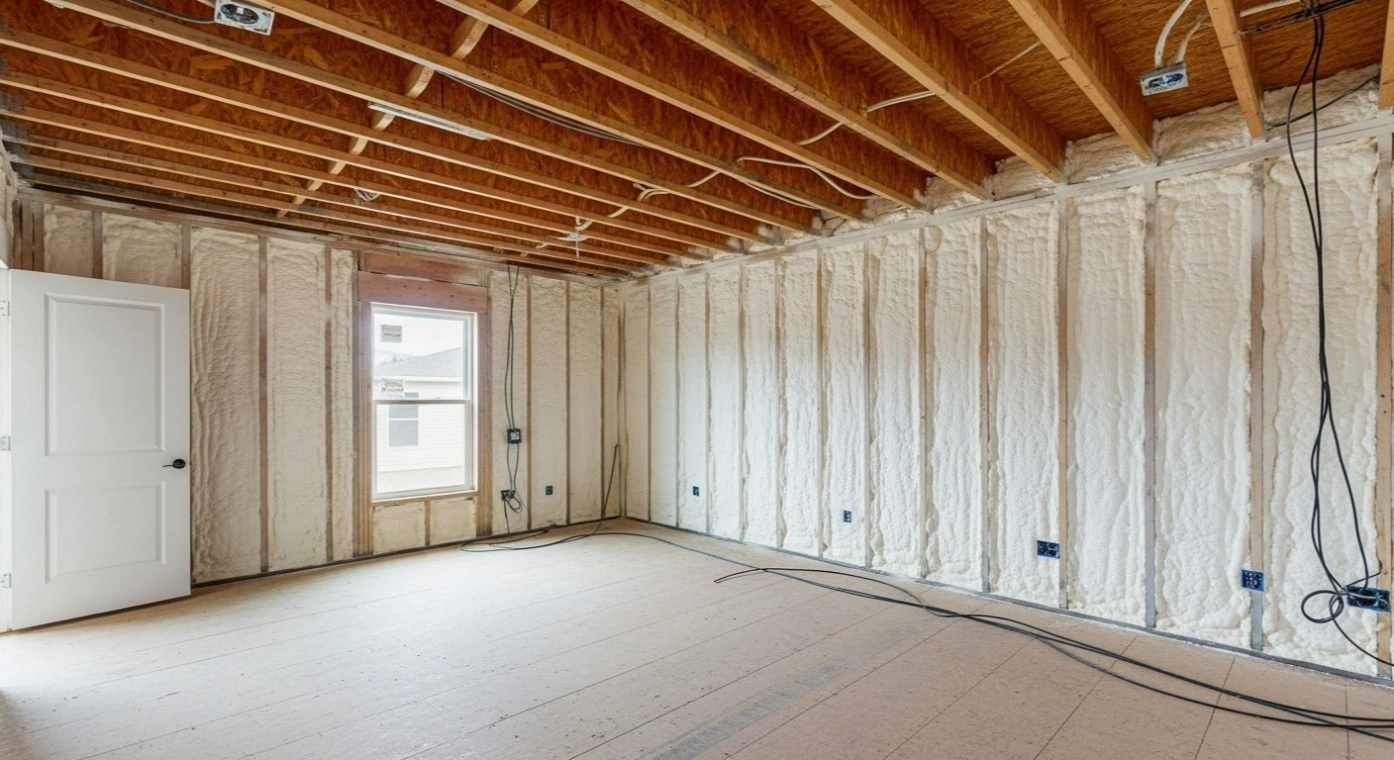
Choosing the right residential spray foam contractor in Raleigh, NC requires evaluating contractor credentials, understanding the types of spray foam insulation available, and verifying that your selected professional has experience with local building codes and climate conditions. The right contractor combines proper certifications, transparent pricing, and a proven track record of quality installations, making residential insulation services a key factor to consider. This guide walks you through the essential steps to find a contractor who will deliver lasting energy efficiency and comfort for your home.
TL;DR
- Verify contractor certifications, specifically ICC-ES certification and manufacturer credentials, before signing any agreement
- Open-cell spray foam costs between $0.44 and $0.65 per board foot, while closed-cell ranges from $1.00 to $2.00 per board foot
- Request at least three detailed bids to compare pricing, warranties, and scope of work
- Confirm the contractor carries comprehensive liability insurance and workers’ compensation coverage
- Check online reviews, local references, and Better Business Bureau ratings for reputation verification
- Ensure the contractor follows Raleigh building code requirements and obtains necessary permits
- Ask about ventilation requirements and moisture management specific to North Carolina’s humid climate
- Review warranty terms carefully, distinguishing between material warranties and workmanship coverage
Why Contractor Selection Matters for Spray Foam Insulation
Spray foam insulation differs fundamentally from traditional insulation materials like fiberglass or cellulose. The application process requires specialized equipment, precise mixing ratios, and skilled technicians who understand how the chemical reaction works in various conditions. According to the U.S. Department of Energy, improper installation can lead to gaps, settling, and reduced thermal performance that defeats the purpose of the investment.
Poor installation also creates genuine safety concerns. Spray foam chemicals require careful handling during application and proper cure times before occupants can safely return. A contractor who cuts corners on preparation, ventilation, or cure time may leave your family exposed to off-gassing or create conditions for mold growth behind the insulation.
The financial stakes are significant, too. Spray foam insulation represents a larger upfront investment than conventional alternatives, with costs varying based on foam type, application area, and project complexity. Choosing the wrong contractor means paying twice, once for removal of faulty work and again for proper replacement, which is why our residential insulation guide helps homeowners make informed decisions.
Types of Spray Foam Insulation: What You Need to Know
Before evaluating contractors, understand the two primary spray foam options available for residential applications.
| Foam Type | R-Value per Inch | Best Applications | Typical Cost per Board Foot |
|---|---|---|---|
| Open-Cell | 3.5 to 4.0 | Interior walls, attics, sound-dampening | $0.44 to $0.65 |
| Closed-Cell | 6.0 to 7.0 | Exterior walls, crawl spaces, high-moisture areas | $1.00 to $2.00 |
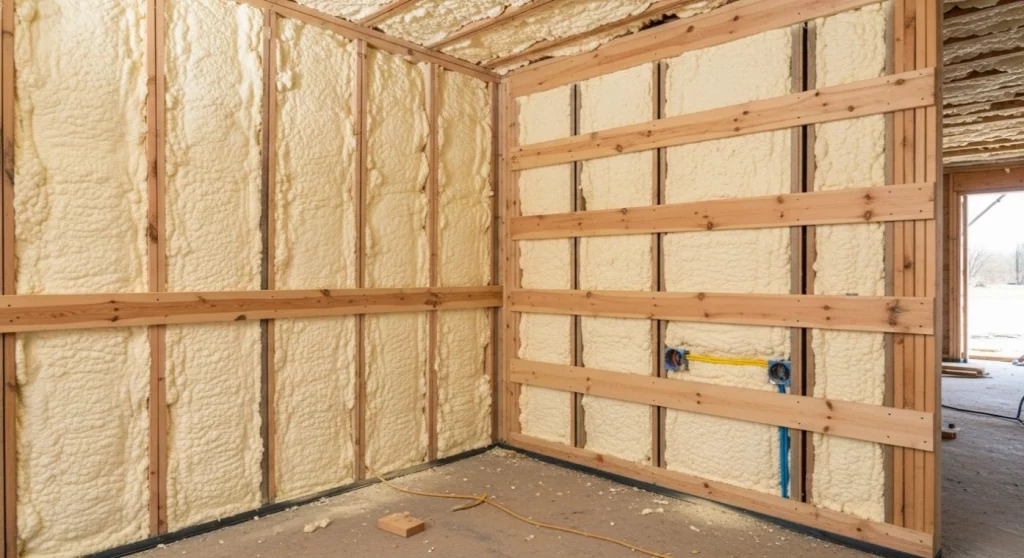
Open-cell spray foam expands more after application, making it excellent for filling irregular cavities and providing air sealing. It costs less upfront but requires consideration of moisture management since it remains vapor-permeable.
Closed-cell spray foam provides a higher R-value per inch and acts as a vapor barrier, making it suitable for Raleigh’s humid climate, where moisture control is critical. Its structural strength also reinforces wall assemblies, though the higher material cost reflects its performance benefits.
A knowledgeable contractor will assess your specific situation, including existing insulation, moisture concerns, and budget constraints, to recommend the appropriate product rather than pushing the more expensive option automatically.
Essential Credentials to Verify
Manufacturer Certifications
Leading spray foam manufacturers like BASF, Dow, and Huntsman maintain certified contractor networks. These programs require contractors to complete specific training, use approved equipment, and follow manufacturer specifications. Working with a certified contractor often extends warranty coverage and ensures the product performs as designed.
Insurance Requirements
Request proof of both general liability insurance and workers’ compensation coverage. Liability insurance protects your property if damage occurs during installation, while workers’ compensation covers medical expenses if a worker sustains an injury on your property. Never hire a contractor who cannot provide current certificates, and verify that the coverage amounts are adequate for your project scope.
Licensing and Registration
North Carolina requires contractors to register with the state for projects exceeding $30,000. For spray foam insulation specifically, check whether the contractor holds any certifications from the Spray Polyurethane Foam Alliance or similar industry organizations. Local business licenses and Better Business Bureau accreditation provide additional verification of legitimate operation.
North Carolina requires contractors to register with the state for projects exceeding $30,000. For spray foam insulation specifically, check whether the contractor holds any certifications from the Spray Polyurethane Foam Alliance or similar industry organizations. Local business licenses and Better Business Bureau accreditation provide additional verification of legitimate operation.
Red Flags to Watch For
Unusually Low Bids: If one estimate comes in significantly lower than others, investigate why. The contractor may be using inferior materials, skipping essential preparation steps, or planning to add charges once work begins.
Reluctance to Provide References: Quality contractors maintain lists of recent customers willing to discuss their experience. Hesitation to provide references or pressure to make a quick decision suggests the contractor has something to hide.
No Written Contract: Verbal agreements offer no protection. Insist on detailed written contracts that specify materials, application areas, R-value targets, prep work, cleanup, and warranty terms.
Pushy Sales Tactics: High-pressure tactics like “today only” pricing or claims that your current insulation poses immediate health hazards indicate a salesperson focused on closing rather than solving your problems.
Questions to Ask Prospective Contractors
- How long have you been installing spray foam insulation, and how many projects similar to mine have you completed?
- Which manufacturers do you work with, and what certifications do your technicians hold?
- Will you handle permit acquisition, or is that my responsibility?
- What preparation work do you require from me before installation begins?
- How do you address ventilation and moisture management in the areas being insulated?
- What warranty do you provide, and what does it cover?
- What is your expected timeline for completion, including any curing periods?
Contractors who answer these questions thoroughly and patiently demonstrate the communication quality you should expect throughout your project.
Evaluating Quotes and Proposals
When comparing bids, do not automatically choose the lowest price. Instead, evaluate what each quote includes:
| Evaluation Criteria | What to Look For |
|---|---|
| Material specifications | Brand names, R-value guarantees, thickness recommendations |
| Scope of work | Prep work, protection of living spaces, cleanup procedures |
| Labor details | Crew size, expected timeline, supervisor presence |
| Warranty terms | Duration, coverage scope, transferability |
| Payment terms | Deposit requirements, milestone payments, final payment timing |
| Exclusions | Items not covered, potential additional charges |
A complete quote addresses potential complications like electrical wiring, existing moisture issues, and ventilation requirements. Vague estimates that lack detail may indicate the contractor plans to adjust pricing once work begins.
Regional Considerations for Raleigh Homeowners
North Carolina’s climate creates specific challenges that affect spray foam installation. High humidity levels mean moisture management deserves particular attention, especially in crawl spaces and basements. Your contractor should understand how closed-cell foam performs differently from open-cell products in these conditions and recommend solutions based on actual site conditions rather than generic approaches.
Raleigh’s building codes incorporate energy efficiency requirements from the state building code, and local jurisdictions may have additional specifications. Experienced local contractors know which permits are required and how inspections work in Wake County, preventing delays and compliance issues that could affect your warranty or resale value.
Temperature during installation matters too. Spray foam chemistry reacts differently in extreme heat or cold, affecting adhesion and expansion. Professional contractors monitor conditions and may adjust scheduling or use Climate-specific product formulations to ensure proper cure and performance.
Signs You Have Found the Right Contractor
You have found a quality contractor when they communicate clearly from initial contact through project completion. They arrive on time for appointments, provide written documentation, and take time to answer questions without rushing you toward a decision.
The contractor demonstrates knowledge through specific recommendations rather than generic statements. They inspect your home before quoting rather than providing estimates over the phone, and they explain why certain products or approaches suit your situation better than alternatives.
Transparency appears throughout the process. Pricing is clear, potential complications are discussed upfront, and any changes during work are documented and approved before proceeding. References speak positively about the experience, mentioning not just quality results but professional conduct and good communication.
Get Started With Your Project
Raleigh Excel Spray Foam Insulation brings years of hands-on experience with residential projects throughout the Triangle area, understanding how local climate conditions affect insulation performance and longevity. Our certified technicians evaluate your home’s specific needs and recommend solutions that balance performance, budget, and long-term value. We maintain full insurance coverage, provide detailed written quotes, and stand behind our work with comprehensive warranties.
Contact us today to schedule a free consultation and learn how spray foam insulation can transform your home’s comfort and energy efficiency at [email protected] or call (919) 301-9435
Frequently Asked Questions
How long does spray foam insulation take to cure before it is safe?
Most spray foam products require 24 to 48 hours to fully cure before occupants can return to the treated areas. Your contractor should specify exact cure times based on the products used and current temperature and humidity conditions.
Will spray foam insulation increase my home’s value?
Homes with properly installed spray foam insulation often appraise higher due to improved energy efficiency and comfort. Many buyers specifically look for documented insulation upgrades when shopping for homes.
Can spray foam be installed over existing insulation?
Yes, in many cases. Open-cell foam can be installed over existing fiberglass in attics, and closed-cell foam can be applied in crawl spaces over existing materials. However, your contractor should inspect existing conditions to ensure proper adhesion and identify any moisture issues first.
What happens if spray foam is installed incorrectly?
Poor installation can result in gaps, settling, reduced R-value, and potential moisture problems. This is why verifying credentials, checking references, and choosing experienced contractors matters significantly for spray foam projects.
Does spray foam insulation require maintenance?
Unlike fiberglass, spray foam does not settle, sag, or degrade under normal conditions. Once installed correctly, it requires no ongoing maintenance, though periodic inspection of walls and attic spaces during other home maintenance is recommended.
Sources
- U.S. Department of Energy – Insulation Materials – Comprehensive guide to insulation types, R-values, and installation best practices from the federal energy efficiency authority.
- Spray Polyurethane Foam Alliance – Industry association providing certification information, safety guidelines, and standards for professional spray foam contractors.
- North Carolina Department of Insurance – Contractor Licensing – Official state regulations governing contractor licensing requirements in North Carolina.
- Environmental Protection Agency – Seal and Insulate with ENERGY STAR – Federal guidance on air sealing and insulation techniques that improve home energy performance and indoor air quality.
- Building Science Corporation – Insulation Materials and Climate – Technical resource explaining how different insulation materials interact with moisture and climate conditions in residential buildings.

- What Role Does Insulation Thickness Play in Building Durability and Material Performance? - October 23, 2026
- How Can Spray Foam Insulation Improve Coverage Around Irregular Framing? - October 23, 2026
- Why Is Closed Cell Spray Foam Effective Around Moisture-Prone Building Areas in Raleigh, NC? - October 21, 2026