


Proper home insulation works by resisting the flow of heat through your walls, attic, floors, and basement, which means your HVAC system runs less frequently and uses less energy to maintain a comfortable indoor temperature. According to the U.S. Department of Energy, insulation provides resistance to heat flow and directly lowers heating and cooling costs. The EPA estimates that homeowners can save an average of 15% on heating and cooling costs (or an average of 11% on total energy costs) by air sealing their homes and adding insulation in attics, crawl spaces, and basements. The type of insulation you choose, its R-value rating, how well it is installed, and whether you pair it with air sealing all determine how much you will actually save on monthly utility bills.
TL;DR
- Proper insulation resists heat flow through conduction, convection, and radiation, keeping conditioned air inside your home
- The EPA estimates homeowners can save an average of 15% on heating and cooling costs and 11% on total energy costs by sealing air leaks and adding insulation
- 9 out of 10 homes in the U.S. are under-insulated, meaning most households have room for meaningful improvement
- Higher R-values indicate greater thermal resistance, and the right target depends on your climate zone and the area of the home being insulated
- Air sealing and insulation work together as a system. Insulation without sealing allows air to bypass the thermal barrier
- Spray foam insulation provides high R-values while also forming an air barrier, addressing both heat transfer and air leakage in a single application
- Attics and crawl spaces are typically the highest-impact areas to insulate first, since they experience the largest temperature differences
- Proper installation matters as much as material choice. Compressed or gapped insulation loses effectiveness regardless of its rated R-value
How Heat Transfer Drives Your Energy Bills
To understand why insulation reduces utility bills, it helps to start with how heat moves through a home. Heat flows from warmer areas to cooler areas through three mechanisms: conduction (through solid materials like walls and ceilings), convection (through air movement and circulation), and radiation (heat traveling in a straight line from warm surfaces to cooler ones). In winter, your expensive heated air moves toward unheated attics, garages, basements, and the outdoors. Proper whole-home insulation systems help reduce this heat transfer and lower utility demand. In summer, outdoor heat pushes inward, forcing your air conditioning system to work harder.
Your HVAC system has to replace every bit of heat lost in winter and remove every bit of heat gained in summer. Insulation slows this exchange by providing a material barrier with high thermal resistance. The less heat that escapes or enters, the less energy your system consumes to maintain your thermostat setting. The Department of Energy notes that heating and cooling accounts for a large share of household energy use, making insulation one of the most direct ways to cut that expense.
Understanding R-Value: The Rating That Matters
The effectiveness of insulation is measured by its R-value, which quantifies how well a material resists conductive heat flow. The higher the R-value, the better the insulating performance. As Wikipedia explains, R-value depends on the type of insulation, its thickness, its density, and its temperature. R-values are additive, meaning layers of different materials can be combined by summing their individual R-values to determine total thermal resistance.
Not all insulation delivers the same R-value per inch of thickness. Closed-cell spray foam, for example, achieves a higher R-value per inch than fiberglass batts or loose-fill cellulose. This matters when space is limited, such as in wall cavities with standard framing depths. The Department of Energy provides detailed R-value recommendations based on climate zone, ranging from R30 in warm southern zones to R60 in colder northern zones, for attic insulation.
Recommended R-Values by Climate Zone (Attic Floor)
| Climate Zone | Uninsulated Attic | Existing 3-4 Inches | Crawlspace/Basement Floor |
|---|---|---|---|
| 1-2 | R30-R60 | R25-R38 | R13 |
| 3 | R49-R60 | R38-R49 | R19 |
| 4 (except Marine) | R60 | R49 | R19 |
| 4 Marine and 5 | R60 | R49 | R30 |
| 6-8 | R60 | R49 | R38 |
These targets come from ENERGY STAR’s recommended insulation levels for retrofitting existing wood-framed buildings. Matching the right R-value to your zone ensures you get meaningful energy savings without over-investing beyond what your climate demands.
Why Air Sealing and Insulation Must Work Together
One of the most common mistakes homeowners make is upgrading insulation without addressing air leaks first. Air that leaks through your home’s envelope, the outer walls, windows, doors, and other openings, wastes energy regardless of how much insulation is installed. Smart home insulation systems are specifically designed to minimize this type of energy loss more effectively than traditional materials. ENERGY STAR points out that if you added up all the leaks, holes, and gaps in a typical home, it would be the equivalent of leaving a window open every day of the year.
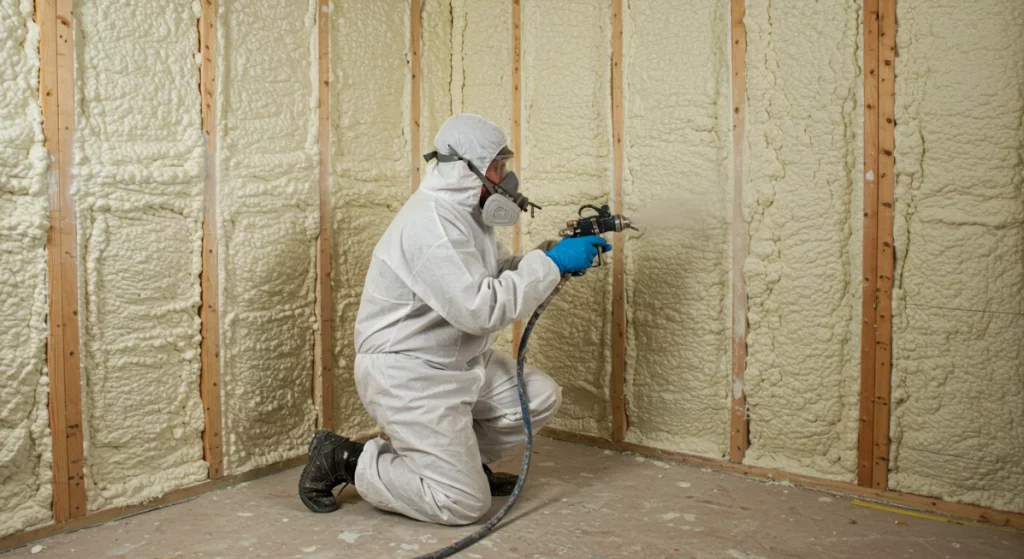
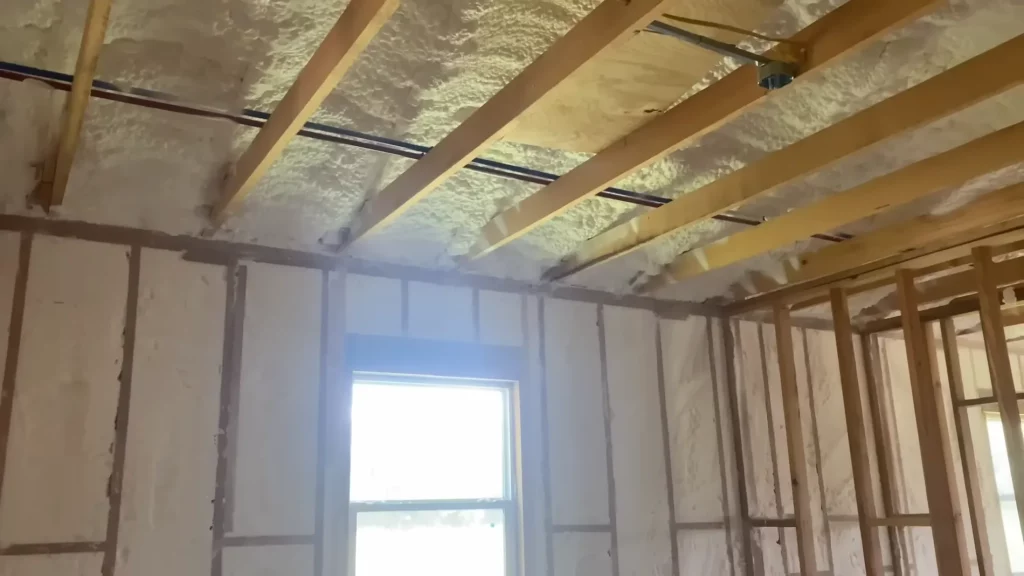
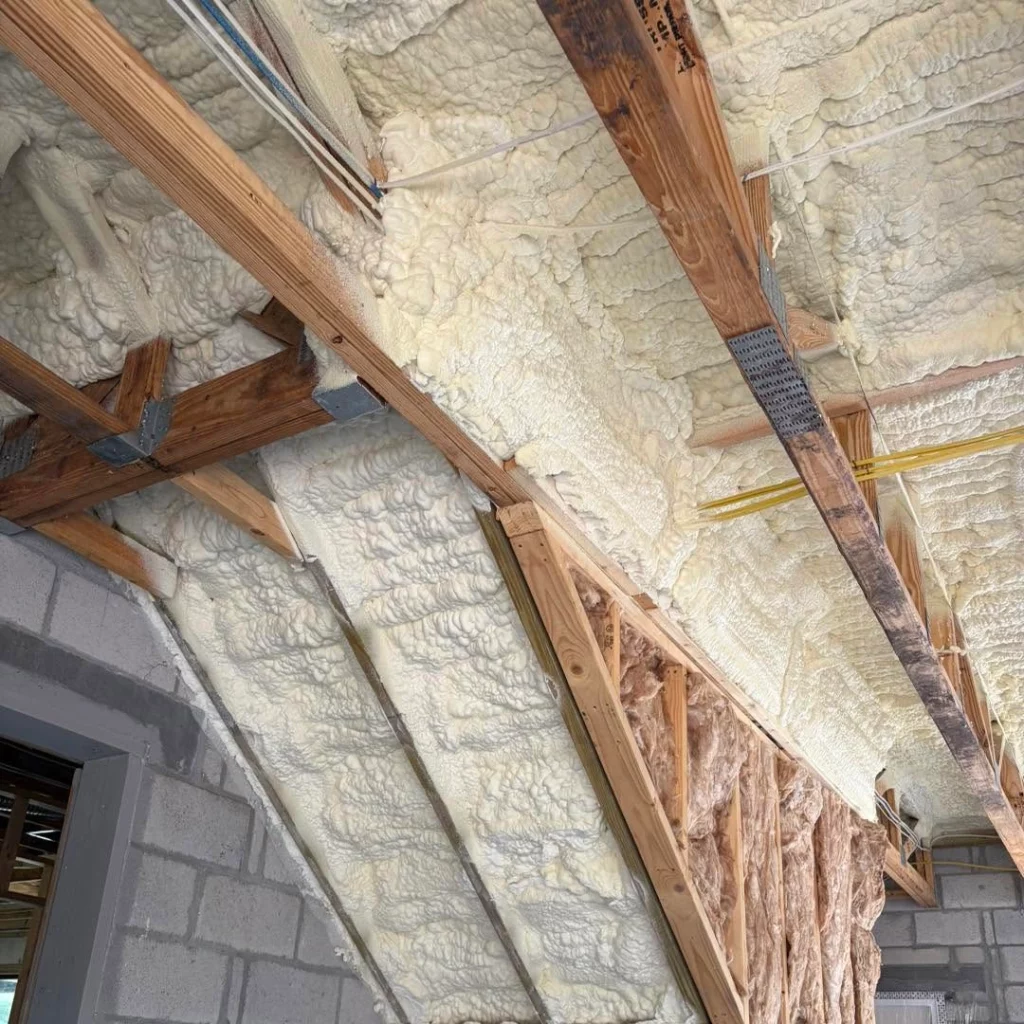
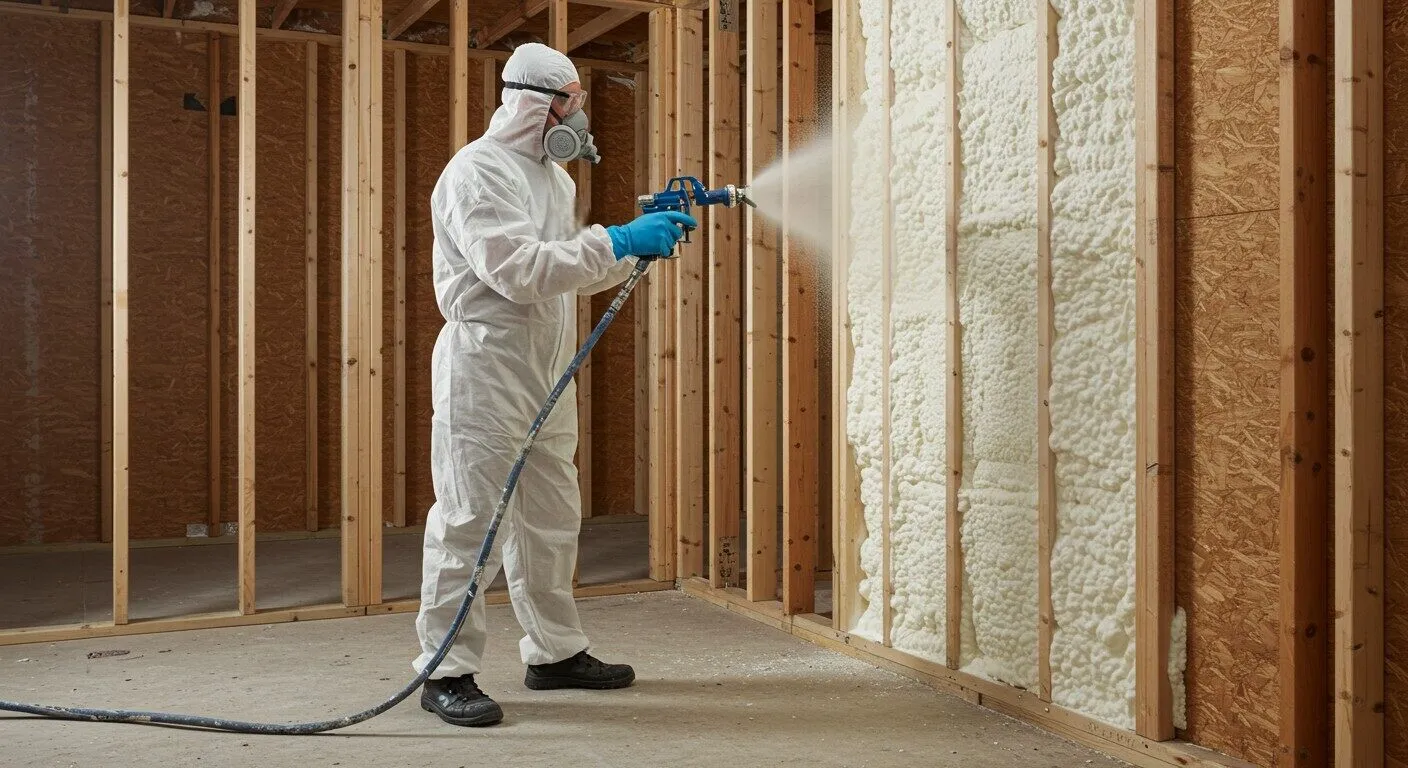
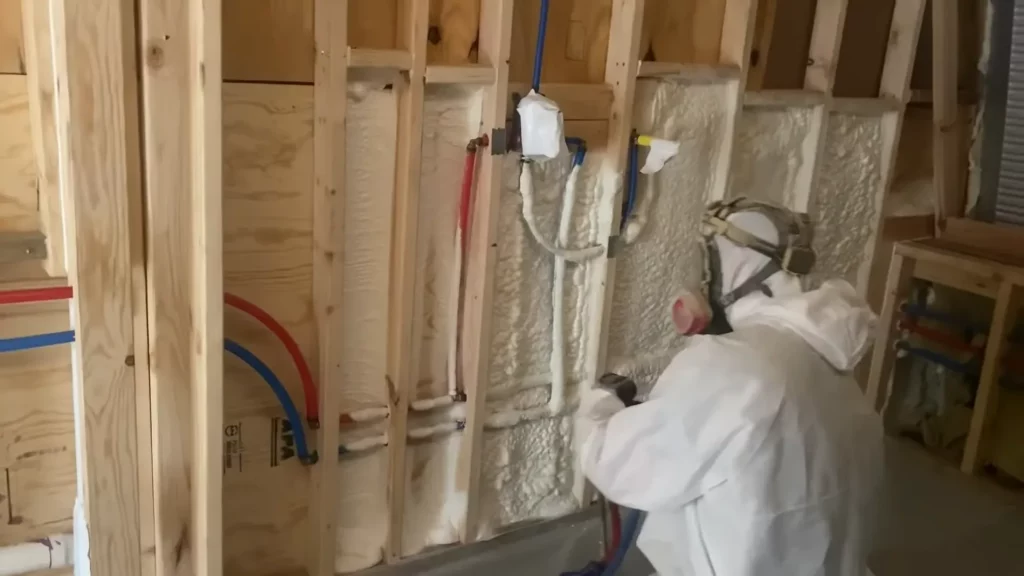
When warm air escapes through gaps around recessed lights, plumbing penetrations, attic hatches, and framing joints, it bypasses your insulation entirely. The insulation still does its job within the wall or ceiling cavity, but the air finds another path around it. Sealing those leaks before adding insulation creates a complete thermal envelope. Spray foam insulation is particularly effective here because it expands to fill cavities and crevices, creating both an insulating layer and an air barrier in one step.
Comparing Insulation Types for Energy Savings
The right insulation material depends on where it will be installed, your budget, and whether the space is already finished. The Department of Energy outlines the main categories, each with distinct advantages for reducing energy consumption.
| Insulation Type | R-Value Per Inch | Best Application | Air Sealing Ability |
|---|---|---|---|
| Fiberglass batts/rolls | 2.9-3.8 | Standard wall cavities, attics with regular spacing | Low |
| Loose-fill cellulose | 3.1-3.8 | Enclosed existing walls, attic floors | Moderate |
| Loose-fill fiberglass | 2.2-3.7 | Attic floors, hard-to-reach areas | Moderate |
| Rigid foam board | 3.8-6.5 | Basement walls, continuous exterior insulation | Low-Moderate |
| Closed-cell spray foam | 5.5-6.5 | Walls, attics, crawl spaces, rim joists | High |
| Open-cell spray foam | 3.5-3.6 | Wall cavities, attics (where moisture is not a concern) | High |
Closed-cell spray foam stands out for energy-saving purposes because it provides both high thermal resistance and a built-in air barrier. It also resists moisture, which prevents the mold and rot issues that can undermine insulation performance over time. Open-cell spray foam is lighter and more affordable, offering strong air sealing with slightly lower R-values. Both types are installed by professionals using specialized equipment.
Which Areas of Your Home Lose the Most Energy
Targeting the right areas makes a measurable difference in how much you save. The biggest energy losses typically occur where there is the largest temperature difference between inside and outside your home.
Attics are almost always the first priority. In summer, attic temperatures can reach 150 degrees or more, and that heat radiates down into your living spaces. In winter, heated indoor air rises and escapes through the ceiling into a cold attic. Bringing attic insulation up to the recommended R-value for your zone delivers the fastest return.
Crawl spaces and basements are the next priority. Uninsulated floors above vented crawl spaces allow heat to escape downward in winter and let ground moisture drive up cooling costs in summer. Encapsulating and insulating crawl spaces with spray foam addresses both thermal and moisture issues simultaneously.
Walls represent a large surface area but are harder and more expensive to retrofit in finished homes. When exterior siding is being replaced, it is an ideal time to add insulation to wall cavities and install continuous rigid foam sheathing to interrupt thermal bridging through studs.
Signs Your Home Needs Better Insulation
Several indicators suggest your current insulation is not doing enough to reduce your energy bills:
- Uneven temperatures from room to room, especially between floors
- Drafts near windows, doors, electrical outlets, and ceiling fixtures
- High utility bills compared to similarly sized homes in your area
- Ice dams forming along the roof edge in winter, which signal heat escaping through the attic
- HVAC systems are running constantly but struggling to maintain the thermostat setting
- Visible gaps, compression, or settling in existing attic insulation when you inspect it
If you notice any of these signs, an insulation assessment can identify exactly where your home is losing energy and what R-values you are currently working with.
How to Choose the Right Insulation Strategy
The best approach depends on your home’s age, construction type, climate zone, and budget. Here is a breakdown by common homeowner scenarios:
| Homeowner Scenario | Recommended Priority | Insulation Strategy |
|---|---|---|
| Older home, no attic upgrade | Attic first, then crawl space | Air seal + blown-in or spray foam in attic; encapsulate crawl space |
| New construction | Full envelope | Spray foam walls + high R-value attic insulation during build |
| Finished basement, cold floors | Crawl space or rim joist | Closed-cell spray foam on rim joists and crawl space walls |
| Remodeling with siding removal | Walls | Blow insulation into wall cavities + add continuous exterior foam board |
| High summer cooling bills | Attic and ductwork | Attic insulation + seal and insulate ductwork in unconditioned spaces |
Signs You Have Found the Right Insulation Contractor
Choosing the right professional makes the difference between insulation that performs at its rated R-value and insulation that falls short due to poor installation. Look for these indicators:
- Detailed written estimates that specify the R-value to be achieved, the exact areas to be insulated, and the materials to be used
- Air sealing is included in the scope of work, not offered as an expensive add-on or omitted entirely
- Willingness to explain why a particular material and R-value target is recommended for your specific home and climate zone
- Experience with your home type, whether it is a crawl space encapsulation, attic retrofit, or new construction project
- Clear communication about the timeline, the preparation you need to do beforehand, and what to expect during and after installation
Our team at Raleigh Excel Spray Foam Insulation evaluates every home individually, checking existing insulation levels, identifying air leakage points, and recommending solutions matched to your home’s specific needs and your local climate zone.
Get Started Reducing Your Energy Bills
Lowering your utility bills starts with the right insulation strategy for your home. Our team at Raleigh Excel Spray Foam Insulation provides professional insulation assessments, expert installation, and long-lasting results for homeowners looking to cut energy waste and improve year-round comfort. We serve the Raleigh area with spray foam insulation solutions tailored to your home’s unique needs.
Contact us today to get started:
Call (919) 301-9435 | Email [email protected]
Do not wait for the next extreme weather season. Proper insulation pays for itself in energy savings, and the sooner you act, the sooner you stop paying for wasted energy.
Frequently Asked Questions
Does adding insulation really make a noticeable difference in utility bills?
A: Yes. The EPA estimates that air sealing combined with adding insulation in attics, crawl spaces, and basements can save homeowners an average of 15% on heating and cooling costs and 11% on total household energy costs.
What R-value should I target for my attic?
A: It depends on your climate zone. Homes in warmer southern zones need R30 to R49, while homes in zones 4 through 8 should aim for R49 to R60 in attics, per ENERGY STAR recommendations.
Is spray foam insulation better than fiberglass for reducing energy bills?
A: Spray foam provides a higher R-value per inch and also acts as an air barrier, which fiberglass does not. This dual function means spray foam addresses both heat transfer and air leakage, leading to greater overall energy savings.
How do I know if my home is under-insulated?
A: Common signs include uneven room temperatures, high energy bills, drafts, ice dams in winter, and HVAC systems running constantly. ENERGY STAR reports that 9 out of 10 U.S. homes are under-insulated.
Should I air seal before adding insulation?
A: Yes. Air sealing should always be done before or alongside insulation installation. Sealing gaps and leaks first prevents conditioned air from bypassing your insulation and ensures you get the full benefit of the R-value you are paying for.
Sources
- Department of Energy – Insulation – Comprehensive overview of how insulation works, R-value explanations, and recommended insulation levels by climate zone for U.S. homeowners.
- ENERGY STAR – Why Seal and Insulate – EPA estimates on energy savings from air sealing and insulation, plus data on how many U.S. homes are under-insulated.
- Department of Energy – Types of Insulation – Detailed guide covering all major insulation materials, installation methods, applications, and relative advantages, including spray foam, fiberglass, rigid foam, and loose-fill options.
- ENERGY STAR – Recommended Home Insulation R-Values – Climate zone-specific R-value recommendations for retrofitting existing wood-framed buildings, including attic, floor, wall, and basement targets.
- Wikipedia – R-value (Insulation) – Technical reference covering the definition, measurement, and mathematical basis of R-value, including material comparisons and the relationship between R-value and U-factor.

- How Should Raleigh, NC Property Owners Evaluate Insulation for Long-Term Use? - September 23, 2026
- What Factors Affect Insulation Performance Across Different Parts of a Property? - September 23, 2026
- Could Spray Foam Insulation Be Useful Around Uneven Building Sections in Wake Forest, NC? - September 18, 2026