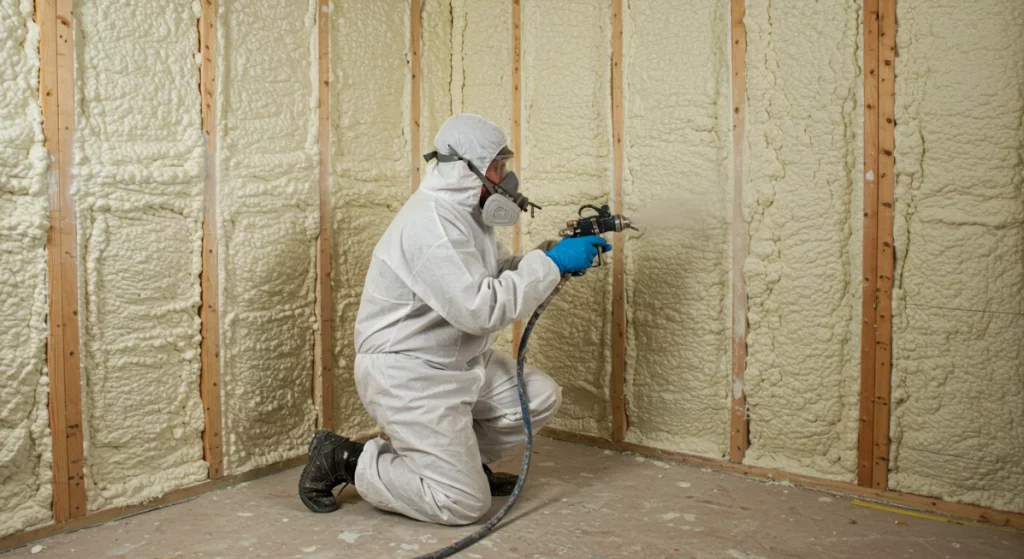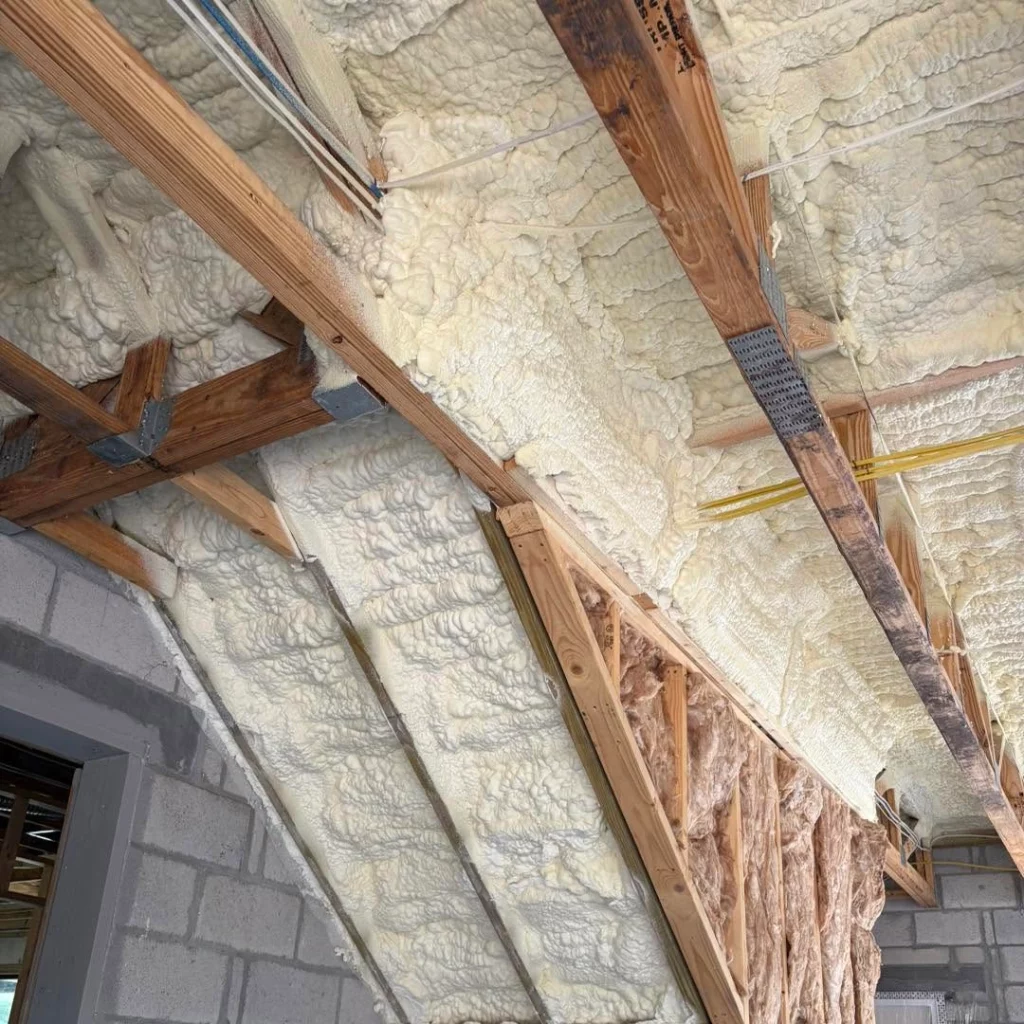



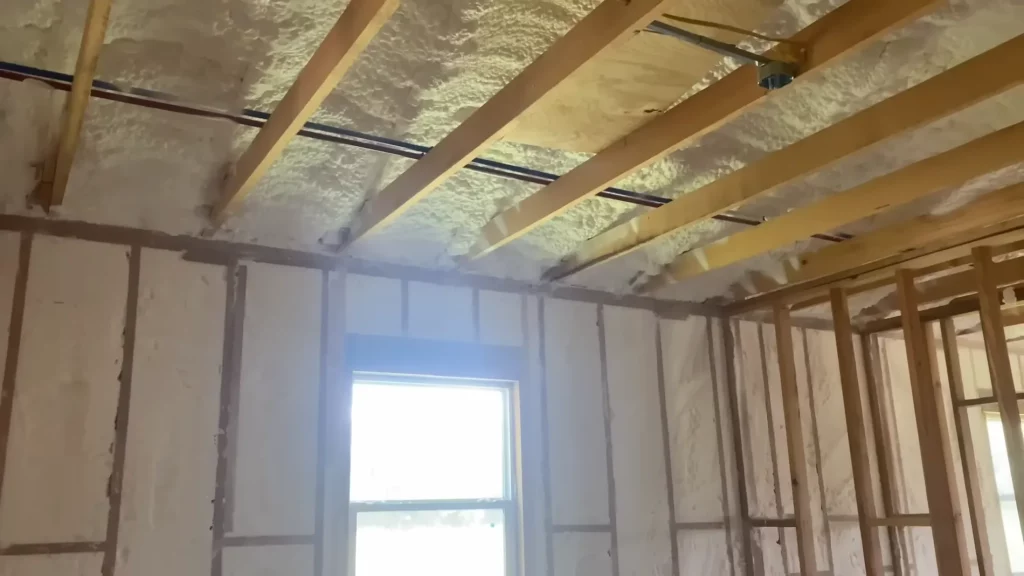
Insulation performance depends on far more than the R-value printed on a product label. Where insulation is installed, how it is installed, the moisture conditions around it, and the climate zone of the property all change how well it resists heat flow in the real world. Attics face radiant heat gain and stack-effect air leakage, walls battle thermal bridging through framing, and basements and crawl spaces fight ground moisture and humidity. In this guide, we break down the factors that shape insulation performance in every part of a property, compare how priorities shift by area, and explain how we help Raleigh homeowners, builders, and property managers match the right material to the right space, including insulation types, efficiency, and cost-effectiveness.
TL;DR
- R-value is a lab number, not a guarantee. Federal rules require insulation makers, installers, and retailers to disclose R-values based on standard testing, but rated values assume proper installation (FTC – R-Value Rule).
- Installation quality is a performance factor. Compression, gaps, and voids all reduce real-world results below the rated number.
- Thermal bridging limits wall performance. Studs, joists, and windows create parallel heat paths, so doubling insulation between framing members delivers substantially less than a 50% reduction in heat loss.
- Targets vary by location. Current guidance calls for R49-R60 in zone 4A attics, R19 over floors, and R10-R13 on crawlspace or basement walls .
- Moisture changes the math. Raising humidity from 0% to 90-95% can increase thermal conductivity by 2% in rock wool and up to 45% in lightweight cellular concrete.
- Air sealing and R-value work together. A primary value of spray foam is the airtight seal it forms directly against the substrate.
- Moisture control protects both comfort and health. EPA guidance treats moisture control as the key to mold control, which makes vapor management part of every insulation plan.
The Universal Factors Behind Insulation Performance
Four factors influence insulation performance in every part of a property, regardless of material:
- Heat transfer mode. Heat moves by conduction, convection, and radiation. Bulk insulation primarily slows conduction by trapping air, while radiant barriers reflect radiant energy and only work when they face an adequate air gap.
- Installation quality. Manufacturer R-values apply only to properly installed insulation. Stuffing two layers of batt into a cavity sized for one increases, but does not double, the R-value, and compressing fiberglass lowers its rating .
- Moisture and humidity. Some forms of insulation transfer heat more readily when wet, and trapped water adds latent heat transfer that degrades performance further.
- Air movement. Air infiltration allows convective heat transfer and condensation, both of which degrade insulation over time. Air sealing and vapor control are as important as the insulation itself.
Understanding how these four factors shift by location is what separates a whole-property insulation strategy from a one-size-fits-all guess.
Attics and Rooflines: Radiant Heat, Stack Effect, and Settling
Attics sit at the top of the thermal envelope, where rising warm air and sun-driven heat loads converge. Three factors dominate here:
- Radiant heat gain. In hot weather, roof surfaces heat the attic dramatically, and radiation dominates downward heat flow across attic air spaces. This is why radiant barriers are highly effective in attic assemblies in hot climates, provided they face an air gap.
- Stack effect and air leakage. Warm air escapes through attic penetrations, chases, and top plates, pulling conditioned air out of the living space. Insulation alone does not stop this; air sealing must come first.
- Depth, density, and settling. Loose-fill insulation can settle over time and form voids that reduce overall performance, which is why dense packing at installation matters. Stacking a second batt layer on the first does not necessarily double thermal resistance, because the weight compresses the layer below.
For a typical existing home in our region, current guidance recommends adding attic insulation up to R60 when 3-4 inches already exist, and R49 when the attic is uninsulated.
Walls: Thermal Bridging and Installation Quality
Wall assemblies fail differently than attics. Studs, plates, and headers create parallel paths that bypass cavity insulation entirely, and windows bypass even more. Key factors in wall insulation services include:
- Framing fraction. Even perfect cavity insulation only eliminates conduction through the insulation itself, leaving conductive losses through studs and glass untouched. Continuous exterior insulation, such as foam sheathing, interrupts these thermal bridges.
- Cavity fill accuracy. Voids around wiring, plumbing, electrical boxes, and corners are among the most common weak points, and inaccessible wall cavities devoid of insulation act as hidden thermal bridges.
- Temperature dependence. Rated values are measured near room temperature. A nominal R-13 fiberglass batt may test closer to R-14 in cold conditions and R-12 in hot conditions, so seasonal performance shifts with the material (Wikipedia – R-value (insulation).
These realities are why disclosure rules exist: the R-value Rule requires manufacturers, professional installers, new home sellers, and retailers to provide R-value information based on standard tests so buyers can compare products fairly.
Basements and Crawl Spaces: Moisture Changes Everything
Below-grade spaces are defined by ground contact, humidity, and temperature differences that run opposite to the rest of the house. Priorities here include:
- Ground moisture management. In cellars and enclosed crawl spaces, water enters because of higher water tables in rainy seasons, and an adequate damp-proof layer prevents moisture from rising. Ventilation in the crawl space helps minimize condensation at insulation surfaces.
- Humidity effects on materials. Research shows that moving from 0% to 90-95% humidity increases thermal conductivity by 2% in rock wool and up to 45% in lightweight cellular concrete, with closed-cell PUR rising roughly 5% across the full humidity range (Wikipedia – Building insulation).
- Condensation on cold surfaces. (EPA – A Brief Guide to Mold, Moisture and Your Home) guidance recommends covering cold surfaces, such as cold water pipes, with insulation and keeping indoor relative humidity below 60%, ideally between 30% and 50%. Hidden mold often develops inside walls around leaking or condensing pipes, which is why moisture control is treated as the key to mold control.
- Zone-specific targets. For zone 4A homes like those in Raleigh, guidance calls for R10 insulative wall sheathing or an R13 batt on basement and crawlspace walls, and R19 between floors above unconditioned spaces.
Closed-cell spray foam earns its place in these spaces because it insulates and seals against the substrate at the same time, reducing the air leakage that invites condensation.
How Performance Factors Shift by Area
| Property Area | Dominant Performance Factors | Common Failure Points | Best-Fit Solutions |
|---|---|---|---|
| Attic | Radiant gain, stack effect, settling | Penetrations, compressed batts, wind washing | Air sealing, deep loose-fill or foam, radiant barrier with air gap |
| Walls | Thermal bridging, cavity voids | Missed cavities, wiring obstructions, corner gaps | Spray foam or dense-pack, continuous exterior sheathing |
| Basement / crawlspace | Ground moisture, humidity, condensation | Wet insulation, missing vapor control, open vents | Closed-cell foam, damp proofing, humidity management |
| Floors over unconditioned space | Convective drafts, sagging | Batts falling out of contact with subfloor | Sealed rim joists, encapsulated crawlspace, R19+ floor insulation |
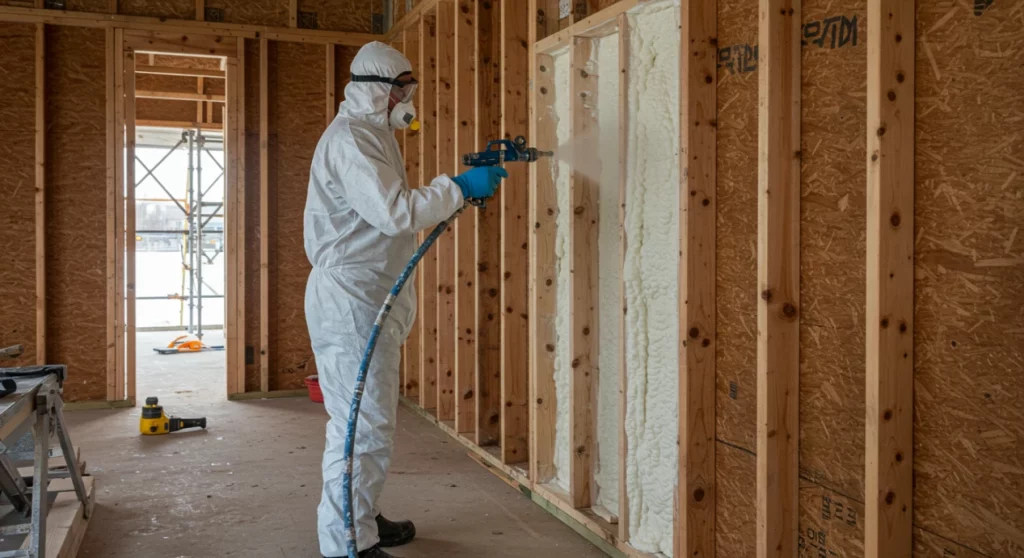
Climate Zone and Regional Conditions in Raleigh
Raleigh sits in IECC climate zone 4A, a mixed-humid zone, and Energy Star’s guidance is built directly on that zoning. Hot, humid summers push attic heat loads and humidity management to the front of the list, while cool winters make stack-effect air sealing a year-round priority. The same insulation strategy that works in a dry or cold climate underperforms here if moisture and air leakage are ignored. Our team designs every project around the zone, the assembly, and the moisture profile of the specific property.
Recommendations by Audience and Property Type
| Audience / Context | Recommended Approach | Key Notes |
|---|---|---|
| Homeowners with older Raleigh homes | Energy assessment, then attic air sealing and R49-R60 top-up | Highest-impact starting point for most existing homes |
| New construction builders | Spray foam walls, continuous exterior insulation, sealed attic options | Stops thermal bridging before walls close in |
| Property managers and landlords | Zone-by-zone review of attics, crawlspaces, and rim joists | Protects units from moisture-related complaints |
| Crawlspace and basement concerns | Closed-cell foam on foundation walls plus humidity control | Addresses moisture and insulation in one assembly |
Signs You’ve Found the Right Approach
- The provider inspects every zone, not just the easiest one, and explains why each area’s factors differ.
- Recommendations come with clear R-value targets, installation details, and moisture management steps.
- Air sealing is treated as a prerequisite, not an upsell.
- The contractor explains how rated R-values translate to installed performance for your specific assemblies.
- Expectations are set around measurable comfort and energy outcomes, with a plan for verification after the work.
Talk to Our Team About Your Property’s Insulation Plan
Every part of your property has different performance factors, and our team at Raleigh Excel Spray Foam Insulation knows how to match the material, R-value, and air sealing strategy to each one. We serve homeowners, builders, and property managers across Raleigh and the surrounding Triangle with zone-by-zone assessments and spray foam installations built for our mixed-humid climate. Call us at (919) 301-9435 or email [email protected] to get started.
FAQs
Why does my attic insulation underperform its rated R-value?
Air leakage through attic penetrations, compressed or disturbed batts, settling loose-fill, and radiant heat gain all reduce real-world performance below the label. Rated values assume proper installation under standard conditions (Energy Star – Recommended Home Insulation R-Values).
Can I use the same insulation everywhere in the property?
No. Attics need depth and radiant heat management, walls need cavity fill and thermal bridging control, and below-grade spaces need moisture-resistant, air-sealing materials. Each area has different dominant factors.
Does Raleigh’s climate affect which insulation I should choose?
Yes. Raleigh’s zone 4A mixed-humid climate targets R49-R60 in attics, R19 over floors, and R10-R13 on basement or crawlspace walls. Humidity management is part of every sound plan here.
Will adding more insulation fix my air leaks?
No. Air infiltration drives convective heat loss and condensation that insulation alone cannot stop. Seal the leaks first, then insulate, so the rated R-value delivers its full potential.
Is R-value the only number that matters?
No. R-value measures conductive resistance under lab conditions. Installed performance also depends on air sealing, moisture control, thermal bridging, and installation quality across each assembly.
Sources
- Energy Star – Recommended Home Insulation R-Values – Government guidance with recommended insulation levels by climate zone and location in the home, based on the 2021 IECC.
- FTC – R-Value Rule – Federal Trade Commission rule requiring insulation manufacturers, installers, and sellers to disclose R-values based on standard testing.
- Wikipedia – Building insulation – Reference covering heat transfer modes, moisture effects on thermal conductivity, thermal bridges, radiant barriers, and climate-based requirements.
- Wikipedia – R-value (insulation) – Detailed explanation of R-value measurement, installation and compression effects, thermal bridging, aging, and air infiltration.
- EPA – A Brief Guide to Mold, Moisture and Your Home – EPA guidance on moisture control, humidity targets, condensation prevention, and hidden mold risks in wall and roof assemblies.