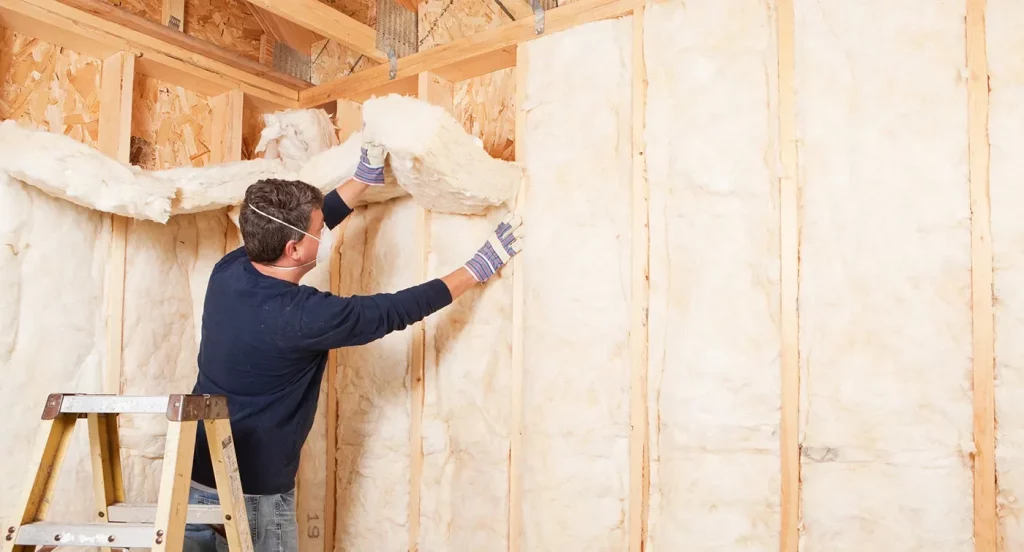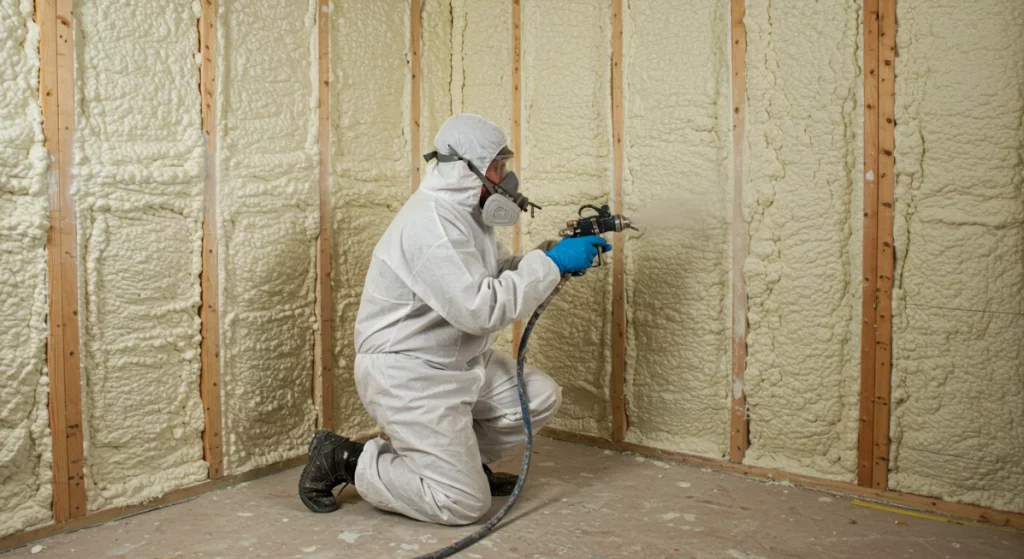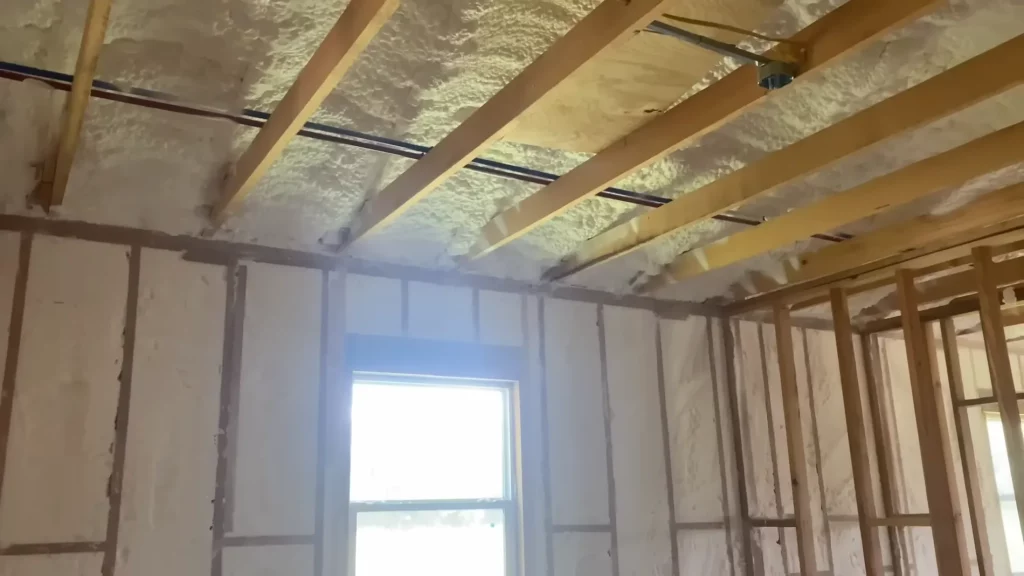



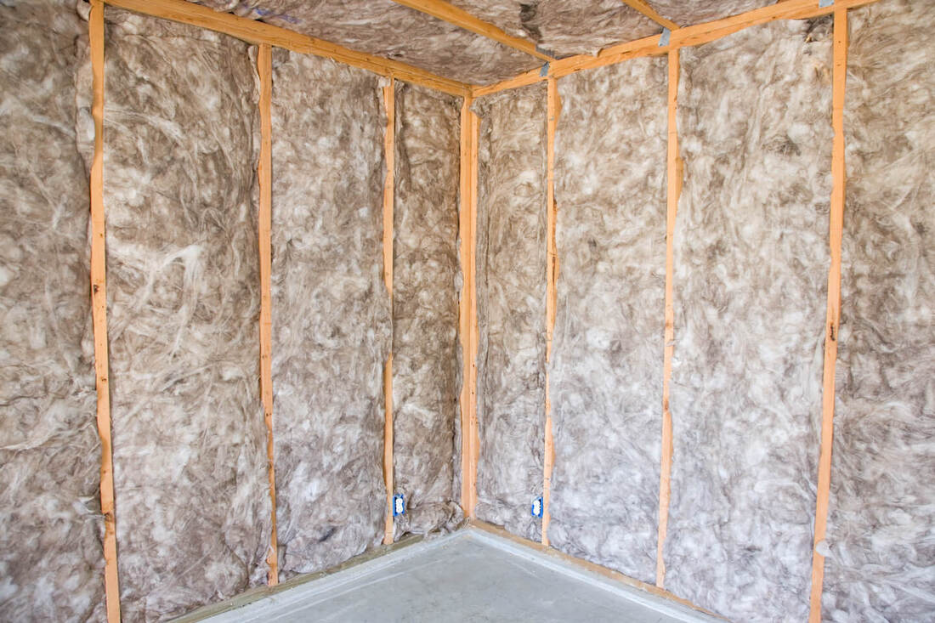
Insulation reduces unwanted sound transmission by absorbing acoustic energy inside wall, ceiling, and floor cavities and by sealing gaps that let noise pass through. The right insulation choice for sound control depends on the type of noise you are dealing with, whether it is airborne (speech, TV, traffic) or structure-borne (footsteps, mechanical vibrations), the existing construction of your building, and your comfort goals. Insulation Types, Efficiency, and Cost-Effectiveness should also be considered when selecting the right solution. Fibrous insulation materials like fiberglass and mineral wool installed within cavities can increase a wall’s Sound Transmission Class (STC) rating by 5 to 10 points, while spray foam’s air-sealing properties address the gaps and cracks that allow sound to bypass otherwise well-built assemblies.
TL;DR
- The U.S. EPA identifies 45 decibels as the recommended indoor noise level for residential spaces, hospitals, and schools to prevent activity interference and annoyance
- Fibrous insulation inside wall and ceiling cavities can improve STC ratings by 5 to 10 points depending on framing type and insulation density
- Spray foam insulation seals air gaps that standard batt insulation cannot, reducing flanking transmission paths where sound bypasses the primary barrier
- Noise exposure is linked to cardiovascular disease, sleep disruption, stress-related illness, and cognitive impairment, making interior sound control a health priority
- The three primary sound transmission paths in buildings are airborne, impact, and flanking, each requiring different insulation strategies
- A wall assembly rated at STC 50 or above is generally considered the minimum for adequate privacy between occupied spaces
Why Sound Control Matters for Interior Comfort
Noise is not just an annoyance. The EPA defines noise pollution as unwanted or disturbing sound that interferes with normal activities such as sleeping, conversation, or disrupts quality of life. The agency has linked chronic noise exposure to stress-related illnesses, high blood pressure, speech interference, hearing loss, sleep disruption, and lost productivity.
Research from Harvard Medical School reinforces these concerns, showing that noise pollution can cause or worsen cardiovascular disease, type 2 diabetes, sleep disturbances, mental health problems, and childhood learning delays. Transportation noise has been shown to trigger stress pathways through amygdalar activity, even in people who believe they have tuned it out. The European Environmental Agency ranks noise second only to air pollution as the environmental exposure most harmful to public health.
The EPA’s established guidelines recommend indoor noise levels at or below 45 decibels for residential spaces, hospitals, and schools. For context, normal conversation sits around 60 decibels. When exterior noise or adjacent-room activity pushes interior levels above that threshold, insulation becomes a practical first line of defense.
How Sound Moves Through Buildings
Understanding how sound travels is the first step toward controlling it. According to Wikipedia’s overview of acoustic transmission, there are three primary paths sound takes in building construction:
Airborne transmission occurs when a noise source in one room creates air pressure waves that cause one side of a wall or ceiling to vibrate, transferring that vibration to the adjacent room. This is how speech, television audio, and music travel between rooms.
Impact transmission happens when a physical object strikes a surface, such as footsteps on a floor or a door slamming. The impact sends vibrations directly through the building structure.
Flanking transmission is a more complex path where vibrations travel through structural elements that connect rooms, such as continuous floor slabs, shared wall plates, or unsealed joints. Even a well-insulated wall can underperform if sound finds a flanking path around it.
The most effective acoustic control method for airborne sound is adding mass to the structure, while airtightness is critical for all three paths. A sealed door with good sound reduction properties loses nearly all effectiveness if left open even a few millimeters.
How Insulation Improves Sound Control
Insulation addresses sound control through two distinct mechanisms: absorption inside cavities and air sealing at gaps, penetrations, and joints.
Cavity Absorption
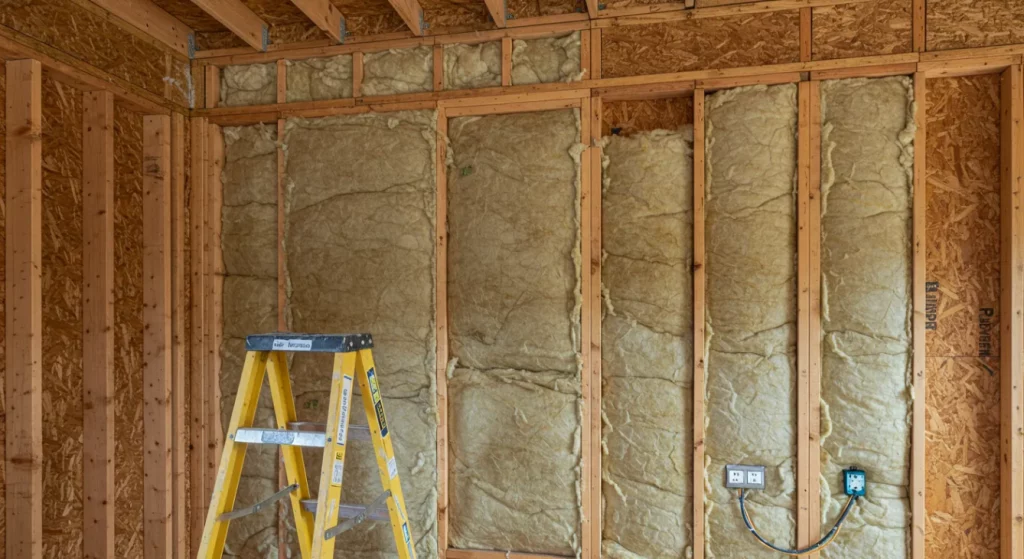
When sound waves enter an empty wall or ceiling cavity, they bounce between the interior surfaces, amplifying certain frequencies and reducing the overall effectiveness of the partition. Fibrous insulation materials installed inside these cavities absorb acoustic energy by converting it into minute amounts of heat. This dampens the resonances that would otherwise reduce the partition’s performance.
According to the Wikipedia article on Sound Transmission Class, the effectiveness of cavity insulation varies significantly based on framing type. In standard 2×4 wood stud walls, adding fiberglass insulation provides only a modest STC improvement because wood studs develop resonances that cavity insulation cannot fully address. However, in light-gauge steel stud partitions, the same fiberglass insulation can yield a nearly 10-point STC improvement. Mineral wool insulation has been shown to increase STC by 5 to 8 points in various wall assemblies due to its higher density.
Air Sealing
Spray foam insulation fills gaps, cracks, and penetrations that fibrous batts cannot reach. When installed in wall cavities, ceiling joist bays, and around rim joists, spray foam eliminates the air paths that allow sound to bypass the primary barrier. This is particularly effective against flanking transmission, where sound travels through indirect paths rather than through the wall or ceiling itself.
STC Ratings and What They Mean for Comfort
The STC rating system provides a standardized way to compare how well building assemblies block airborne sound. The chart below shows what occupants can expect at different STC levels:
| STC Rating | What You Can Hear Through the Partition |
|---|---|
| 25 | Normal speech is fully understood through the wall |
| 30 | Loud speech is understood |
| 35 | Loud speech is audible but not intelligible |
| 40 | Loud speech is audible as a murmur |
| 45 | Loud speech is heard but not distinguishable |
| 50 | Loud sounds are only faintly heard |
| 60+ | Most sounds do not disturb neighboring residents |
A typical interior wall with two sheets of half-inch drywall and no insulation in the cavity has an STC around 33. Adding cavity insulation alone can bring that closer to the STC 40 to 45 range. Reaching STC 50 or above, the level many building codes require for multi-family construction, typically requires combining insulation with additional mass, staggered or double-stud framing, or resilient channel systems.
Insulation Strategies by Space Type
Different spaces have different sound control needs. The right approach depends on the noise source, the sensitivity of the receiving space, and the existing construction.
| Space / Context | Primary Noise Concern | Recommended Insulation Approach | What to Expect |
|---|---|---|---|
| Home offices | Interior airborne noise from household activity | Fibrous cavity insulation + sealed penetrations | Noticeable reduction in speech and TV bleed-through |
| Bedrooms near exterior walls | Traffic, outdoor equipment, neighborhood noise | Spray foam in exterior walls for air sealing + cavity fill | Reduced outdoor noise intrusion, especially at flanking paths |
| Multi-family shared walls | Neighbor speech, TV, music | Mineral wool or fiberglass in cavity + airtight sealing | STC improvements of 5 to 10 points depending on assembly |
| Home theaters or media rooms | Sound escaping to adjacent rooms | Dense cavity insulation + comprehensive air sealing | Better containment of low-frequency content |
| Basements under living areas | Impact noise from footsteps, dropped objects | Cavity insulation between joists + air sealing at rim joist | Reduced structure-borne noise transmission |
Common Mistakes in Sound Control Insulation
Even well-intentioned insulation projects can fall short if certain pitfalls are not avoided.
Leaving gaps and penetrations unsealed. As noted in acoustic transmission research, even a small opening can reduce a partition’s effectiveness to nearly nothing. Electrical boxes, plumbing penetrations, and recessed lights all create flanking paths if left unsealed.
Confusing sound absorption with sound blocking. Surface treatments like fabric panels and heavy curtains reduce reverberation inside a room but do not significantly improve the STC rating of the wall itself. The insulation needs to go inside the cavity.
Ignoring flanking paths. Insulating the primary wall insulation or ceiling without addressing continuous floor slabs, shared structural elements, or unsealed joints means sound will simply travel around the treated assembly.
Using only mass without cavity insulation. Adding layers of drywall increases mass, which helps, but doubling mass does not double the STC. Cavity insulation is needed to address the resonances that mass alone cannot control.
Signs You Have the Right Sound Control Strategy
Working with an experienced insulation provider makes a measurable difference in acoustic outcomes. A few indicators suggest you are on the right track:
- The provider assesses the specific noise sources and transmission paths in your space before recommending a solution, rather than applying a one-size-fits-all approach
- The proposal addresses both cavity insulation and air sealing, recognizing that gaps and penetrations undermine even the best materials
- The team explains STC and NRC concepts in plain language and sets realistic expectations for the level of noise reduction you will experience
- Installation includes detailed attention to penetrations, rim joists, and other common flanking paths
- There is a clear understanding of the difference between airborne and structure-borne noise, with strategies matched to the actual problem
Get Expert Sound Control for Your Space
Raleigh Excel Spray Foam Insulation helps homeowners and builders create quieter, more comfortable interiors through professional insulation installation designed for both thermal performance and sound control. Our team evaluates your specific noise concerns, identifies transmission paths, and recommends the right insulation strategy for your space. Contact us at (919) 301-9435 or email [email protected] to get started.
FAQs
Does insulation in walls actually make a noticeable difference in sound control?
Yes. Fibrous insulation inside wall cavities can improve a partition’s STC rating by 5 to 10 points depending on framing type and material density, which is often the difference between understanding conversation through a wall and hearing only a faint murmur.
Is spray foam insulation better than fiberglass for sound control?
Spray foam and fiberglass address sound differently. Spray foam excels at air sealing, closing the gaps where sound bypasses a wall assembly, while fiberglass and mineral wool are better at absorbing acoustic energy inside cavities. The best results come from combining air sealing with cavity absorption.
What STC rating should I target for a comfortable home?
An STC of 45 to 50 is generally considered the minimum for adequate privacy between occupied spaces. At STC 50, loud sounds are only faintly heard, which meets the International Building Code requirement for multi-family construction.
Can insulation help with noise coming from outside my house?
Insulation in exterior walls helps reduce outdoor noise intrusion, particularly when spray foam is used to seal air leaks around windows, doors, and penetrations. The EPA recommends keeping indoor residential noise at or below 45 decibels, and proper insulation is a practical way to move closer to that target.
Why do I still hear noise through a wall that has insulation?
Sound can bypass insulated walls through flanking paths such as unsealed electrical boxes, continuous floor slabs, shared structural elements, or gaps around doors and windows. Comprehensive air sealing alongside cavity insulation is necessary to address these indirect transmission routes.
Sources
- Sound Transmission Class – Wikipedia – Comprehensive reference on STC rating methodology, factors affecting sound transmission, and the subjective experience of different STC levels in building partitions.
- Health Effects from Noise – Wikipedia – Research summary on the physical and psychological health consequences of regular exposure to elevated sound levels, including cardiovascular, cognitive, and stress-related effects.
- Clean Air Act Title IV – Noise Pollution – U.S. EPA – EPA overview of noise pollution as a public health concern, including documented health effects and the agency’s regulatory authority.
- Noise and Health – Harvard Medicine Magazine – Harvard Medical School report on noise pollution as a health risk, covering cardiovascular disease links, stress pathway mechanisms, and the need for better noise mitigation strategies.
- EPA Identifies Noise Levels Affecting Health and Welfare – U.S. EPA – EPA’s established noise level thresholds, including the 45 dB indoor recommendation for residential spaces, hospitals, and schools to prevent activity interference and annoyance.

- How Does Wall Insulation Help Limit Heat Transfer Through Exterior Walls? - October 15, 2026
- How Should Raleigh, NC Property Owners Evaluate Insulation for Long-Term Use? - September 23, 2026
- What Factors Affect Insulation Performance Across Different Parts of a Property? - September 23, 2026