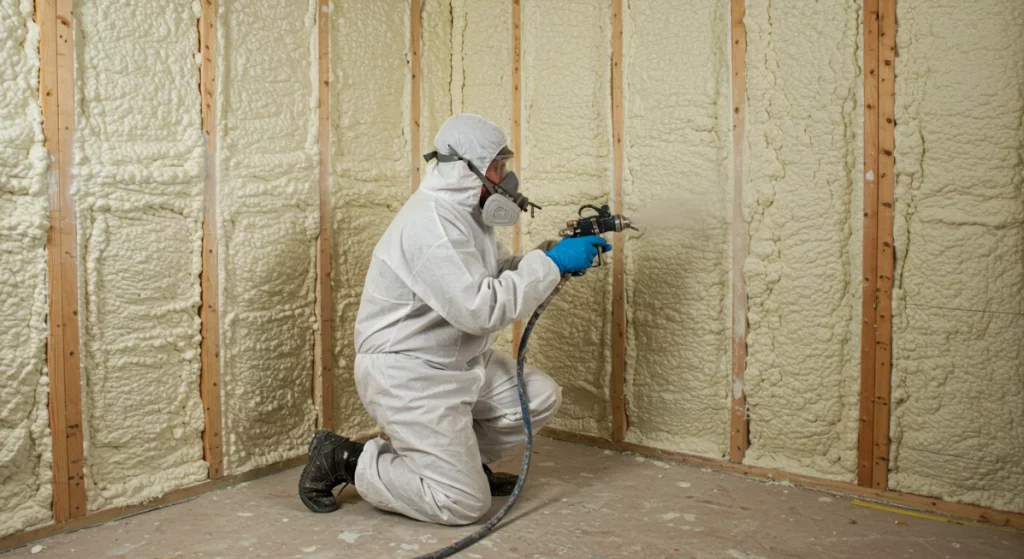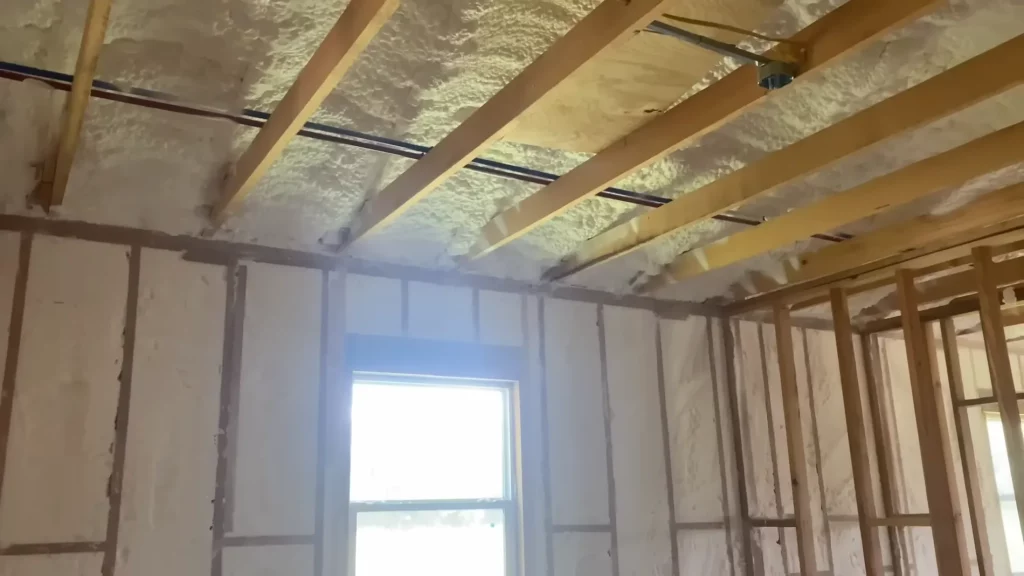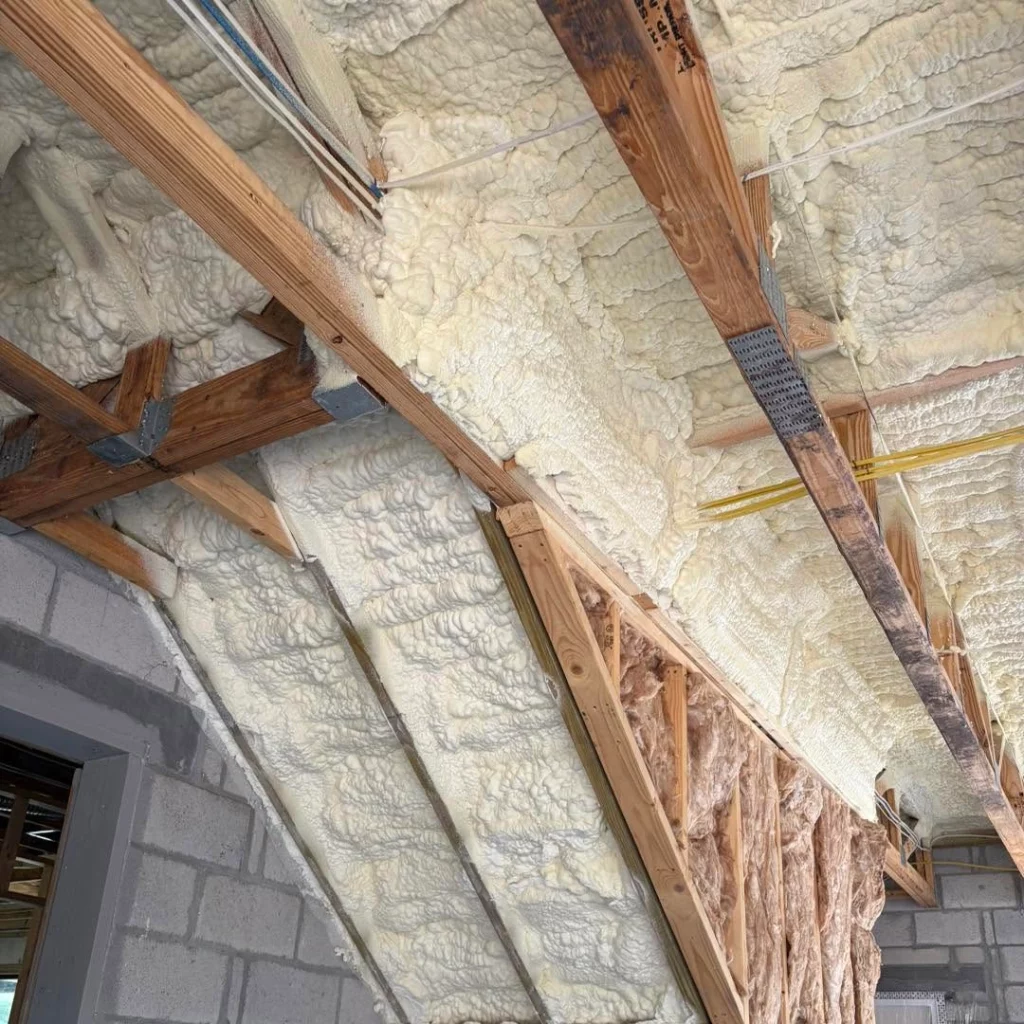



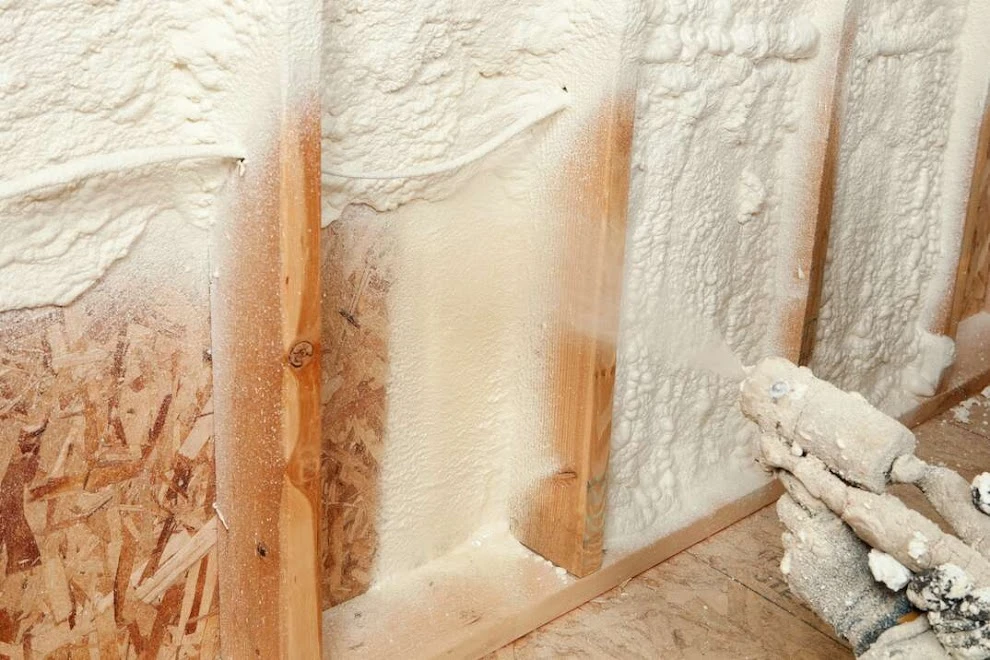
Open cell spray foam insulation works by expanding to fill every gap, crack, and cavity in your building envelope, creating a continuous air barrier that traditional insulation materials simply cannot achieve. When installed correctly, it seals against air infiltration, reduces convective heat loss, and delivers more consistent temperatures room to room. The material achieves an R-value of approximately 3.6 per inch according to the Spray Foam Coalition, and unlike fiberglass or cellulose, it also functions as an air barrier, meaning it controls both heat transfer and air movement simultaneously. The right insulation strategy depends on your climate zone, the areas being insulated, and whether moisture control is a priority. Open cell spray foam is best suited for interior wall cavities, attics, and ceilings in mixed-humid and warm climates where its vapor-permeable nature and sound-dampening properties deliver the greatest value.
TL;DR
- Open cell spray foam expands to fill cavities completely, sealing air leaks that account for a significant portion of energy loss in most homes
- It delivers an R-value of approximately 3.6 per inch and, when installed to the depth required for an air-impermeable rating, qualifies as a continuous air barrier
- The material reduces drafts, eliminates cold spots, and maintains more even temperatures across rooms
- Open cell foam is vapor-permeable, allowing moisture to diffuse rather than trap it, which is beneficial in many wall assemblies
- It provides meaningful sound attenuation, reducing noise transmission between rooms and from outside
- Whole-wall R-value matters more than per-inch R-value, and open cell often delivers comparable whole-wall performance to closed cell at lower installed cost
- Best applications include conditioned attics, wall cavities, and ceiling assemblies in moderate to warm climate zones
- Proper installation by experienced professionals is essential to achieving rated air-barrier performance
What Makes Open Cell Spray Foam Different from Traditional Insulation
Most homeowners are familiar with fiberglass batts or blown-in cellulose. These materials resist conductive heat transfer, but they do not stop air movement. Gaps around framing, penetrations for plumbing and electrical, and construction joints allow conditioned air to escape and unconditioned air to enter. The U.S. Department of Energy states that reducing air leakage is a cost-effective way to cut heating and cooling costs, improve durability, increase comfort, and create a healthier indoor environment.
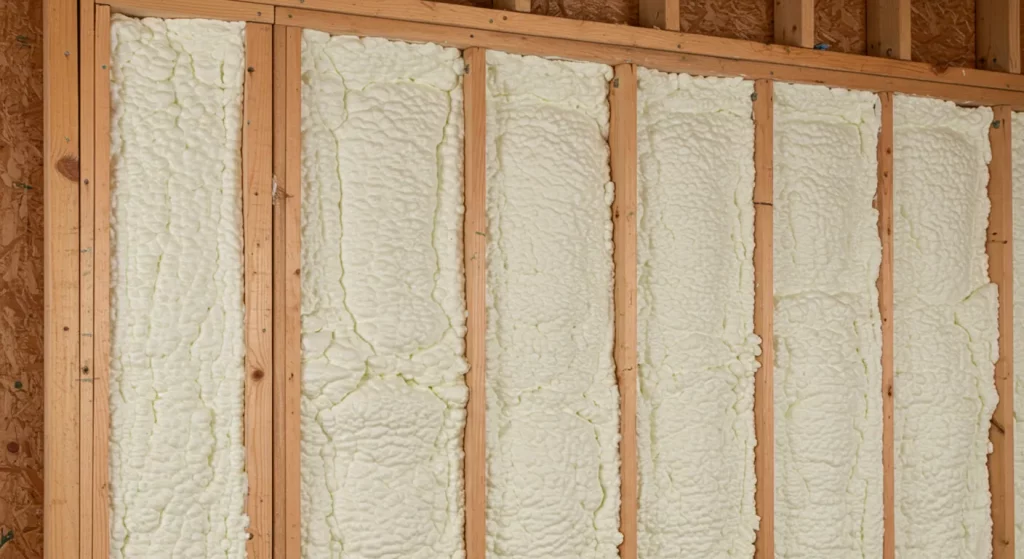
Open cell spray foam insulation addresses this gap differently. The liquid mixture is sprayed into wall cavities, attics, or ceiling assemblies and expands to roughly 100 times its original volume, conforming to every surface and filling voids that batt insulation cannot reach. Once cured, the foam forms a solid, adhered layer that resists air movement through the assembly. The Spray Foam Coalition notes that spray foam is unique in its ability to serve simultaneously as a thermal control layer, air control layer, and, depending on type and thickness, a vapor control layer.
The Building Science Corporation confirms that spray foam insulation provides continuity of the water control, air control, vapor control, and thermal control layers necessary for effective environmental separation, resulting in low exterior air leakage that delivers significant energy efficiency and sound attenuation.
How Air Sealing Directly Improves Indoor Comfort
Air sealing is the mechanism behind most of the comfort improvements homeowners notice after spray foam installation. When uncontrolled air leaks through the building envelope, several problems follow:
- Drafts near windows, baseboards, and electrical outlets: These occur when outside air infiltrates through gaps around framing and penetrations
- Cold spots in specific rooms: Air leakage through attics, rim joists, and knee walls creates uneven temperature distribution
- High humidity in summer: Warm, moist outdoor air enters through leaks, forcing HVAC systems to work harder to dehumidify
- Dry air in winter: Heated indoor air escapes through gaps in the upper portions of the building envelope
Open Cell Spray Foam seals these pathways by adhering directly to framing, sheathing, and drywall. In conditioned attics, for example, it is applied directly to the underside of the roof deck, bringing the ductwork and mechanical systems into the conditioned space. This eliminates the extreme temperature swings common in vented attics and reduces the load on HVAC equipment year round.
Building Science Corporation recommends spray foam for unvented conditioned attic assemblies, noting that both open cell and closed cell foam work in most climates, with open cell providing a cost-effective solution for zones where a vapor barrier is not required at the roof plane.
Open Cell vs. Closed Cell: Choosing the Right Option
The choice between open cell and closed cell spray foam depends on the application, climate zone, and performance priorities. The following comparison outlines the key differences:
| Property | Open Cell Spray Foam | Closed Cell Spray Foam |
|---|---|---|
| R-value per inch | ~3.6 | ~5.7 to 6.5 |
| Air barrier | Yes, at minimum rated depth | Yes, at minimum rated depth |
| Vapor retarder | Vapor-permeable | Class II (typically at 1.5″ or greater) |
| Density | Low (0.5 lb/ft3) | High (1.5 to 2.0 lb/ft3) |
| Expansion | Expands significantly, fills full cavity | Expands moderately |
| Sound dampening | Superior | Moderate |
| Moisture handling | Allows drying, vapor-open | Acts as vapor retarder |
| Best applications | Wall cavities, attics, ceilings | Rim joists, crawlspaces, flood-prone areas |
The Fine Homebuilding building science team notes that open cell spray foam has an R-value of about 3.7 per inch while closed cell reaches approximately 6.5 per inch. However, when evaluating whole-wall performance, the difference between the two narrows considerably because thermal bridging through wood framing affects both assemblies similarly. Open cell foam fills the entire stud cavity depth, which reduces the exposed framing area and can actually improve whole-wall R-value relative to a partially filled closed cell application.
For homeowners in mixed-humid and warm climates, open cell is often the better value in wall cavities and attics where its vapor-permeable nature allows assemblies to dry in both directions. Closed cell is better suited to below-grade applications, vented crawlspaces, and climate zones where condensation control at the building envelope is a priority.
Where Open Cell Spray Foam Performs Best
Conditioned Attics
In homes where HVAC equipment and ductwork are located in the attic, converting the space to a conditioned assembly with open cell spray foam applied to the roof deck is one of the most impactful upgrades available. The Building Science Corporation residential spray foam guide confirms that unvented conditioned attics can be constructed by installing open cell spray foam directly to the underside of the roof deck, and that this approach eliminates the large thermal penalty associated with locating ductwork in vented, unconditioned attic spaces.
Wall Cavities
Open cell foam fills 2×4 and 2×6 stud cavities completely, sealing around every electrical box, plumbing penetration, and framing member. This eliminates the air leaks that account for a large share of energy loss in typical homes, as noted by the U.S. Department of Energy.
Sound-Dampening Applications
The open cell structure traps and absorbs sound energy, making it effective for reducing noise transmission between rooms, from exterior sources, and through floor-ceiling assemblies. For homeowners building media rooms, home offices, or bedrooms near busy streets, this secondary benefit adds meaningful livability.
Recommendations by Project Type
| Project Context | Recommended Approach | Key Notes |
|---|---|---|
| New construction, warm climate | Open cell in walls and attic | Cost-effective full cavity fill, excellent air sealing and sound control |
| Existing home retrofit, attic only | Open cell on roof deck | Brings ducts into conditioned space, addresses largest source of air leakage |
| Remodel with exposed walls | Open cell in wall cavities | Seals around penetrations during framing phase |
| Mixed-humid climate basement | Closed cell on walls, open cell on ceiling | Moisture control below grade, vapor-permeable at ceiling plane |
| Sound-sensitive rooms | Open cell in partition walls | Superior sound attenuation vs. other insulation types |
Signs You Have Found the Right Installer
Choosing a qualified spray foam contractor has a direct impact on whether the installed material actually performs as an air barrier. Here are the qualities that set experienced professionals apart:
- They discuss the building envelope as a system, not just R-value. They explain how air sealing, insulation, and ventilation work together
- They reference climate zone requirements and building code provisions rather than quoting a single material specification
- They perform a pre-installation assessment of the areas to be insulated, identifying potential moisture issues and air leakage pathways
- They explain proper curing times, occupancy re-entry protocols, and ventilation requirements after installation
- They stand behind their work with clear warranties on both materials and labor
Get an Expert Assessment for Your Home
Raleigh Excel Spray Foam Insulation provides professional open cell spray foam installation throughout the Raleigh area, helping homeowners improve indoor comfort and air sealing performance. Our team evaluates your building envelope, recommends the right approach for your climate zone and project scope, and installs materials to the depth required for rated air-barrier performance.
For additional guidance on 2021 IECC requirements for insulation R-values and air sealing criteria, refer to the U.S. Department of Energy Insulation and Air-Sealing Essentials.
Contact us today for a personalized insulation quote or to schedule a home comfort assessment.
Frequently Asked Questions
Can open cell spray foam be used in all climate zones?
Open cell spray foam works well in most climates for wall cavities and conditioned attics, but in colder climate zones (IECC Zone 5 and above), closed cell or a hybrid approach may be required at the roof plane for condensation control.
Does open cell spray foam prevent mold growth?
By sealing air leaks, open cell foam reduces the moisture infiltration that contributes to mold growth. Its vapor-permeable nature also allows wall assemblies to dry, which helps prevent trapped moisture problems.
How does open cell spray foam compare to fiberglass for sound control?
Open cell spray foam provides noticeably better sound dampening than fiberglass batts because its cell structure absorbs acoustic energy rather than transmitting it through rigid fibers.
Is a separate vapor barrier needed with open cell spray foam?
In many applications, open cell spray foam does not require an additional vapor barrier because its vapor-permeable nature allows the assembly to dry. In some cold-climate configurations, an interior vapor retarder may be recommended.
How long does open cell spray foam last?
When properly installed, open cell spray foam maintains its air-sealing and insulating properties for the life of the building without settling, sagging, or degrading like fiberglass or cellulose.
Sources
- Building Science Corporation – GM-2102: Residential Spray Foam Guide. https://buildingscience.com/documents/guides-and-manuals/gm-2102-residential-spray-foam-guide
- U.S. Department of Energy – Air Sealing Your Home. https://www.energy.gov/energysaver/air-sealing-your-home
- U.S. Department of Energy – Insulation and Air-Sealing Essentials. https://www.energy.gov/cmei/buildings/articles/energy-efficient-home-improvement-credit-insulation-and-air-sealing
- Spray Foam Coalition – Spray Foam R-Values and Performance. https://www.whysprayfoam.org/new-construction/r-values-and-performance/
- Fine Homebuilding – Closed-Cell Foam Between Studs Is a Waste. https://www.finehomebuilding.com/project-guides/insulation/closed-cell-foam-studs-waste

- How Should Raleigh, NC Property Owners Evaluate Insulation for Long-Term Use? - September 23, 2026
- What Factors Affect Insulation Performance Across Different Parts of a Property? - September 23, 2026
- Could Spray Foam Insulation Be Useful Around Uneven Building Sections in Wake Forest, NC? - September 18, 2026