


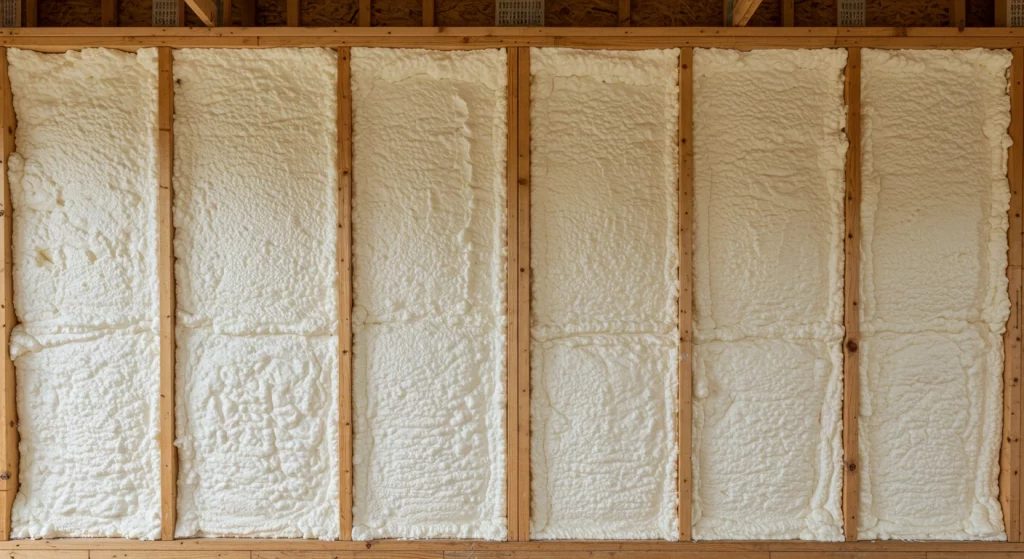
Closed cell spray foam stands out among insulation materials because it seals gaps while simultaneously adding structural integrity and resisting moisture, making it particularly well suited for Zebulon, NC properties that face hot, humid summers and cool winters. The material expands on application to fill cracks, crevices, and irregular cavities that traditional insulation cannot reach, and once cured, it forms a rigid barrier that blocks air infiltration, reduces energy transfer, and acts as a vapor retardant. Closed Cell Spray Foam Comprehensive Analysis helps explain why these combined properties matter for homeowners and property owners in Zebulon’s mixed-humid climate, where controlling both heat flow and moisture is essential for long-term building performance.
TL;DR
- Closed cell spray foam expands to fill gaps and irregular cavities, creating an airtight seal that fiber-based insulation cannot achieve
- It provides both thermal insulation and a built-in vapor retardant, which is especially valuable in North Carolina’s mixed-humid climate zone
- The rigid cured foam adds structural strength to walls and roof assemblies, resisting sagging and compression over time
- Spray polyurethane foam is recognized by the EPA as an effective insulation and air sealant material for building envelope applications
- Proper installation with correct safety protocols is essential, as the isocyanates used during application require protective measures per OSHA guidelines
- The material’s high R-value per inch means thinner applications can meet or exceed ASHRAE 90.1 prescriptive requirements for climate zone 4
- Fully cured spray foam is considered chemically inert and performs reliably for decades when installed correctly
Why Closed Cell Spray Foam Works as an Air Barrier
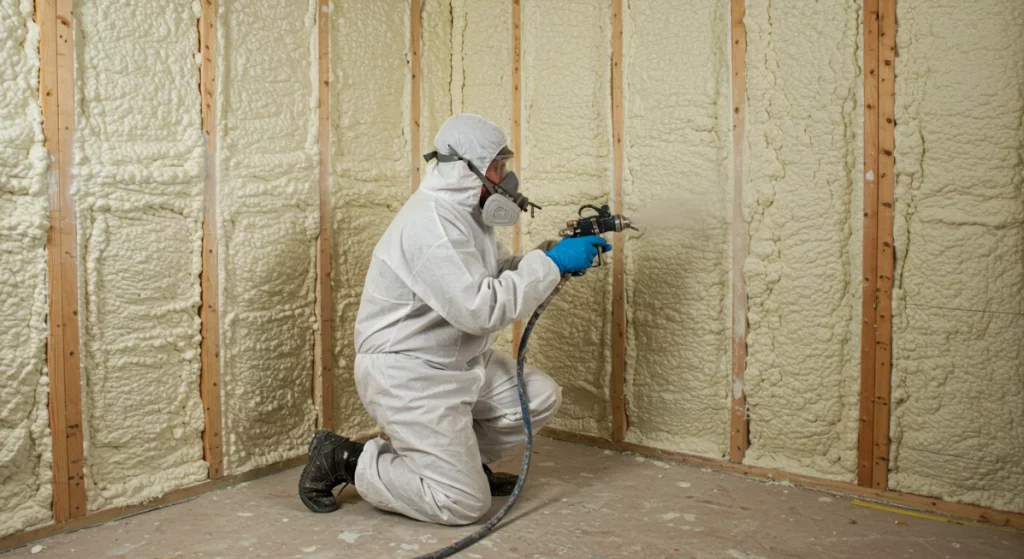
The core advantage of closed cell spray foam over other insulation types is its dual function as both an insulator and an air barrier. When the two liquid components, isocyanates and polyols, are mixed at the spray nozzle, the chemical reaction produces a foam that expands and fills the cavity it is applied to. According to the EPA’s guidance on spray polyurethane foam, spray polyurethane foam is an effective insulation and air sealant material. The foam cures into a solid, rigid mass with closed gas cells that block the passage of air through the building envelope.
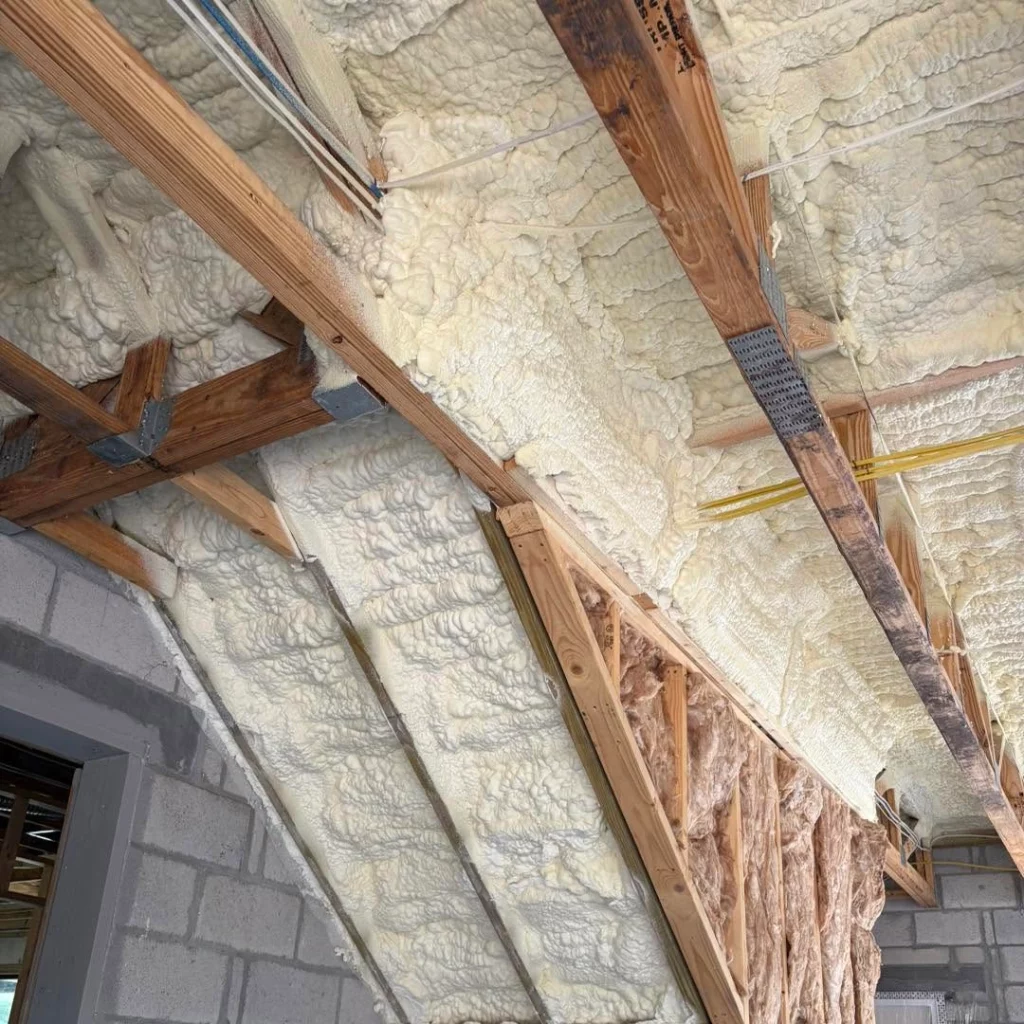
This matters because air leakage accounts for a significant portion of energy loss in most buildings. Traditional insulation materials like fiberglass batts or loose-fill cellulose can reduce conductive heat transfer but do little to stop air movement through gaps around framing, plumbing penetrations, electrical boxes, and rim joists. Closed Cell Spray Foam for Long-Term Durability adheres to surfaces and expands into those gaps, eliminating the pathways where air would otherwise infiltrate or exfiltrate.
In Zebulon, where summer temperatures regularly reach the 90s and winter lows dip below freezing, the pressure differences between conditioned interior spaces and the outdoors drive constant air movement through any available gap. Sealing those gaps with closed cell spray foam reduces the workload on HVAC systems year round.
Moisture Resistance in a Mixed-Humid Climate
Zebulon sits within ASHRAE climate zone 4, a region characterized by hot summers, moderate winters, and elevated humidity levels for much of the year. In this climate, insulation must manage both heat flow and moisture vapor. Closed cell spray foam has a permeance rating low enough to function as a vapor retardant, meaning it slows the movement of water vapor through the building assembly.
As documented in the Wikipedia article on building insulation, polyurethane foam is listed among the cellular insulation materials that trap small gas pockets to resist heat transfer. The closed-cell structure means the gas bubbles within the foam remain intact rather than open and interconnected, which is what gives the material its moisture-resistant properties. When applied to crawl spaces, basement rim joists, and exterior wall cavities in Zebulon properties, closed cell spray foam prevents warm, humid outdoor air from reaching cooler interior surfaces where condensation could form.
Condensation control is critical in the Raleigh area’s climate. When warm, moist air contacts a surface below its dew point, water droplets form. Over time, this moisture accumulation leads to mold growth, wood rot, and degraded indoor air quality. By serving as both an air barrier and a vapor retardant, closed cell spray foam addresses the two primary mechanisms that allow moisture into building assemblies.
Thermal Performance and R-Value per Inch
The insulating capability of a material is measured by its R-value, which quantifies thermal resistance. Closed cell spray foam delivers one of the highest R-values per inch among common insulation materials, meaning it resists heat transfer more effectively in less thickness than most alternatives. According to the Wikipedia article on thermal insulation, thermal conductivity is the key property that determines how well a material insulates, and materials with lower thermal conductivity provide better insulating performance.
For property owners in Zebulon, this high R-value per inch translates to practical benefits. In existing homes where wall cavity depth is limited by standard framing dimensions, closed cell spray foam can achieve the required thermal performance without needing to build out wall thickness. In attics and cathedral ceilings, thinner foam applications can meet or exceed the prescriptive insulation requirements outlined in ASHRAE 90.1 for climate zone 4, which the building insulation Wikipedia article notes are organized by climate zone and expressed as minimum R-values for various building assemblies.
Structural Benefits Beyond Insulation
An often overlooked advantage of closed cell spray foam is the structural rigidity it adds to a building assembly once cured. The Wikipedia article on polyurethane explains that rigid polyurethane foams are thermosetting polymers that do not melt on heating and are produced with a high degree of crosslinking. This crosslinked molecular structure gives closed cell spray foam its hardness and dimensional stability.
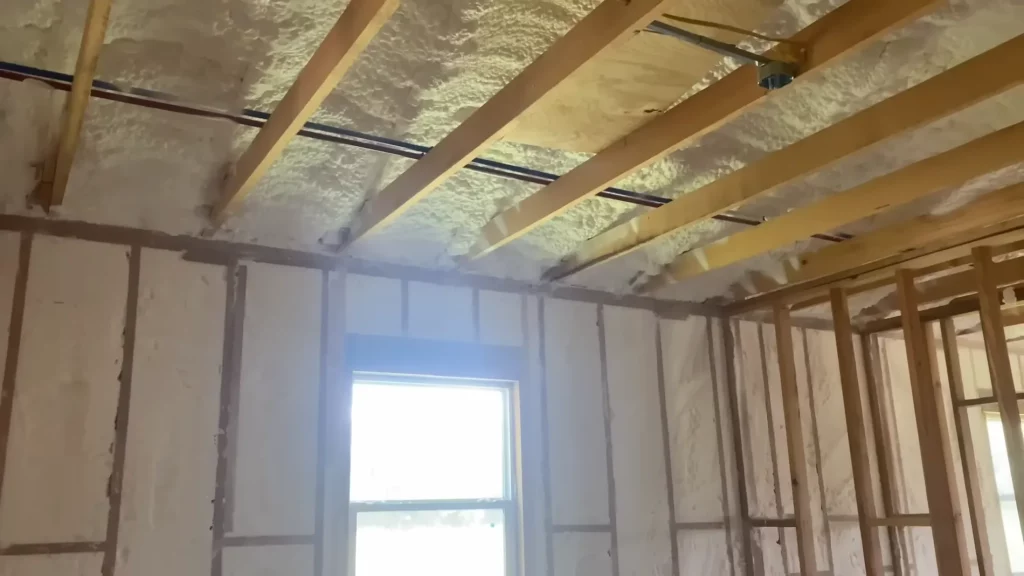
When sprayed into wall cavities or onto roof decks, the cured foam bonds to framing members and sheathing, essentially gluing the assembly together. This added rigidity reduces wall racking and can improve a structure’s resistance to wind loads, which is relevant in Zebulon given the thunderstorms and high-wind events that occur in central North Carolina. The foam also will not settle, sag, or compress over time the way loose-fill insulation can, maintaining its thermal performance throughout the life of the building.
Closed Cell vs. Open Cell Spray Foam
Choosing between closed cell and open cell spray foam depends on the specific application and the building’s needs. The table below compares the two across the factors that matter most for Zebulon properties:
| Property | Closed Cell Spray Foam | Open Cell Spray Foam |
|---|---|---|
| Cell Structure | Intact, closed gas cells | Broken, interconnected cells |
| Air Barrier | Yes, effective air seal | Limited air sealing capability |
| Vapor Retardant | Yes, low permeance | No, high permeance allows vapor flow |
| R-Value per Inch | Higher thermal resistance | Lower thermal resistance |
| Density | Higher, rigid when cured | Lower, flexible when cured |
| Structural Support | Adds rigidity to assemblies | Minimal structural benefit |
| Best Applications | Walls, crawl spaces, rim joists, metal buildings | Interior wall cavities, attics with ventilation |
| Moisture Environments | Suitable for damp or humid conditions | Not recommended where moisture is a concern |
For Zebulon homeowners dealing with crawl space moisture, rim joist air leakage, or basement insulation, closed cell spray foam is generally the better choice because it addresses both thermal and moisture concerns simultaneously. Open cell foam has its place in interior applications where vapor permeability is desirable, but it cannot match the all-around protective qualities of closed cell in the areas most vulnerable to North Carolina’s humidity.
Where Closed Cell Spray Foam Makes the Biggest Impact in Zebulon Properties
Not every area of a home benefits equally from closed cell spray foam. Our team typically recommends prioritizing the following locations based on where the material’s specific properties deliver the most value:
Crawl spaces and basement rim joists: These areas are the most common sources of air infiltration and moisture problems in North Carolina homes. The ground moisture that rises through crawl spaces, combined with humid summer air, creates conditions where condensation and mold thrive. Closed cell spray foam seals the rim joist band, insulates the crawl space walls or floor, and provides the vapor retardant needed to keep moisture out.
Attic floors and roof assemblies: In Zebulon’s climate, attic temperatures can exceed 150 degrees in summer. Spraying closed cell foam on the attic floor or directly on the roof deck creates a conditioned attic, reducing duct losses and extending the life of roofing materials by keeping them closer to indoor temperatures.
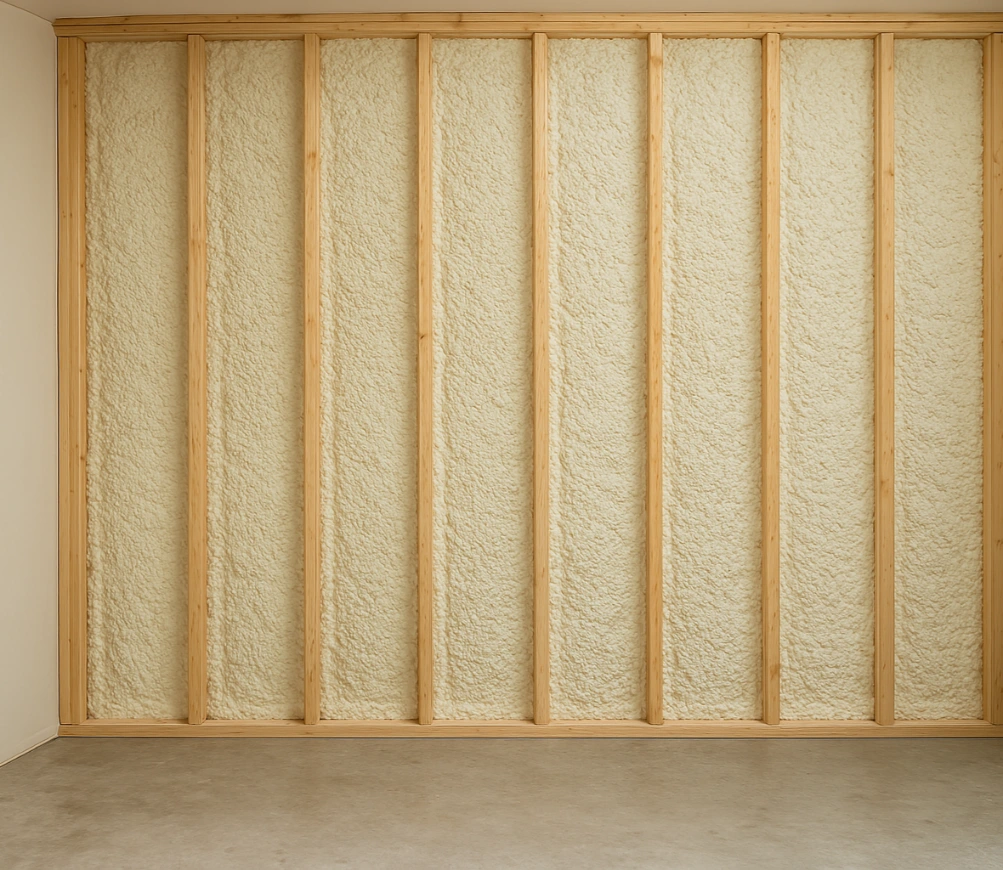
Exterior wall cavities: During new construction or major renovations, closed cell spray foam in wall cavities eliminates air infiltration through the framing and around penetrations. The thin application depth compared to other insulation types means more usable interior space.
Metal buildings and pole barns: Zebulon has a growing number of agricultural and light commercial structures. Metal buildings are notoriously difficult to insulate and prone to condensation. Closed cell spray foam adheres directly to metal surfaces, seals the joints, and prevents the condensation that causes rust and dripping.
Safety Considerations During and After Installation
Like any building material, closed cell spray foam must be handled and installed correctly to deliver its intended benefits. The raw materials used in spray polyurethane foam include isocyanates, which OSHA identifies as compounds that can cause skin and respiratory sensitization, asthma, and lung damage if proper protective measures are not followed during application. This is why professional installation matters.
During spraying, applicators must wear appropriate personal protective equipment, and building occupants must remain outside until the foam has cured and the manufacturer’s re-occupancy guidelines are met. The EPA notes that some manufacturers recommend 24 hours before unprotected occupants can safely re-enter after application of two-component high-pressure spray foam systems. Once fully cured, the foam is considered relatively inert and chemically inactive.
Proper curing depends on several factors including ambient temperature, humidity, correct mixing ratios, and application thickness. Our technicians follow manufacturer specifications precisely to ensure each installation cures correctly and performs as designed for years to come.
Signs You Have Found the Right Insulation Contractor
Choosing the right installer is as important as choosing the right material. Watch for these indicators:
- The contractor explains what type of foam they recommend for each area of your property and why, rather than applying a one-size-fits-all approach
- They discuss ventilation requirements, building code compliance, and how the insulation integrates with your existing HVAC system
- Their crew follows established safety protocols during installation, including proper protective equipment and re-occupancy procedures
- They provide clear documentation of the product used, thickness applied, and expected R-value achieved
- They offer a warranty that covers both materials and workmanship, and stand behind their installations with follow-up support
Get Expert Insulation for Your Zebulon Property
Raleigh Excel Spray Foam Insulation provides professional Closed Cell Spray Foam Zebulon, NC installation for homeowners and property owners throughout Zebulon and the surrounding area. Our experienced technicians assess each property’s specific needs, recommend the right insulation strategy for the local climate, and install every project to manufacturer specifications for lasting performance. Whether you are building new, retrofitting an older home, or insulating a metal building, we deliver the air sealing, moisture control, and thermal protection that Zebulon properties demand.
Call us at (919) 301-9435 or email [email protected] to discuss your project. We are ready to help you protect your property with insulation that performs.
Frequently Asked Questions
How long does closed cell spray foam last in a home?
When properly installed and protected from UV exposure, closed cell spray foam is a permanent insulation material that does not degrade, settle, or lose its R-value over time.
Can closed cell spray foam be installed in existing walls without removing drywall?
In most cases, closed cell spray foam requires access to open cavities, but some existing applications like rim joists and attics can be insulated without significant demolition.
Does closed cell spray foam prevent mold growth?
The foam itself does not support mold growth because it is an inorganic material, and by sealing out moisture-laden air, it reduces the conditions that allow mold to develop on surrounding surfaces.
Is closed cell spray foam safe after it cures?
Fully cured spray foam is considered chemically inert and inactive, according to EPA guidance, making it safe for everyday occupancy once manufacturer re-occupancy times are satisfied.
Why is closed cell spray foam better than fiberglass for Zebulon’s climate?
Closed cell spray foam provides both an air barrier and a vapor retardant in addition to higher R-value per inch, which directly addresses the heat and humidity challenges of North Carolina’s mixed-humid climate in ways fiberglass cannot.
Sources
- EPA – Quick Safety Tips for Spray Polyurethane Foam Users – EPA guidance confirming spray polyurethane foam as an effective insulation and air sealant, with safety protocols for installation and re-occupancy.
- OSHA – Isocyanates Safety and Health Topics – OSHA standards and hazard information covering isocyanate exposure risks during spray foam application and required protective measures.
- Wikipedia – Polyurethane – Comprehensive reference on polyurethane chemistry, foam types including closed-cell rigid foams, and the distinction between open-cell and closed-cell structures.
- Wikipedia – Thermal Insulation – Explanation of thermal conductivity, R-value measurement, and how insulation materials resist heat transfer in building applications.
- Wikipedia – Building Insulation – Overview of building insulation materials, ASHRAE 90.1 climate zone requirements, and the role of polyurethane foam in building envelopes.

- How Should Raleigh, NC Property Owners Evaluate Insulation for Long-Term Use? - September 23, 2026
- What Factors Affect Insulation Performance Across Different Parts of a Property? - September 23, 2026
- Could Spray Foam Insulation Be Useful Around Uneven Building Sections in Wake Forest, NC? - September 18, 2026