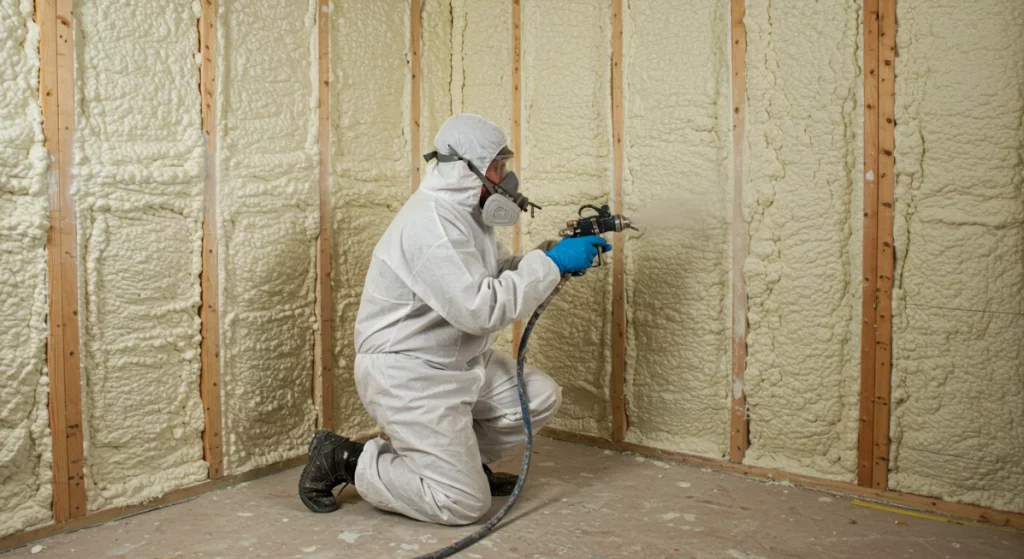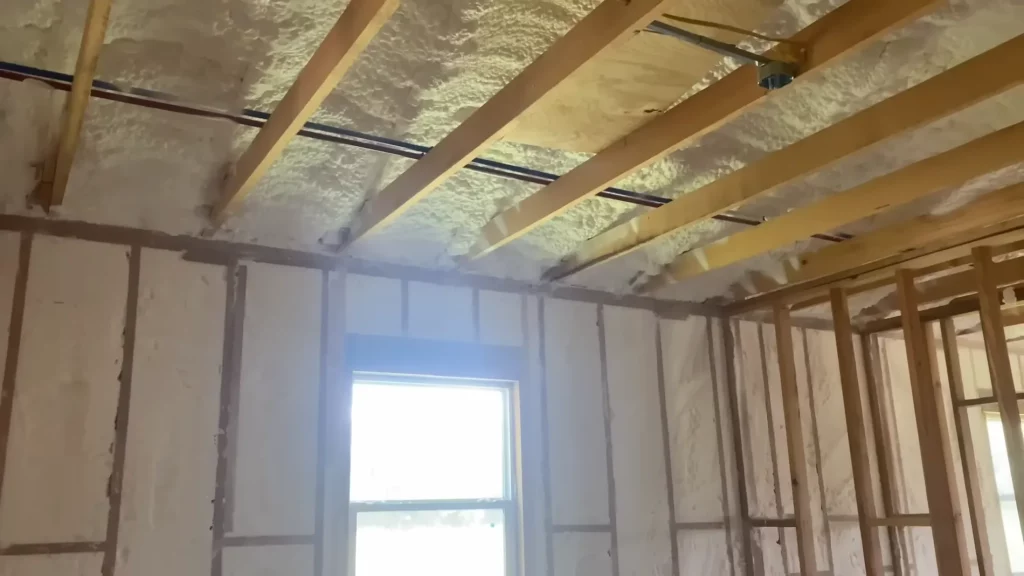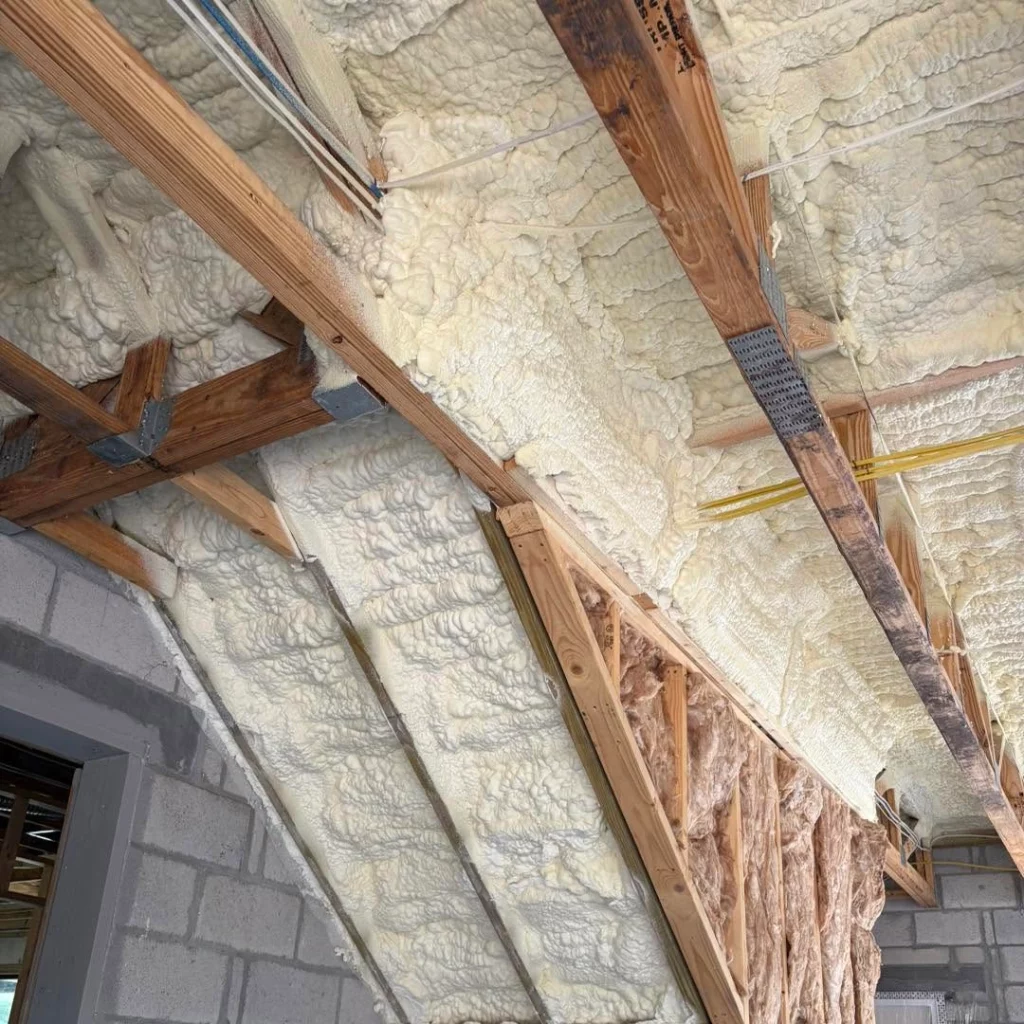



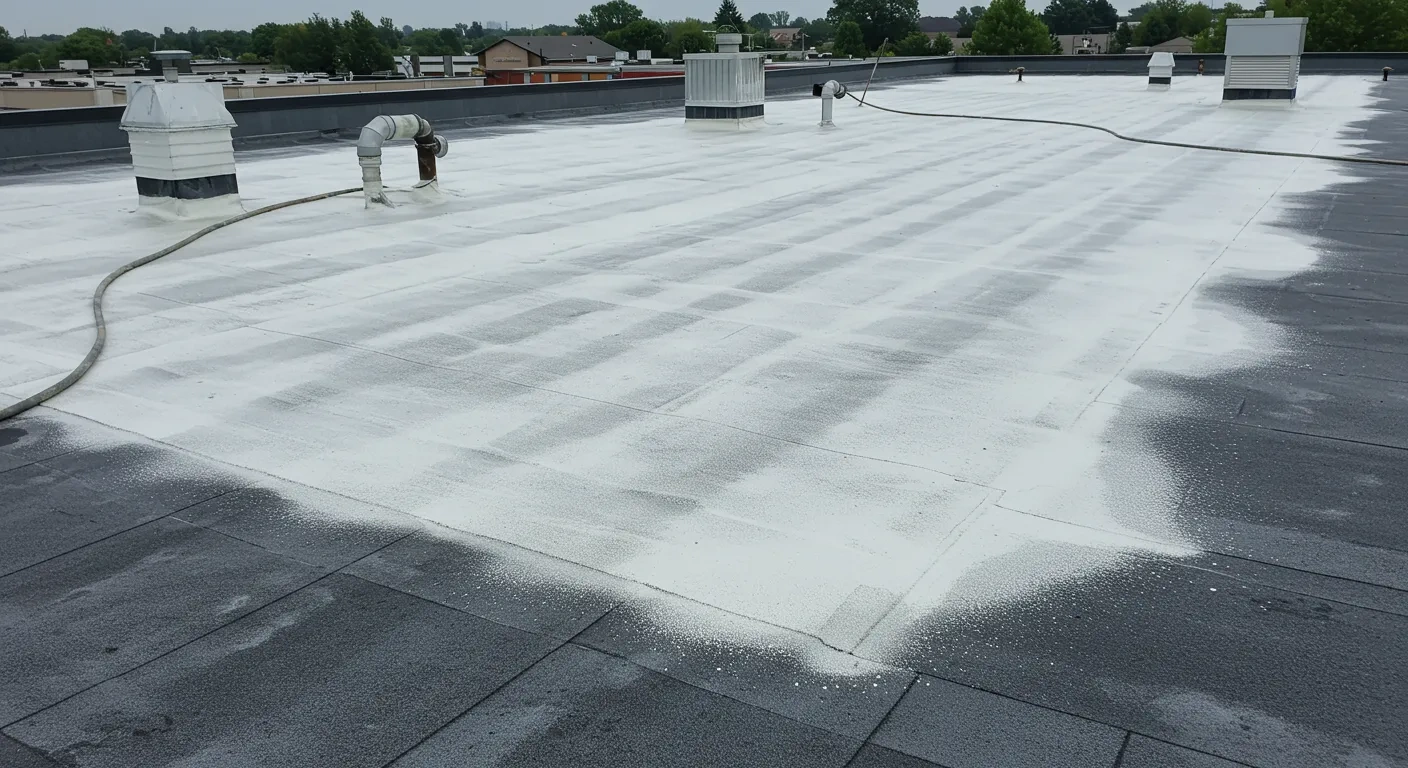
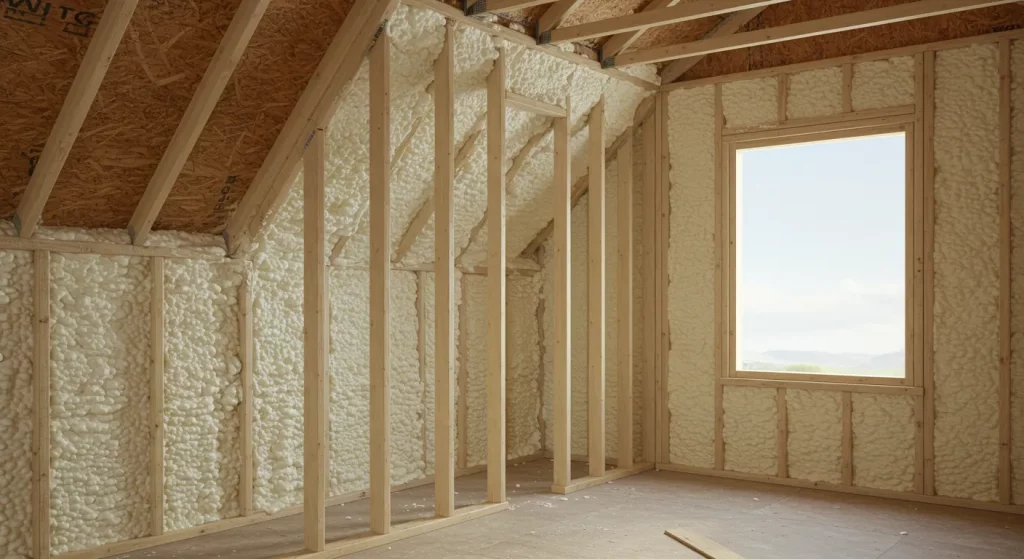
Spray foam roofing solutions are considered one of the most durable options for commercial and industrial buildings because they create a completely seamless, self-flashing, and lightweight barrier. Unlike traditional materials that rely on seams, fasteners, or adhesives, spray polyurethane foam (SPF) is applied as a liquid that expands into a solid, closed-cell structure. This eliminates the primary cause of roof failure: leaks at the seams.
When professionally installed, spray foam roofing solutions provide exceptional wind uplift resistance and thermal insulation. While the initial investment is comparable to high-quality single-ply membranes, the long-term value is significantly higher. This is due to lower energy costs, reduced maintenance requirements, and the ability to renew the system every 15 to 20 years with a simple protective coating instead of a full replacement.
TL;DR
- Seamless Construction: SPF removes seams and joints, which are the most common points of failure in traditional roofing.
- Renewable Lifespan: With proper maintenance and recoating, a foam roof can last 50 years or more without requiring a tear-off.
- Superior Insulation: Foam roofing offers an R-value of approximately 6.5 per inch, significantly reducing heating and cooling expenses.
- Rapid Installation: Our team can often apply foam over existing roof substrates, saving time and reducing debris disposal costs.
- Wind Resistance: SPF is fully adhered to the deck, making it one of the most resilient systems against hurricane-force winds.
- Self-Flashing: The material expands to seal around pipes, vents, and parapet walls, creating a watertight bond without metal flashing.
Why Spray Foam Roofing Solutions Lead the Industry
The search for durable roofing materials often leads commercial property owners to spray polyurethane foam. The reason is simple: SPF is not just a covering; it is a fully integrated insulation and structural system. According to the Spray Polyurethane Foam Alliance (SPFA), SPF systems have been utilized since the 1960s, proving their longevity in diverse climates.
Seamless Roofing System vs. Traditional Methods
Traditional roofs like EPDM, TPO, or built-up roofing (BUR) are composed of sheets or rolls. These sheets are joined together using heat-welded seams, tapes, or glues. Over time, thermal expansion and contraction cause these seams to pull apart, leading to water infiltration.
A seamless roofing system created with spray foam avoids this entirely. Because it is applied as a liquid, it conforms to the unique shape of your roof. It fills gaps, cracks, and dips, ensuring that there are no weak points where water can collect or penetrate.
Commercial Roof Protection and Wind Uplift
In areas prone to severe weather, commercial roof protection is a top priority. Spray foam provides incredible structural strength without adding significant weight. Research by the National Roofing Contractors Association (NRCA) indicates that SPF systems are highly resistant to wind uplift because they are “monolithic,” meaning the entire roof acts as a single, solid unit.
| Feature | Spray Foam (SPF) | Single-Ply (TPO/EPDM) | Built-Up Roof (BUR) |
|---|---|---|---|
| Seams | None (Seamless) | Numerous seams | Overlapping layers |
| R-Value | 6.5 per inch | 3.0 – 5.0 per inch | 2.5 – 3.0 per inch |
| Wind Resistance | Excellent (Fully Adhered) | Good (Mechanical/Adhesive) | Fair (Heavy weight) |
| Maintenance | Low (Recoat every 15-20 yrs) | Moderate (Seam repairs) | High (Gravel/Leak detection) |
| Installation Speed | Fast | Moderate | Slow |
Long-Lasting Roofing Through Thermal Efficiency
One of the most significant foam roofing benefits is its thermal performance. Traditional insulation often leaves gaps at the edges, leading to “thermal bridging.” SPF creates a continuous airtight seal. This reduces the workload on HVAC systems, extending their lifespan and lowering monthly utility bills.
The Department of Energy (DOE) highlights that reflective “cool roofs,” such as those finished with white silicone coatings over spray foam, can reduce building energy use by up to 15%. This makes it a strategic choice for businesses looking to improve their bottom line while securing a long-lasting roofing solution.
Visual Suggestion: Lifecycle Cost Graph
Graph Type: Line Chart X-Axis: Years (0 to 50) Y-Axis: Total Cost of Ownership (TCO) Comparison: Compare SPF with TPO and BUR. Show SPF having a slightly higher initial cost but a much flatter curve over 50 years due to recoating instead of replacement, while TPO/BUR shows sharp cost spikes every 15-20 years for full tear-offs.
Real-World Scenarios and Applications
To understand how these systems perform, consider how we apply them in various commercial settings.
| Scenario | Property Type | Recommended Option | Estimated Benefit |
|---|---|---|---|
| Flat roof with frequent leaks | Manufacturing Plant | SPF with Silicone Coating | 100% leak elimination and noise reduction. |
| High-wind coastal area | Warehouse | High-Density SPF | Enhanced structural wind uplift resistance. |
| An aging metal roof with rust | Retail Center | SPF Restoration | Stops oxidation and seals all metal fasteners. |
| Climate-controlled facility | Cold Storage | 3″ Thick SPF Application | Massive reduction in refrigeration energy loss. |
Factors That Influence the Decision
While spray foam is highly durable, its performance depends on several variables:
- Substrate Condition: The existing roof must be dry and free of loose debris. We perform moisture scans to ensure no water is trapped beneath the new foam.
- UV Protection: SPF is sensitive to ultraviolet light. A high-quality elastomeric or silicone coating is mandatory to protect the foam from sun damage.
- Application Environment: Wind speeds and temperature during installation affect the “lift” and cell structure of the foam.
- Drainage: While SPF can be used to “build up” low spots to improve drainage, the roof must still have a functional slope or internal drains.
Who This Is For
- Commercial Property Owners: Those looking for a “set it and forget it” solution with a 20+ year horizon.
- Sustainability-Minded Businesses: Companies aiming to reduce their carbon footprint and waste (since SPF often avoids roof tear-offs).
- Facilities with Complex Roofs: Buildings with many penetrations (pipes, HVAC units, skylights) where traditional flashing is prone to failure.
Who This Is NOT For
- Residential Homes with Steep Slopes: SPF is primarily designed for flat or low-slope applications.
- Budgets Only Focused on “Cheapest Initial Price”: While SPF saves money over time, the upfront cost may be higher than a basic patch job.
- DIY Projects: This requires specialized equipment and precise chemical ratios that only our trained professionals can manage.
Secure Your Facility with Raleigh Excel Spray Foam Insulation
Investing in a high-quality roofing system is one of the most important decisions you can make for your commercial property. Our team specializes in high-performance spray foam roofing solutions that provide lasting protection and energy efficiency. We handle everything from initial moisture surveys to the final protective coating.
[Request a quote] | [Schedule an assessment]
Company Name: Raleigh Excel Spray Foam Insulation Phone: (919) 301-9435 Email: [email protected]
Protect your investment with a roof that grows stronger with age and keeps your operating costs low for decades.
FAQs
How long does a spray foam roof actually last?
A spray foam roof can last indefinitely if it is maintained. Every 15 to 20 years, we simply clean the surface and apply a new topcoat to ensure continued UV protection.
Can you walk on a spray foam roof?
Yes, SPF is highly durable and has a high compressive strength. It can easily withstand normal foot traffic for HVAC maintenance and routine inspections without damage.
Is spray foam roofing waterproof?
A: Yes, the closed-cell structure of the foam is inherently waterproof. Even if the top coating is punctured, the foam itself will not allow water to travel laterally through the system.
Can SPF be installed over an existing roof?
In many cases, yes. As long as the existing roof is structurally sound and dry, we can apply foam directly over it, which saves you the high cost of a total tear-off.
How does foam roofing help with energy bills?
It provides a high R-value and a total air seal. By reflecting sunlight and preventing air leaks, it typically reduces cooling costs by 30% to 50% for most commercial buildings.
Sources
- Spray Polyurethane Foam Alliance (SPFA): https://www.sprayfoam.org
- National Roofing Contractors Association (NRCA): https://www.nrca.net
- Department of Energy (DOE) – Cool Roofs: https://www.energy.gov/energysaver/design/energy-efficient-home-design/cool-roofs
- Wikipedia – Spray Polyurethane Foam: https://en.wikipedia.org/wiki/Spray_foam

- How Should Raleigh, NC Property Owners Evaluate Insulation for Long-Term Use? - September 23, 2026
- What Factors Affect Insulation Performance Across Different Parts of a Property? - September 23, 2026
- Could Spray Foam Insulation Be Useful Around Uneven Building Sections in Wake Forest, NC? - September 18, 2026