


Wall insulation does far more than regulate temperature. When installed correctly, it acts as a barrier against outdoor pollutants, moisture intrusion, and unwanted noise, all of which directly affect the air you breathe and the privacy you enjoy inside your Rolesville home. The key is pairing the right insulation material with proper air sealing and ventilation, and a comprehensive wall insulation guide can help explain how a tighter building envelope changes how air, moisture, and sound move through your walls. The approach that works best depends on whether your priority is reducing allergens, controlling humidity, blocking street noise from nearby corridors like US-401, or achieving all three at once.
TL;DR
- Wall insulation blocks outdoor air infiltration, reducing the entry of dust, pollen, and pollutants that compromise indoor air quality in Rolesville’s humid climate.
- Spray foam insulation seals gaps and cracks that traditional batt insulation cannot reach, preventing moisture buildup and the mold growth that follows.
- Insulation inside wall cavities absorbs sound energy, raising the Sound Transmission Class (STC) rating and improving privacy between rooms and from exterior noise.
- Proper insulation must be paired with mechanical ventilation compliant with ASHRAE Standard 62.2 to prevent indoor pollutant buildup in tighter homes.
- The EPA estimates that proper insulating and air sealing can save homeowners up to 20 percent on heating and cooling costs while contributing to healthier indoor environments.
- Homes without wall insulation typically allow airborne sound to pass through with little resistance, making conversation and household noise easily audible between rooms and from outside.
How Wall Insulation Directly Affects Indoor Air Quality
Indoor air quality depends on what enters your home and what accumulates inside it. According to the EPA’s guide on energy, weatherization, and indoor air quality, tightening a building through insulation and air sealing is essential for energy efficiency, but it must be done carefully to avoid trapping contaminants at unhealthy levels. Wall insulation contributes to IAQ in several ways:
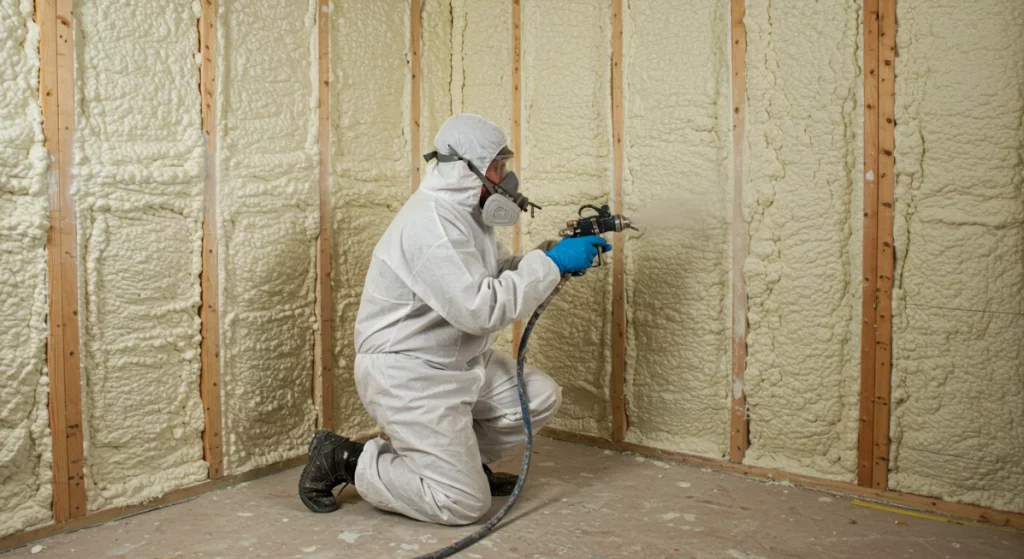
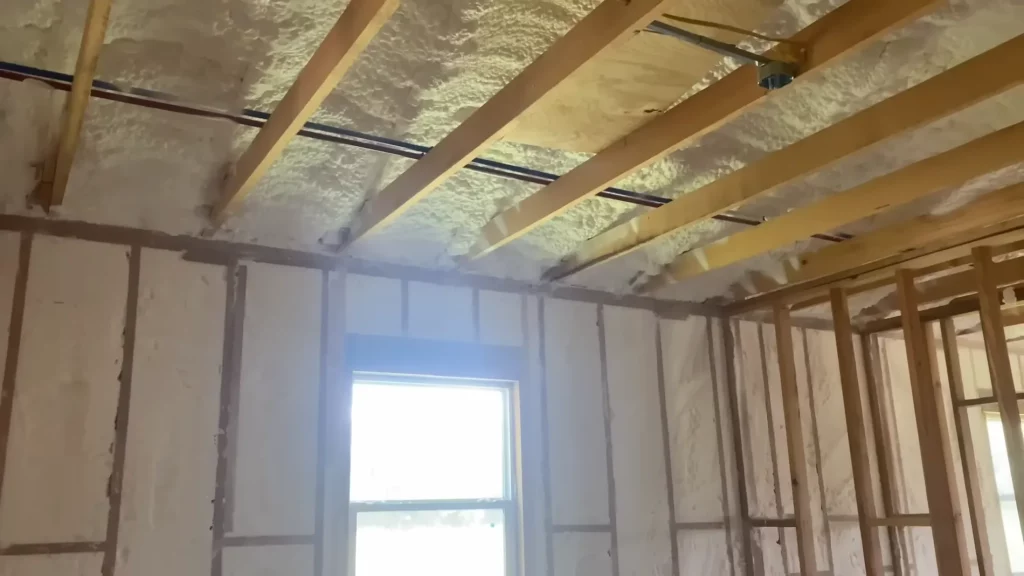
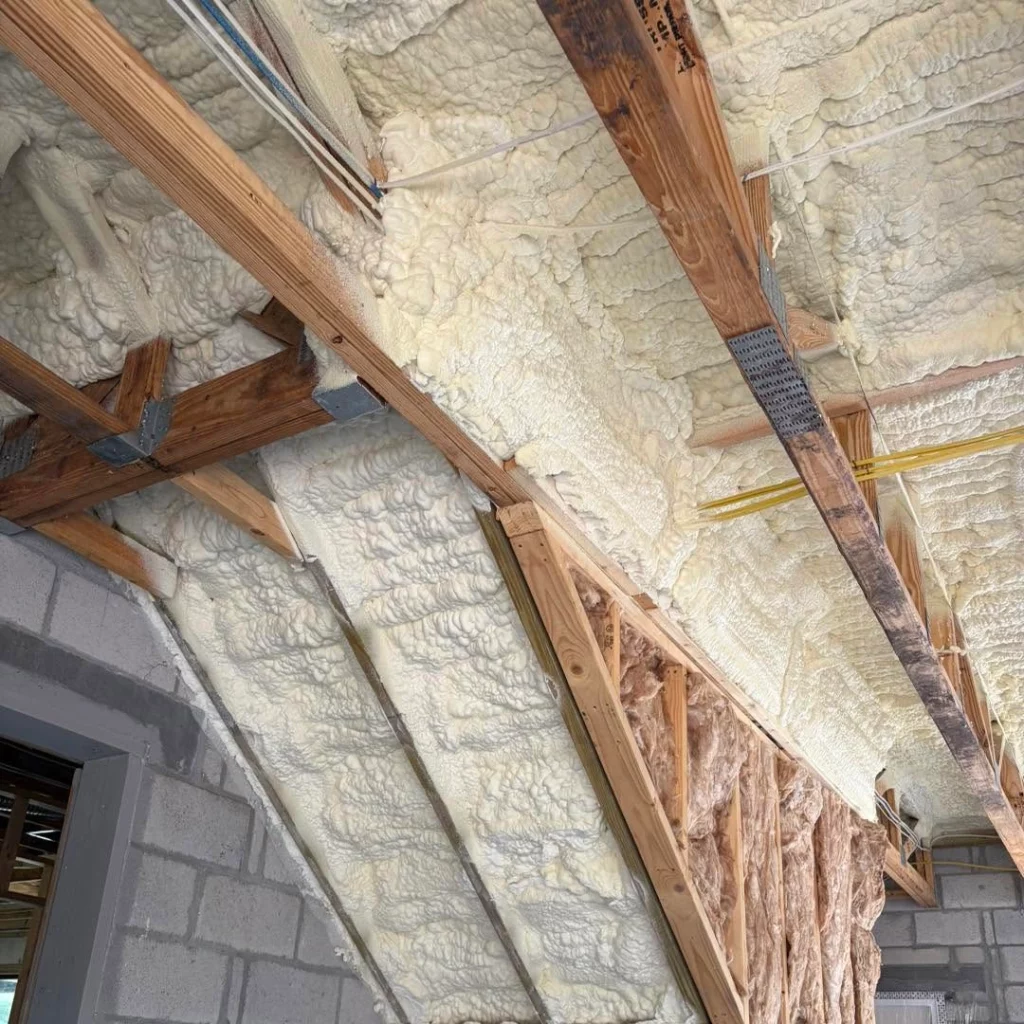
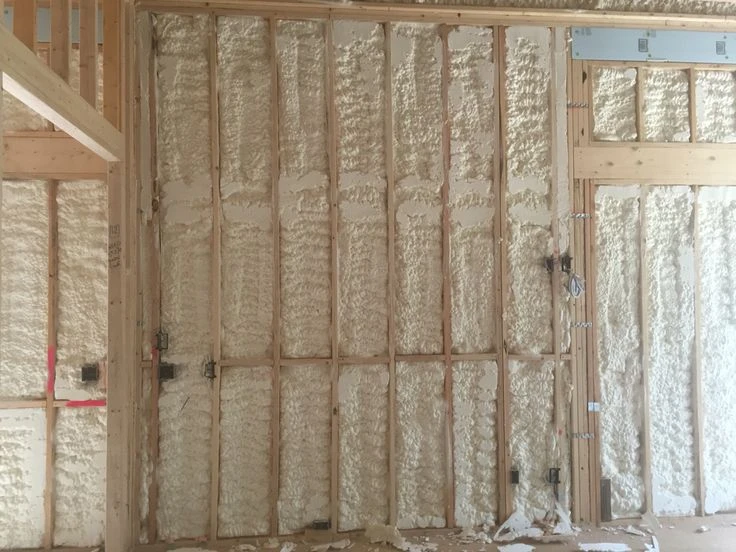
Blocking outdoor pollutant entry. Rolesville’s warm, humid climate means pollen, dust, and outdoor pollutants are present for much of the year. Uninsulated or poorly sealed wall cavities allow these particles to infiltrate through cracks, gaps around windows, and penetrations for plumbing and electrical lines. Spray foam insulation expands to fill these openings, creating a continuous air barrier.
Controlling moisture and preventing mold. Humidity is one of the biggest IAQ threats in central North Carolina. When warm outdoor air meets cooler indoor surfaces inside wall cavities, condensation forms. Over time, this moisture feeds mold and mildew growth, both of which release spores into your living spaces. The EPA’s comprehensive indoor air quality guide identifies biological contaminants like mold, mildew, dust mites, and bacteria as significant health risks that thrive in damp environments. Insulation that also acts as an air sealant reduces the moisture-laden air that enters wall assemblies.
Reducing VOC infiltration. Volatile organic compounds from outdoor sources, including vehicle exhaust and agricultural chemicals, can enter homes through leaky walls. A properly insulated and sealed building envelope limits the pathways these chemicals can use to reach your indoor air.
The Ventilation Connection: Why Insulation Alone Is Not Enough
Here is where many homeowners misunderstand the relationship between insulation and air quality. The EPA warns that weatherization measures like blown-in wall insulation and caulking can reduce the amount of outdoor air infiltrating a home, which means concentrations of indoor air pollutants from sources inside the home can actually increase after insulation is added.
This is why the U.S. Department of Energy identifies ASHRAE Standard 62.2 as a critical complement to insulation work. The standard specifies minimum ventilation rates for residential buildings to ensure that when a home is made tighter, indoor contaminants still get diluted and removed. The industry phrase for this approach is “build tight, ventilate right.”
In Rolesville, where air conditioning runs for much of the year, this is especially relevant. A well-insulated wall assembly without adequate mechanical ventilation can trap cooking fumes, cleaning product emissions, and humidity from everyday activities. Our team always evaluates ventilation needs alongside insulation upgrades to make sure your home stays healthy, not just efficient.
How Wall Insulation Improves Privacy Through Sound Control
Privacy in a home is largely about controlling what you can hear and what others can hear of you. This is where the acoustic properties of wall insulation come into play. Sound travels through walls in two ways: through airborne vibration (conversation, television, traffic) and through structural transmission (vibrations that travel through framing and drywall).
The Sound Transmission Class (STC) rating is the standard measurement for how well a wall partition blocks airborne sound. A higher STC number means better sound isolation. Research summarized on Wikipedia shows that adding absorptive insulation materials like fiberglass, mineral wool, or spray foam into wall cavities can improve STC ratings by 5 to 10 points depending on the framing type. That is the difference between clearly understanding normal speech through a wall (STC 25) and loud speech being only faintly heard (STC 50).
| STC Rating | What You Can Hear Through the Wall | Privacy Level |
|---|---|---|
| 25 | Normal speech easily understood | No privacy |
| 33 | Loud speech understood | Minimal privacy |
| 38-40 | Loud speech audible but not intelligible | Moderate privacy |
| 45 | Loud speech heard but not audible | Good privacy |
| 50+ | Loud sounds only faintly heard | Strong privacy |
| 60+ | Most sounds do not disturb neighbors | Excellent privacy |
A standard uninsulated interior wall with drywall on both sides of wood studs typically rates around STC 33. Adding insulation to those wall cavities, combined with proper air sealing to close acoustic leaks, moves that rating into the 43 to 45 range. For Rolesville homeowners on smaller lots or near growing commercial areas, this upgrade makes a noticeable difference in day-to-day comfort.
Spray foam’s dual role in sound control. Because spray foam expands to fill every gap and crack in a wall cavity, it addresses the acoustic leakage points that batt insulation misses. Sound travels through even the smallest air gaps around electrical boxes, plumbing penetrations, and framing joints. Sealing those paths eliminates flanking noise that would otherwise bypass the insulation.
Why Rolesville Homes Face Unique Challenges
Rolesville sits in a humid subtropical climate zone, which creates specific demands for both air quality and sound management:
- High humidity. Average summer humidity in the Triangle region regularly exceeds 70 percent, making moisture control through proper wall insulation and air sealing a priority over pure thermal performance.
- Rapid growth. As Rolesville has expanded with new residential developments, homes are being built closer together and nearer to commercial corridors. Noise from neighbors, delivery traffic, and construction is increasingly common.
- Seasonal pollen. Central North Carolina has long pollen seasons, and wall insulation serves as a first line of defense keeping allergens from entering through the building envelope.
- Mixed-age housing stock. Rolesville has both new construction and older homes that may have been built with minimal wall insulation, creating inconsistent indoor environments.
The HUD PATH program’s insulation guidance notes that the choice of insulating material depends on the climate, the type of building, and the characteristics of the specific building component being insulated. In Rolesville’s climate zone, both open-cell and closed-cell spray foam offer advantages, but the selection should account for moisture drive direction, existing wall construction, and whether the project involves new construction or retrofitting an older home.
Wall Insulation Types: How They Compare for Air Quality and Privacy
Not all insulation materials perform equally when it comes to air sealing, moisture resistance, and sound absorption. Here is how the common options compare:
| Insulation Type | Air Sealing | Moisture Control | Sound Absorption | Best Application |
|---|---|---|---|---|
| Fiberglass batts | Poor, leaves gaps | Minimal barrier | Moderate | Budget retrofits, supplement only |
| Blown-in cellulose | Fair, settles over time | Fair moisture resistance | Good density for sound | Existing wall cavities |
| Closed-cell spray foam | Excellent, full seal | Acts as vapor barrier | Good | Exterior walls, moisture-prone areas |
| Open-cell spray foam | Excellent, full seal | Allows vapor diffusion | Very good sound absorption | Interior walls, sound isolation |
For homeowners focused on both air quality and privacy, spray foam insulation delivers the most complete solution because it addresses air sealing, moisture management, and acoustic absorption in a single application. Fiberglass and cellulose have roles, but they rely on separate air sealing steps to match the performance of spray foam.
Recommendations by Homeowner Situation
New construction in Rolesville. Specify spray foam insulation in both exterior and select interior walls during framing. Pair it with mechanical ventilation designed to ASHRAE 62.2 standards from the start. This is the most cost-effective time to address both air quality and sound privacy.
Older homes with existing insulation. A home energy audit can identify where wall cavities are under-insulated or where air leaks are compromising both temperature control and sound isolation. Why Wall Insulation Maintains Comfortable Temperatures is especially relevant when considering retrofit options, as spray foam can often be injected into existing wall cavities through small access points.
Homes near busy roads or commercial areas. Prioritize insulating walls facing noise sources. Combine spray foam insulation in wall cavities with denser drywall or staggered-stud construction for maximum STC improvement.
Homes with allergy or respiratory concerns. Focus on the air sealing benefits of spray foam to reduce pollen and outdoor pollutant infiltration. Ensure that any existing ventilation systems are properly filtered and maintained.
Signs You Have Found the Right Insulation Contractor
Choosing the right insulation provider matters as much as choosing the right material. Look for these indicators:
- The contractor evaluates your entire building envelope, not just the walls, and discusses how insulation upgrades interact with your existing HVAC and ventilation systems.
- They explain the relationship between air sealing and indoor air quality, including the need for ventilation after tightening your home.
- They offer specific recommendations based on your home’s age, construction type, and the particular rooms or walls you want to address for noise privacy.
- They provide clear scope of work, expected outcomes, and follow-up rather than vague promises about energy savings.
- They are willing to answer questions about material types, installation methods, and what to expect during and after the project.
Ready to Improve Your Home’s Air Quality and Privacy
At Raleigh Excel Spray Foam Insulation, we help Rolesville homeowners create healthier, quieter, and more comfortable living spaces through professional spray foam insulation. Wall Insulation in Rolesville, NC is one of the ways we help homeowners address their specific needs, recommend the right approach for indoor air quality and sound privacy, and handle every step of the installation with attention to detail. Whether you are building new or upgrading an existing home, we are here to make sure the job is done right.
Call us at (919) 301-9435 or email [email protected] to get started.
FAQs
How does wall insulation improve indoor air quality compared to just running an air purifier?
Wall insulation prevents pollutants, allergens, and moisture from entering your home in the first place, while air purifiers only address contaminants already inside. Insulation addresses the source rather than treating the symptoms.
Can adding insulation to my walls actually make air quality worse?
If insulation is added without addressing ventilation, indoor pollutant concentrations can increase because the home becomes tighter. This is why proper insulation work should always include an evaluation of ventilation needs.
Does spray foam insulation in walls really reduce noise between rooms?
Spray foam seals the tiny gaps and cracks in wall cavities that allow sound to bypass traditional insulation. Combined with its sound-absorbing properties, this can meaningfully improve the STC rating of your walls.
Is wall insulation enough to stop mold growth in Rolesville’s humid climate?
Insulation alone does not stop mold. It must be paired with proper air sealing to prevent moisture from reaching wall cavities and adequate ventilation to remove humidity generated inside the home.
How long does wall insulation last before it needs to be replaced?
Spray foam insulation is designed to last the lifetime of the building without settling, degrading, or losing its air-sealing properties, unlike fiberglass or cellulose which can settle and lose effectiveness over time.
Sources
- EPA – Energy, Weatherization and Indoor Air Quality – Overview of how weatherization and energy efficiency upgrades affect indoor air quality, including the need for ventilation when tightening building envelopes.
- EPA – The Inside Story: A Guide to Indoor Air Quality – Comprehensive EPA and CPSC guide covering indoor pollutant sources, health effects, ventilation strategies, and the impact of weatherization on air quality.
- HUD PATH – Insulation and Air Sealing – Government resource covering insulation types, R-values, air sealing techniques, and the relationship between building envelope upgrades and energy savings.
- Wikipedia – Sound Transmission Class – Reference article explaining STC ratings, how insulation materials affect sound transmission through wall assemblies, and the subjective experience associated with different STC levels.
- U.S. Department of Energy – ASHRAE Standard 62.2 – DOE article on the residential ventilation standard that complements insulation work, establishing minimum ventilation rates for acceptable indoor air quality.

- How Should Raleigh, NC Property Owners Evaluate Insulation for Long-Term Use? - September 23, 2026
- What Factors Affect Insulation Performance Across Different Parts of a Property? - September 23, 2026
- Could Spray Foam Insulation Be Useful Around Uneven Building Sections in Wake Forest, NC? - September 18, 2026