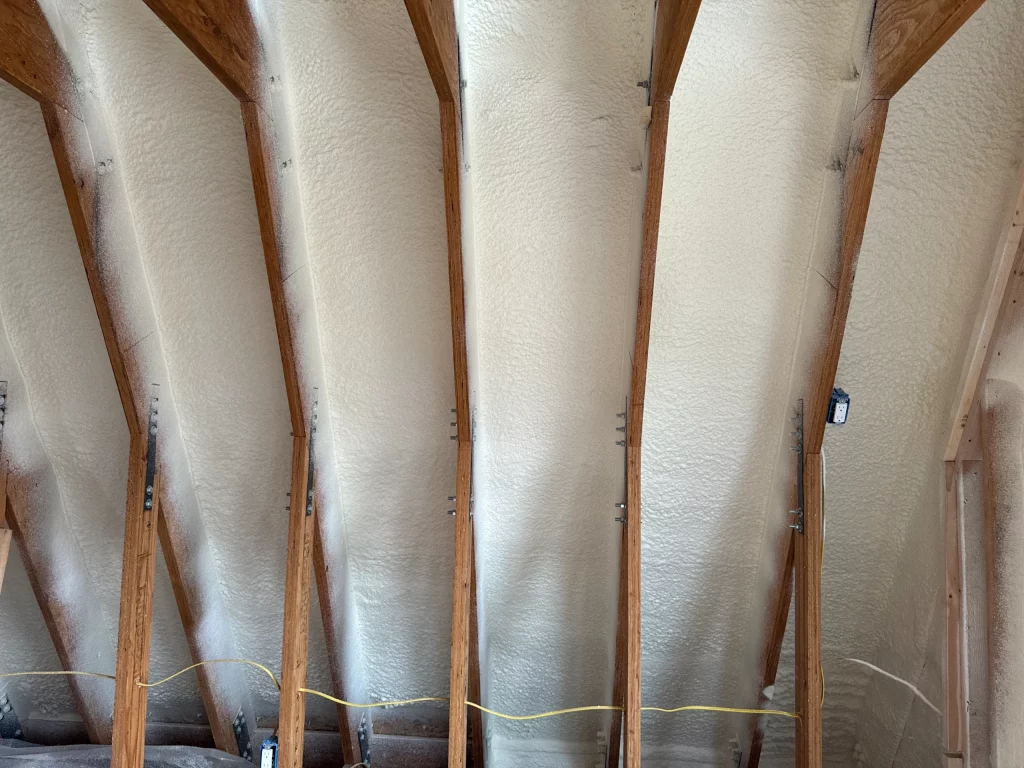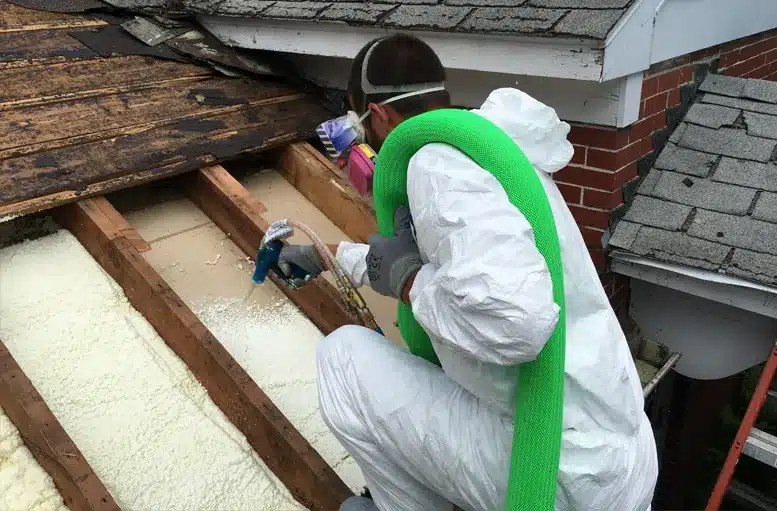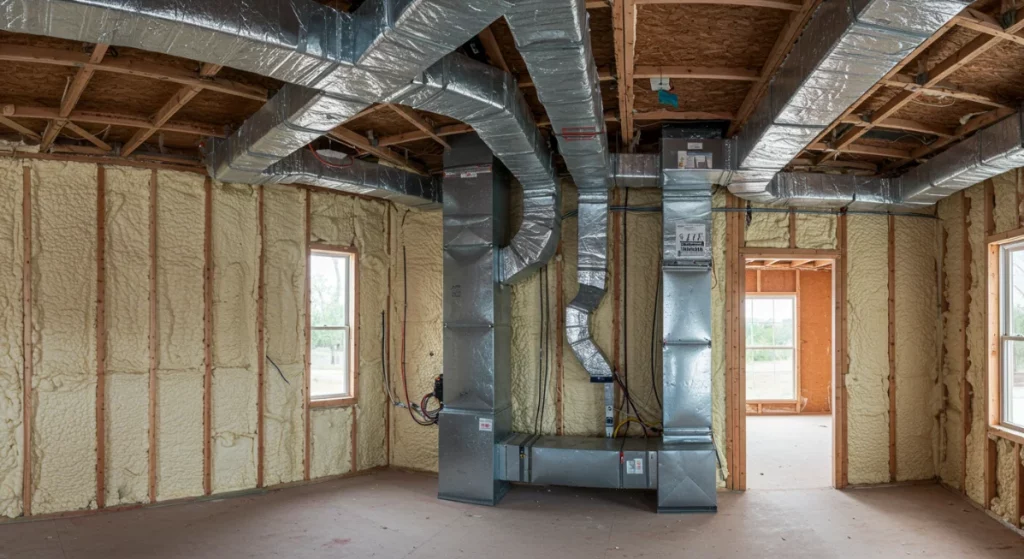



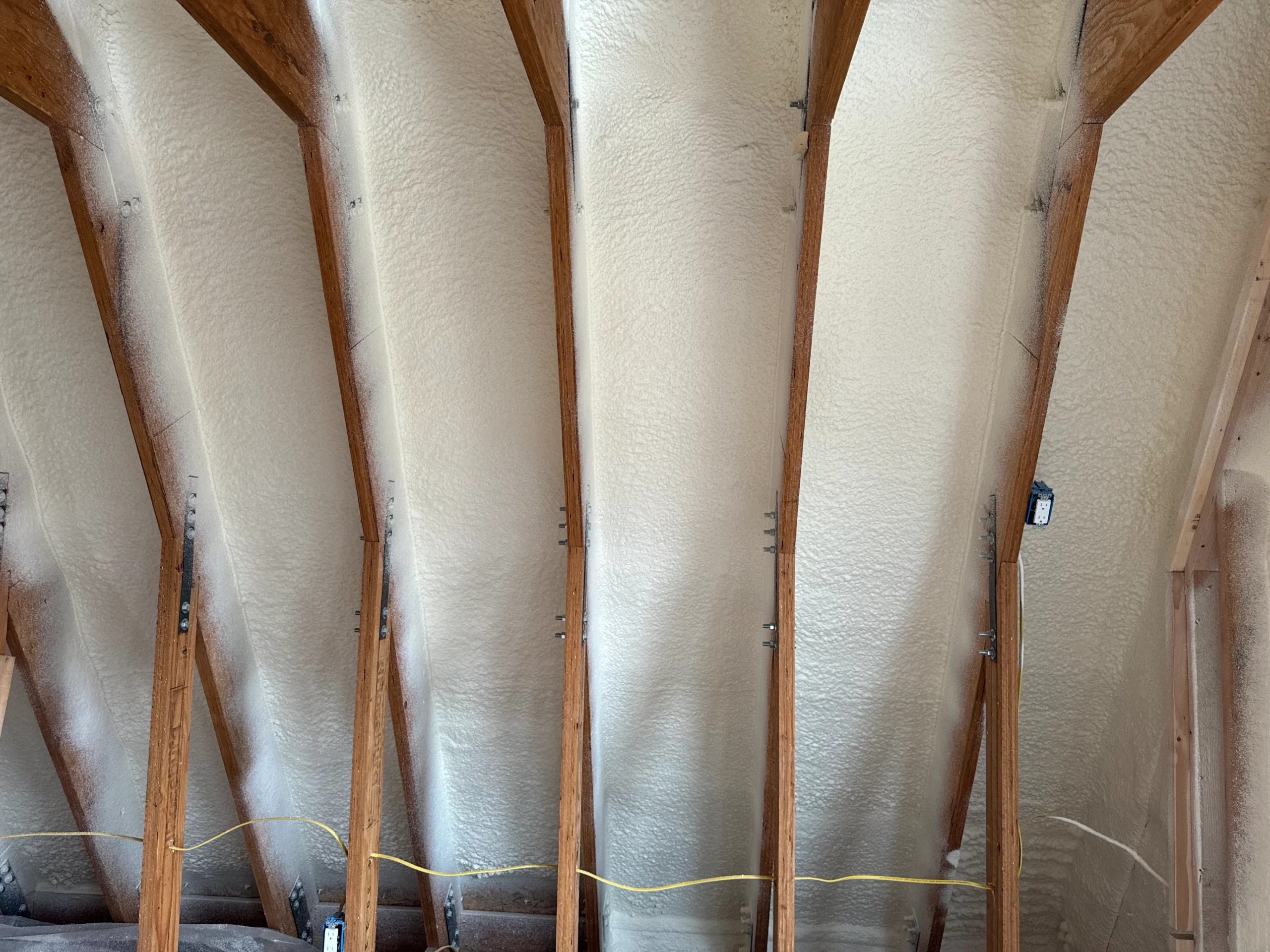
Wall insulation makes the biggest difference on above-grade exterior walls that separate heated and cooled space from the outdoors, on basement and crawlspace walls tied into the conditioned envelope, and at rim joists, garage-adjacent walls, and bonus room walls where thin or missing insulation creates concentrated heat loss. In this Wall Insulation Explained: Types, Benefits, and Installation Guide, the right target depends on the building’s framing, its current R-values, and the local climate, so a one-size answer never fits. For homes and commercial buildings in mixed-humid markets like Raleigh, the strongest results come from pairing dense cavity fill with continuous insulation that interrupts thermal bridging, then verifying performance with blower door and infrared testing. Below, we break down where walls lose the most energy, how to compare insulation strategies, and how our team sequences a project for maximum return.
TL;DR
- Exterior walls above grade are usually the largest insulated surface in the thermal envelope, so upgrades there move whole-building energy use the most.
- Air movement inside leaky wall cavities, known as convective loops, can account for 10% to 20% of heat loss on its own, according to Oak Ridge National Laboratory research cited in building science literature.
- Doubling cavity insulation between studs yields substantially less than a 50% reduction in heat loss because studs and framing still conduct heat around the insulation.
- ENERGY STAR guidance based on the 2021 IECC recommends adding R-5 to R-10 insulative wall sheathing in Zones 4 through 8 whenever siding is removed.
- Closed-cell spray foam delivers roughly R-5.5 to R-6.5 per inch and forms an airtight seal against the substrate, while fiberglass batts average R-3.1 to R-4.3 per inch and need a separate air barrier.
- Air sealing should precede insulation work, since Natural Resources Canada calls air leakage control the single most important retrofit activity.
- Infrared thermography and blower door testing identify missing wall insulation and hidden gaps before any material is installed.
Why Walls Deserve Priority in the Building Envelope
The building envelope is the physical separator between conditioned and unconditioned space, and the thermal envelope within it defines where your heated or cooled environment actually ends. Roughly 40% of energy consumption is attributed to buildings, with the majority going to heating and cooling, and walls are one of the primary transfer surfaces alongside roofs, floors, windows, and doors (Wikipedia, Building Insulation).
Walls also carry risks that attics do not. Convective loops, air movement inside poorly sealed cavities, can be responsible for 10% to 20% of heat loss by themselves (Wikipedia, Building Envelope). And when wall surfaces drop below a critical temperature, condensation forms, which is why building damage reports attribute roughly 12.7% to 14% of documented damage to mould problems traceable to insufficient insulation. A well-insulated wall is therefore both an energy upgrade and a moisture defense.
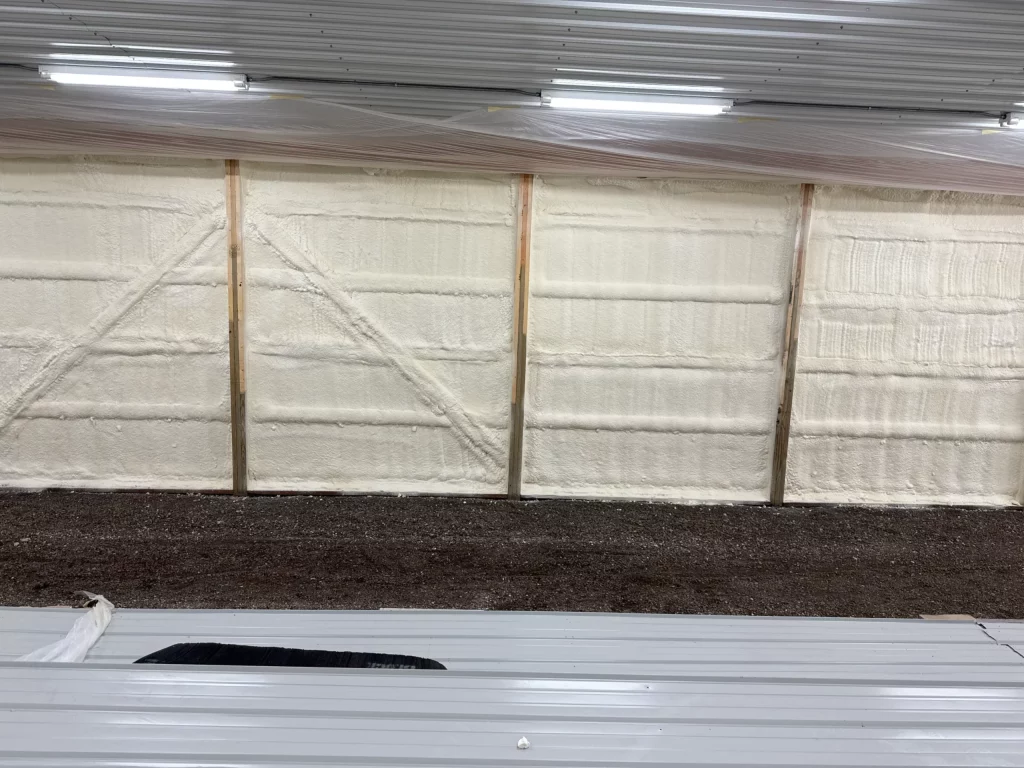
The Wall Zones Where Insulation Pays Off Most
| Wall Zone | Why It Loses the Most Energy | Best Insulation Strategy |
|---|---|---|
| Above-grade exterior walls | Largest conditioned surface exposed to outdoor temperatures, plus cavity convection and air leakage | Dense cavity fill plus continuous exterior insulation |
| Basement and crawlspace walls | Concrete conducts heat and wicks ground moisture into the envelope | Insulative sheathing or batts rated for damp conditions |
| Rim joists and sill plates | Thin framing band where wood meets masonry, a classic leak location | Spray foam that seals and insulates in one step |
| Walls next to unconditioned garages | Frequently under-insulated or skipped during original construction | Full cavity insulation with a dedicated air barrier |
| Knee walls and bonus room walls | Sloped ceilings and irregular cavities leave voids behind | Custom-fit foam that fills odd shapes completely |
Above-Grade Exterior Walls
These walls face wind, sun, and the full indoor-outdoor temperature difference every hour of the year. Because a single R-value rating does not account for construction quality or local conditions, many older walls perform far below their label rating (Wikipedia, Building Insulation). Cavity fill combined with continuous exterior insulation captures the biggest share of recoverable loss.
Basement and Crawlspace Walls
Below-grade walls connect your conditioned space to soil that stays cool and damp year-round. ENERGY STAR guidance recommends basement and crawlspace wall insulation services ranging from R-5 sheathing or R-13 batts in Zone 3 up to R-15 sheathing or R-19 batts in Zones 4C through 8 (ENERGY STAR, Recommended Home Insulation R-Values). Central North Carolina sits in Zone 4, so these targets apply directly to most Raleigh-area buildings.
Rim Joists and Garage-Adjacent Walls
The rim joist is a narrow band of framing where air leaks concentrate, and garage-adjacent walls often carry minimal insulation while facing wide temperature swings. Both are small in area but outsized in effect, which makes them fast, high-return targets.
Thermal Bridging: Why Cavity Insulation Alone Falls Short
Studs and other framing members create parallel heat paths that bypass cavity insulation entirely. The practical consequence is important: you could double the R-value of insulation between studs and still see substantially less than a 50% reduction in heat loss, because conduction through the framing continues (Wikipedia, R-value (Insulation)).
A continuous layer of rigid foam or sprayed insulation over the wall sheathing interrupts that bridging while also reducing air leakage. Heat behaves like current in parallel circuits, so the least insulated section of a wall dominates performance relative to its size. That is why sealing and insulating the weak zones, corners, electrical boxes, and penetrations, is often the most cost-effective improvement once walls are reasonably filled.
Comparing Wall Insulation Materials and Methods
| Insulation Method | R-Value Per Inch | Air Sealing Contribution | Best Wall Application |
|---|---|---|---|
| Closed-cell spray foam | R-5.5 to R-6.5 | Creates an airtight seal against the substrate | Rim joists, masonry walls, damp-prone cavities |
| Open-cell spray foam | R-3.6 | Strong, fills irregular cavities fully | Above-grade wood-framed walls |
| Fiberglass batts | R-3.1 to R-4.3 | None, requires a separate air barrier | Simple, dry, fully accessible cavities |
| Cellulose dense-pack | R-3.0 to R-3.8 | Moderate when densely packed | Retrofitting empty existing wall cavities |
| Rigid foam sheathing | R-3.6 to R-5.4 | Adds a continuous layer over framing | Exterior upgrades that break thermal bridging |
These per-inch values come from published R-value tables (Wikipedia, R-value (Insulation)). Two cautions apply: compressing fiberglass lowers its performance, and moisture trapped in any insulation can form a thermal bridge that defeats the material. One of the primary strengths of spray foam insulation is its ability to bond directly to substrates and shut down the air leakage that degrades other products.
Recommendations by Building Type and Context
| Building Context | Recommended Approach | Why It Works |
|---|---|---|
| Older homes with empty or settled cavities | Dense-pack cellulose or injection foam through small access holes | Walls stay intact while voids and leaks are addressed |
| New construction | Full cavity spray foam plus continuous sheathing | Meets or exceeds IECC Zone 4 wall targets from day one |
| Steel-framed commercial buildings | Continuous exterior insulation over the framing | Steel conducts heat far more readily than wood |
| Garages, workshops, and outbuildings | Insulated and air-sealed shared walls | Keeps temperature swings and fumes out of occupied space |
How Our Team Sequences a Wall Insulation Project
- Audit first. A qualified inspection with a blower door and infrared scanner locates air leaks and missing insulation, the same tools professionals use to find hidden gaps (Natural Resources Canada, Keeping the Heat In).
- Seal before you insulate. Air leakage control should come first in any upgrade strategy, because insulation cannot fix energy lost through unsealed holes.
- Target the weak zones. Rim joists, band areas, garage walls, and below-grade walls get priority over adding R-value where walls already perform.
- Plan for moisture. Humidity measurably raises the thermal conductivity of insulation, so our installs pair materials with proper vapor and drainage strategy.
- Verify the result. Follow-up testing confirms the envelope improvement rather than assuming it.
Signs You’ve Found the Right Approach
- The provider tests before proposing, using blower door and infrared diagnostics rather than a one-look quote.
- The scope names specific wall zones and explains thermal bridging in plain language.
- Air sealing appears in writing as a distinct step, not a vague add-on.
- Recommended R-values are tied to current code guidance, such as IECC-based targets by climate zone .
- Moisture management and ventilation are addressed before the crew leaves, since a tighter building needs controlled airflow.
Get a Wall Insulation Plan Built Around Your Building
At Raleigh Excel Spray Foam Insulation, we specialize in identifying exactly where wall insulation will deliver the biggest difference in your Raleigh-area home or building, then installing spray foam systems that insulate and air-seal in a single application. Our team handles everything from rim joists and crawlspace walls to full exterior wall retrofits, and we back every recommendation with testing-based evidence rather than guesswork.
Reach our team at [email protected] or call (919) 301-9435 to get started. The walls losing the most energy in your building are the ones that can return the most, so let’s find them together.
Wall Insulation Questions We Hear Most
Which walls should be insulated first in an older home?
Start with rim joists, basement walls, and any wall adjoining a garage, then move to above-grade exterior walls with the lowest measured R-values. These zones concentrate the fastest recoverable losses.
Can walls be insulated without removing drywall?
Yes. Dense-pack cellulose or injection foam can be blown into empty cavities through small drilled holes, the same approach ENERGY STAR describes for uninsulated wood-frame walls.
Does wall insulation matter in a cooling-dominated climate?
Yes. In summer, insulation slows heat gain through sun-struck walls, and a tight envelope reduces the dehumidification burden on air conditioning systems in humid climates.
How do I know if my walls are under-insulated?
Infrared thermography during a temperature difference between indoors and outdoors reveals voids and bridging, and a blower door test quantifies leakage, per Natural Resources Canada guidance.
How much continuous insulation should exterior walls get?
ENERGY STAR guidance based on the 2021 IECC recommends adding R-5 to R-10 insulative wall sheathing in Zones 4 through 8 whenever siding is removed, which covers most of central North Carolina.
Sources
- Wikipedia, Building Insulation – Reference overview of how insulation works in the building envelope, heat loss mechanisms, thermal bridging, and code requirements including ASHRAE 90.1 wall R-value tables.
- Wikipedia, Building Envelope – Explains the thermal envelope, air control, and research finding that convective loops inside walls and ceilings can cause 10% to 20% of heat loss.
- Wikipedia, R-value (Insulation) – Detailed R-value definitions, per-inch values for spray foam, batts, and sheathing, plus the thermal bridging limits of cavity-only insulation.
- ENERGY STAR, Recommended Home Insulation R-Values – EPA and DOE-backed climate-zone table of recommended attic, wall, and basement insulation levels based on the 2021 IECC.
- Natural Resources Canada, Keeping the Heat In: Air Leakage Control – Government guide stating air leakage control is the most important first retrofit, with checklists and diagnostic methods including blower doors and infrared scanners.